Knowledge What is the function of high-energy crushing and sieving systems? Master Mechanical Activation for Mineral Carbonation
Author avatar

Tech Team · Kintek Solution

Updated 16 hours ago

What is the function of high-energy crushing and sieving systems? Master Mechanical Activation for Mineral Carbonation


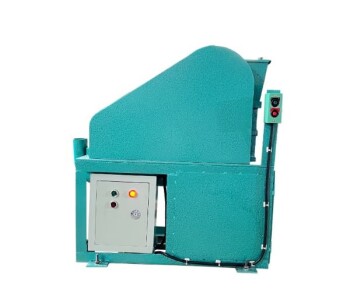
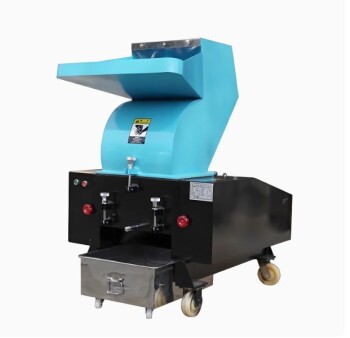
High-energy crushing and sieving systems serve as the critical "activation" mechanism within mineral carbonation, going beyond simple size reduction to fundamentally alter the reactivity of the raw material. Specifically, these systems pulverize mineral feedstocks to an optimal particle size of less than 75 microns to prepare them for chemical interaction.

The core function of this equipment is to overcome kinetic barriers by maximizing the specific surface area and inducing structural defects (micro-cracks) in the mineral lattice. This dual action removes diffusion limitations, allowing for the rapid release of magnesium and calcium ions essential for the carbonation reaction.

The Mechanics of Activation

Optimizing Particle Size and Surface Area

The primary physical output of high-energy crushing is the reduction of raw mineral materials to a highly specific range, typically below 75 microns.

This extensive pulverization dramatically increases the reactive specific surface area of the material. By exposing more of the mineral's surface to the reaction environment, the system ensures that chemical agents can make immediate contact with the substrate.

Inducing Lattice Defects

True mechanical activation involves more than just making particles smaller; it destabilizes the mineral's internal structure.

High-energy crushing generates significant shear forces that induce micro-cracks within the crystal lattice. These physical defects compromise the structural integrity of the mineral, making it energetically "eager" to react and restructure during the carbonation phase.

Accelerating Cation Leaching

The ultimate chemical goal of this physical processing is to facilitate the release of metal cations.

In their natural state, magnesium and calcium ions are locked deep within the mineral matrix. By increasing surface area and creating lattice fissures, crushing systems reduce the distance these ions must travel to react.

This effectively reduces diffusion limitations, ensuring that the leaching of these cations—often the rate-limiting step in carbonation—occurs rapidly.

Understanding the Trade-offs

Energy Input vs. Reaction Efficiency

While finer particles generally lead to faster reaction rates, high-energy crushing is an energy-intensive process.

There is a point of diminishing returns where the energy cost of further grinding outweighs the benefits of marginally faster carbonation. The target of <75 microns represents a calculated balance between energy expenditure and necessary reactivity.

Precision vs. Throughput

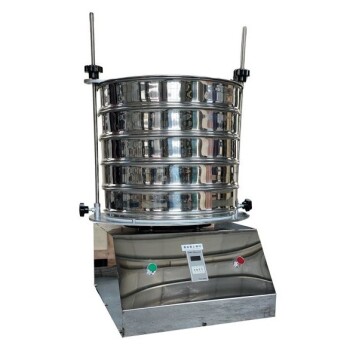
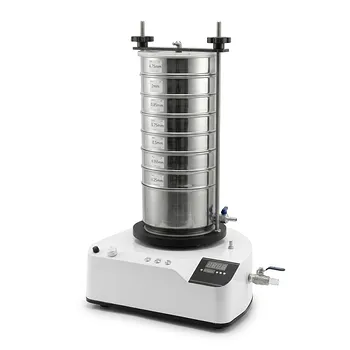
Achieving a uniform particle size distribution requires rigorous sieving, which can act as a bottleneck in high-throughput operations.

If the sieving process is not optimized, it may recirculate material unnecessarily, leading to over-grinding or reduced system capacity. Consistency is key; varying particle sizes can lead to unpredictable reaction kinetics.

Making the Right Choice for Your Goal

To maximize the efficiency of your mineral carbonation process, consider the following regarding your crushing and sieving setup:

  • If your primary focus is Reaction Speed: Ensure your system consistently achieves the <75 micron threshold to maximize surface area and cation availability.
  • If your primary focus is Process Efficiency: Monitor the "activation" aspect—ensure the crushing energy is sufficient to cause lattice micro-cracking, not just superficial size reduction, as this drives the leaching rate.

High-energy crushing is not merely a preparatory step; it is the catalyst that unlocks the chemical potential of stable minerals.

Summary Table:

Feature Physical/Chemical Impact Goal in Carbonation
Particle Size Reduction Decreases size to <75 microns Increases reactive specific surface area
Lattice Destabilization Induces micro-cracks and shear defects Lowers kinetic barriers for reaction
Cation Leaching Accelerates Mg and Ca ion release Removes diffusion limitations
Sieving Precision Ensures uniform size distribution Prevents over-grinding and energy waste

Elevate Your Mineral Research with KINTEK Precision

Unlock the full potential of your carbon capture and storage projects with KINTEK’s high-energy crushing and milling systems. As specialists in advanced laboratory equipment, we understand that mechanical activation is the cornerstone of efficient mineral carbonation.

Our comprehensive range of crushing and milling systems, sieving equipment, and high-pressure reactors is engineered to deliver the precise particle sizes and lattice activation required to accelerate cation leaching. Whether you are optimizing reaction kinetics or scaling throughput, KINTEK provides the high-performance tools—from planetary ball mills to hydraulic presses and high-temperature furnaces—that researchers and industrial innovators trust.

Ready to maximize your process efficiency? Contact KINTEK today to consult with our experts on the right equipment for your mineral carbonation and materials science needs.

References

  1. Caleb M. Woodall, Jennifer Wilcox. Utilization of mineral carbonation products: current state and potential. DOI: 10.1002/ghg.1940

This article is also based on technical information from Kintek Solution Knowledge Base .

Related Products

People Also Ask

Related Products

Low-Temperature Water-Cooled Touchscreen Vibratory Ultrafine Pulverizer

Low-Temperature Water-Cooled Touchscreen Vibratory Ultrafine Pulverizer

Low-temperature water-cooled vibratory pulverizer for ultrafine grinding. Preserves material integrity. Ideal for labs and production. Learn more.

lab cryogenic grinding use liquid-nitrogen for pulverizing plastic raw materials and heat sensitive materials

lab cryogenic grinding use liquid-nitrogen for pulverizing plastic raw materials and heat sensitive materials

Discover the KT-CG01 Liquid Nitrogen Cryogenic Pulverizer, Ideal for Plastic and Heat-Sensitive Material Pulverization, Preserving Material Integrity and Delivering Ultra-Fine Results.

Laboratory Test Sieves and Vibratory Sieve Shaker Machine

Laboratory Test Sieves and Vibratory Sieve Shaker Machine

Efficiently process powders, granules, and small blocks with a high-frequency vibration sieve. Control vibration frequency, screen continuously or intermittently, and achieve accurate particle size determination, separation, and classification.

Laboratory Vibratory Sieve Shaker Machine for Dry and Wet Three-Dimensional Sieving

Laboratory Vibratory Sieve Shaker Machine for Dry and Wet Three-Dimensional Sieving

KT-VD200 can be used for sieving tasks of dry and wet samples in the laboratory. The screening quality is 20g-3kg. The product is designed with a unique mechanical structure and an electromagnetic vibrating body with a vibration frequency of 3000 times per minute.

Laboratory Vibratory Sieve Shaker Machine Slap Vibrating Sieve

Laboratory Vibratory Sieve Shaker Machine Slap Vibrating Sieve

KT-T200TAP is a slapping and oscillating sieving instrument for laboratory desktop use, with 300 rpm horizontal circular motion and 300 vertical slapping motions to simulate manual sieving to help sample particles pass through better.

Rubber Vulcanizer Vulcanizing Machine Plate Vulcanizing Press for Lab

Rubber Vulcanizer Vulcanizing Machine Plate Vulcanizing Press for Lab

The Plate vulcanizing press is a kind of equipment used in the production of rubber products, mainly used for the vulcanization of rubber products. Vulcanization is a key step in rubber processing.

Lab Internal Rubber Mixer Rubber Kneader Machine for Mixing and Kneading

Lab Internal Rubber Mixer Rubber Kneader Machine for Mixing and Kneading

Lab internal rubber mixer is suitable for mixing, kneading and dispersing various chemical raw materials such as plastics, rubber, synthetic rubber, hot melt adhesive and various low-viscosity materials.

Electric Split Lab Cold Isostatic Press CIP Machine for Cold Isostatic Pressing

Electric Split Lab Cold Isostatic Press CIP Machine for Cold Isostatic Pressing

Split cold isostatic presses are capable of providing higher pressures, making them suitable for testing applications that require high pressure levels.

High Performance Laboratory Freeze Dryer for Research and Development

High Performance Laboratory Freeze Dryer for Research and Development

Advanced laboratory freeze dryer for lyophilization, preserving sensitive samples with precision. Ideal for biopharmaceuticals, research & food industries.

Single Punch Tablet Press Machine and Mass Production Rotary Tablet Punching Machine for TDP

Single Punch Tablet Press Machine and Mass Production Rotary Tablet Punching Machine for TDP

Rotary tablet punching machine is an automatic rotating and continuous tableting machine. It is mainly used for tablet manufacturing in the pharmaceutical industry, and is also suitable for industrial sectors such as food, chemicals, batteries, electronics, ceramics, etc. to compress granular raw materials into tablets.

Small Injection Molding Machine for Lab Use

Small Injection Molding Machine for Lab Use

The small injection molding machinehas fast and stable movements; good controllability and repeatability, super energy saving; the product can be automatically dropped and formed; the machine body is low, convenient for feeding, easy to maintain, and no height restrictions on the installation site.

Heated Hydraulic Press Machine with Integrated Manual Heated Plates for Lab Use

Heated Hydraulic Press Machine with Integrated Manual Heated Plates for Lab Use

Efficiently process heat-pressing samples with our Integrated Manual Heated Lab Press. With a heating range up to 500°C, it's perfect for various industries.

Benchtop Laboratory Freeze Dryer for Lab Use

Benchtop Laboratory Freeze Dryer for Lab Use

Premium benchtop laboratory freeze dryer for lyophilization, preserving samples with ≤ -60°C cooling. Ideal for pharmaceuticals & research.

Lab Sterile Slapping Type Homogenizer for Tissue Mashing and Dispersing

Lab Sterile Slapping Type Homogenizer for Tissue Mashing and Dispersing

The slapping sterile homogenizer can effectively separate the particles contained in and on the surface of solid samples, ensuring that the mixed samples in the sterile bag are fully representative.

Benchtop Laboratory Vacuum Freeze Dryer

Benchtop Laboratory Vacuum Freeze Dryer

Benchtop laboratory freeze dryer for efficient lyophilization of biological, pharmaceutical, and food samples. Features intuitive touchscreen, high-performance refrigeration, and durable design. Preserve sample integrity—consult now!

Desktop Fast Laboratory Autoclave Sterilizer 20L 24L for Lab Use

Desktop Fast Laboratory Autoclave Sterilizer 20L 24L for Lab Use

The desktop fast steam sterilizer is a compact and reliable device used for rapid sterilization of medical, pharmaceutical, and research items.

Laboratory Sterilizer Lab Autoclave Herbal Powder Sterilization Machine for Plant

Laboratory Sterilizer Lab Autoclave Herbal Powder Sterilization Machine for Plant

The herbal powder sterilization autoclave machine for Chinese medicine uses saturated steam for effective sterilization. It utilizes the heat and penetrative properties of steam, achieves sterilization after heat preservation, and maintains a good drying effect with a dedicated drying system.

Portable Digital Display Automatic Laboratory Sterilizer Lab Autoclave for Sterilization Pressure

Portable Digital Display Automatic Laboratory Sterilizer Lab Autoclave for Sterilization Pressure

Portable autoclave sterilization pressure is a device that uses pressure saturated steam to quickly and effectively sterilize items.

Single Punch Electric Tablet Press Machine TDP Tablet Punching Machine

Single Punch Electric Tablet Press Machine TDP Tablet Punching Machine

The electric tablet punching machine is a laboratory equipment designed for pressing various granular and powdery raw materials into discs and other geometric shapes. It is commonly used in pharmaceutical, healthcare products, food, and other industries for small batch production and processing. The machine is compact, lightweight, and easy to operate, making it suitable for use in clinics, schools, laboratories, and research units.

XRF & KBR steel ring lab Powder Pellet Pressing Mold for FTIR

XRF & KBR steel ring lab Powder Pellet Pressing Mold for FTIR

Produce perfect XRF samples with our steel ring lab powder pellet pressing mold. Fast tableting speed and customizable sizes for accurate molding every time.


Leave Your Message