The primary function of high melting point metal filaments, such as tungsten, is to act as a high-temperature thermal excitation source.
Heated to approximately 2000°C to 2200°C, these filaments provide the activation energy required to decompose stable feed gases. This process converts molecular hydrogen and hydrocarbons (like methane) into the atomic hydrogen and active carbon radicals necessary for synthesizing diamond films.
Core Takeaway The filament serves as the "chemical engine" of the HFCVD system, not just a heater. By sustaining extreme temperatures, it drives the dissociation of gas molecules into active species, creating the precise chemical environment required to induce diamond nucleation and growth on non-diamond substrates.
The Mechanism of Thermal Decomposition
To understand the filament's role, you must look at the chemical transformation it forces within the vacuum chamber.
Generating Atomic Hydrogen
The most critical task of the filament is breaking down hydrogen molecules ($H_2$).
At temperatures near 2200°C, the filament dissociates these molecules into atomic hydrogen (H•). This atomic hydrogen is essential for the diamond growth process, as it stabilizes the diamond surface and etches away non-diamond carbon phases.
Activating Carbon Precursors
Simultaneously, the filament acts on hydrocarbon gases, typically methane ($CH_4$).
The radiant heat decomposes the methane into active hydrocarbon radicals (such as $CH_x$ or methyl groups). These radicals are the actual building blocks that will eventually deposit onto the substrate to form the diamond lattice.
Why High Melting Point Metals Are Essential
The choice of materials like Tungsten (W) or Tantalum (Ta) is dictated by the extreme physical demands of the process.
Surviving Extreme Temperatures
The process requires filament temperatures of roughly 2000°C to 2200°C to effectively crack the gas molecules.
Standard heating elements would melt or fail instantly under these conditions. Refractory metals like tungsten and tantalum have sufficiently high melting points to maintain their integrity while generating this intense thermal radiation.
Structural Stability
Beyond just surviving the heat, the filament must maintain its shape over long durations.
As noted with Tantalum wire, these materials provide structural stability during the deposition process. This ensures that the distance between the filament and the substrate remains constant, which is uniform film growth.
From Activation to Deposition
The filament is the starting point of a transport process that ends at the substrate.
Transport of Reactive Species
Once the gases are decomposed near the hot filament, the resulting active groups (radicals) diffuse away from the excitation source.
They travel toward the sample (substrate), which is maintained at a significantly lower temperature, typically between 600°C and 1000°C.
Nucleation and Film Growth
Upon reaching the substrate, these active groups adsorb onto the surface.
Driven by the difference in temperature and concentration, they react to form crystal nuclei. These nuclei grow into islands and eventually merge to form a continuous, solid diamond film.
Understanding the Trade-offs
While effective, the use of hot filaments introduces specific constraints that must be managed.
Thermal Limitations
The filament temperature is the governing factor for reaction rates.
However, operating too close to the material's melting point can compromise structural stability. You must balance the need for high decomposition rates with the longevity of the filament.
Material Interactions
The filament does not exist in isolation; it interacts chemically with the carbon-rich atmosphere.
Over time, filaments can undergo carburization (absorbing carbon), which may alter their electrical resistance and mechanical strength. This is why materials like Tantalum are highlighted for their stability in these specific reactive environments.
Making the Right Choice for Your Goal
The specific application of HFCVD depends on balancing temperature, material choice, and gas chemistry.
- If your primary focus is Growth Rate: Prioritize higher filament temperatures (closer to 2200°C) to maximize the production of active hydrocarbon radicals and atomic hydrogen.
- If your primary focus is Process Stability: Ensure you select a filament material (like Tantalum or Tungsten) known for maintaining structural integrity over long heating cycles to prevent sagging or breakage.
- If your primary focus is Film Uniformity: distinct attention must be paid to the geometry and spacing of the filaments to ensure an even distribution of active species across the substrate.
The filament is the critical hardware that bridges the gap between inert gas precursors and the formation of high-value diamond coatings.
Summary Table:
| Feature | Role/Specification |
|---|---|
| Primary Function | High-temperature thermal excitation source |
| Operating Temp | 2000°C to 2200°C |
| Gas Activation | Dissociates $H_2$ into atomic hydrogen & $CH_4$ into carbon radicals |
| Common Materials | Tungsten (W), Tantalum (Ta) |
| Key Outcome | Induces diamond nucleation and growth on substrates |
Optimize Your HFCVD Performance with KINTEK
Precise diamond film deposition requires more than just heat; it requires reliable materials that withstand extreme environments. KINTEK specializes in advanced laboratory equipment and high-performance consumables designed for the most demanding research applications.
Whether you need high-stability tungsten or tantalum filaments, precision hot filament CVD systems, or auxiliary tools like high-temperature furnaces, hydraulic presses, and cooling solutions, our expertise ensures your lab achieves superior results with maximum durability.
Ready to elevate your material synthesis? Contact our technical experts today to find the perfect equipment and consumables for your specific research goals.
References
- Orlando Auciello, Dean M. Aslam. Review on advances in microcrystalline, nanocrystalline and ultrananocrystalline diamond films-based micro/nano-electromechanical systems technologies. DOI: 10.1007/s10853-020-05699-9
This article is also based on technical information from Kintek Solution Knowledge Base .
Related Products
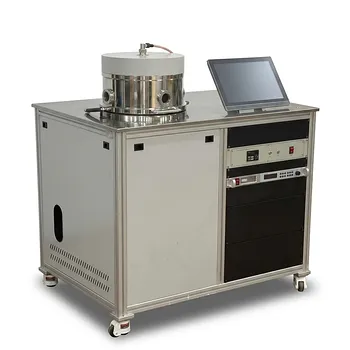
- HFCVD Machine System Equipment for Drawing Die Nano-Diamond Coating
- Customer Made Versatile CVD Tube Furnace Chemical Vapor Deposition Chamber System Equipment
- Multi Heating Zones CVD Tube Furnace Machine Chemical Vapor Deposition Chamber System Equipment
- Chemical Vapor Deposition CVD Equipment System Chamber Slide PECVD Tube Furnace with Liquid Gasifier PECVD Machine
- Split Chamber CVD Tube Furnace with Vacuum Station Chemical Vapor Deposition System Equipment Machine
People Also Ask
- What is the full form of HFCVD? A Guide to Hot Filament Chemical Vapor Deposition
- What are the disadvantages and challenges of the HFCVD method? Overcome Growth Limits and Filament Issues
- Why is Chemical Vapor Deposition (CVD) equipment uniquely suited for constructing hierarchical superhydrophobic structures?
- What is the chemical vapor deposition growth process? Build Superior Thin Films from the Atom Up
- What are the advantages of chemical vapor deposition? Achieve Superior Thin Films for Your Lab