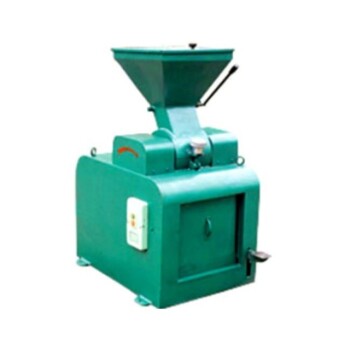
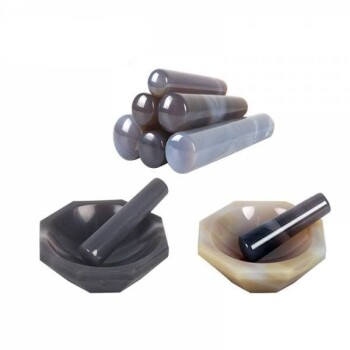
The primary function of industrial grinding and crushing equipment in the pretreatment of aluminum dross is to mechanically refine raw materials into a precise particle size range, specifically between -150 and +70 μm. This mechanical reduction is the foundational step that dictates the efficiency of all subsequent chemical recovery processes.
The core value of this equipment lies in maximizing the material's specific surface area. This physical transformation is essential for enabling the effective removal of impurities and optimizing the chemical kinetics required to extract high-purity alumina.
The Mechanics of Pretreatment
Achieving Target Particle Size
The immediate goal of grinding and crushing is to reduce the variable, often coarse raw aluminum dross into a uniform state. The equipment is calibrated to produce a specific particle size distribution, typically ranging from -150 to +70 μm.
Maximizing Specific Surface Area
By breaking down larger chunks of dross, the equipment exponentially increases the specific surface area of the material. This exposes more of the material's internal structure to the external environment, which is a prerequisite for effective chemical reactivity.
Impact on Downstream Processing
Facilitating Impurity Removal
The increased surface area plays a vital role during the washing phase. Smaller, uniform particles allow water to penetrate the material more effectively.
This accessibility facilitates the efficient dissolution and removal of excess salts and the separation of insoluble impurities like sand.
Enhancing Acid Leaching Performance
The most critical impact of grinding is seen during the acid leaching stage. The maximized solid-liquid contact area ensures that the acid can interact with the aluminum compounds instantaneously and thoroughly.
This direct contact significantly enhances the leaching rate of aluminum ions, directly influencing the final yield of alumina.
Understanding the Trade-offs
The Importance of Precision
It is critical to note that "crushing" is not merely about destroying the material; it is about reaching a specific range.
If the particles remain too coarse (above the target range), the solid-liquid contact area is insufficient, leading to incomplete leaching and wasted raw material. Conversely, while not explicitly detailed in the source, managing the lower limit (-150 μm) implies that maintaining a specific distribution is necessary to prevent handling issues often associated with ultra-fine dust.
How to Apply This to Your Project
To ensure high-purity alumina production, your mechanical pretreatment must be aligned with your chemical processing goals.
- If your primary focus is Purity (Impurity Removal): Ensure your equipment consistently hits the target size range to expose salts and sand for the washing phase.
- If your primary focus is Yield (Leaching Efficiency): Prioritize grinding methods that maximize the specific surface area to optimize the reaction rate during acid leaching.
Mechanical precision in the grinding stage is the single most effective lever for maximizing chemical efficiency in alumina recovery.
Summary Table:
| Process Stage | Goal of Grinding/Crushing | Operational Impact |
|---|---|---|
| Mechanical Refining | Achieve size range (-150 to +70 μm) | Uniformity for downstream processing |
| Surface Area Optimization | Maximize specific surface area | Increases chemical reactivity and contact |
| Washing Phase | Expose salts and insoluble impurities | Enhances dissolution and removal of contaminants |
| Acid Leaching | Maximize solid-liquid contact area | Significantly boosts aluminum ion leaching rates |
Maximize Your Alumina Recovery with KINTEK Precision
Efficiency in high-purity alumina production starts with superior mechanical pretreatment. KINTEK specializes in high-performance crushing and milling systems and sieving equipment designed to achieve the precise particle size distributions required for optimal leaching and impurity removal.
Whether you are refining aluminum dross or conducting advanced battery research, our comprehensive portfolio—including high-temperature furnaces, hydraulic presses, and specialized consumables like alumina crucibles—is engineered to meet the rigorous demands of your laboratory or industrial facility.
Ready to enhance your lab's efficiency and product yield? Contact our technical experts today to find the perfect grinding and milling solution for your specific application!
References
- Ibrahim K. Ayinla. An Energy Saving Option for Production of pure α – Alumina for Industrial Applications Using Waste Aluminium Dross. DOI: 10.54908/iljs.2021.08.02.003
This article is also based on technical information from Kintek Solution Knowledge Base .
Related Products
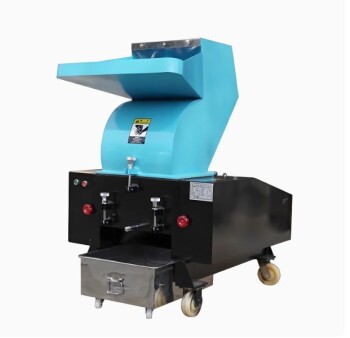
- Powerful Plastic Crusher Machine
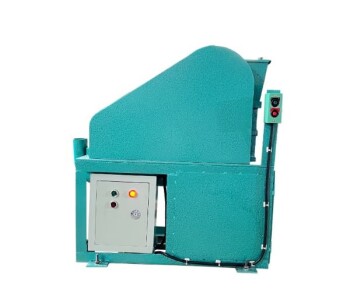
- Sealed Jaw Crusher High Efficiency Environmental Protection Safe and Reliable
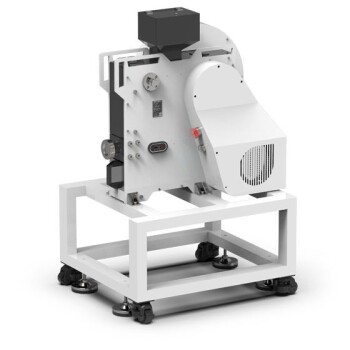
- Laboratory Jaw Crusher
- Laboratory Ball Mill Jar Mill with Metal Alloy Grinding Jar and Balls
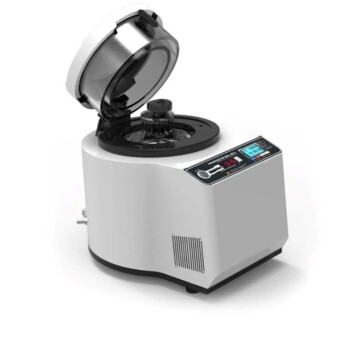
- Laboratory High Throughput Tissue Grinding Mill Grinder
People Also Ask
- What is the primary purpose of using an industrial-grade grinder for flax straw? Optimize Biomass Pretreatment Now
- What is the primary function of a crushing system? Optimize Rice Husk Fractionation with Precise Size Reduction
- What is the primary function of industrial crushers in battery dismantling? Optimize Your Recovery Feedstock
- What are the contaminants in plastic pyrolysis oil? Manage Impurities for Commercial Success
- Why is it necessary to use an ultrasonic cell disruptor before yeast flow cytometry? Ensure Data Accuracy