The primary function of a ball mill in the preparation of Lithium Lanthanum Zirconium Oxide (LLZO) slurry is to facilitate high-energy mixing that physically breaks down powder agglomerates and reduces particle size. By applying intense mechanical force, the ball mill ensures that ceramic powders, solvents, dispersants, and binders are combined into a perfectly uniform dispersion.
Core Insight: The physical quality of the slurry directly dictates the quality of the final solid-state battery component. Ball milling is the critical step that transforms raw ingredients into a homogeneous mixture, enabling the production of defect-free green tapes with consistent density during tape casting.
The Mechanics of Slurry Preparation
Breaking Down Agglomerates
Ceramic powders, such as LLZO, naturally tend to clump together into "agglomerates."
If left unchecked, these clumps create weak points in the final electrolyte. The high-energy impact of the ball mill shatters these agglomerates, ensuring individual particles are separated.
Particle Size Reduction
Beyond simply separating clumps, the milling process actively reduces the size of the LLZO particles.
Smaller, more uniform particles allow for tighter packing. This is essential for achieving high density in the final ceramic layer, which directly correlates to better battery performance.
Achieving Uniform Dispersion
A slurry is a complex mix of solid ceramics and liquid components (solvents, dispersants, and binders).
The ball mill acts as a high-intensity mixer. It forces the liquid components to coat the solid particles evenly, creating a stable suspension where every drop of slurry contains the exact same ratio of ingredients.
Critical Quality Factors
Ensuring Defect-Free Green Tapes
The immediate goal of the slurry is to be used in "tape casting," a process that spreads the liquid into a thin, solid sheet (the green tape).
If the dispersion is poor, the tape will have voids, cracks, or uneven thickness. Thorough ball milling eliminates these inconsistencies, resulting in a smooth, defect-free green tape.
Maintaining Chemical Purity
The choice of grinding media within the ball mill is just as important as the milling action itself.
High-quality Zirconia grinding balls are typically used because they are chemically inert and extremely hard. They resist wear and prevent the introduction of metallic impurities, such as iron, into the slurry.
Preserving Electrochemical Stability
Purity is not just a cosmetic concern; it is a functional requirement.
Metallic contaminants introduced during milling can degrade the electrolyte's high ionic conductivity and electrochemical stability. Using the correct milling media ensures the LLZO retains its required electrical properties.
Understanding the Trade-offs
Mechanical Force vs. Contamination Risk
While high-energy milling is necessary to mix the slurry, it carries an inherent risk of contamination from the grinding media itself.
If the grinding balls are not hard enough (like standard steel or lower-grade ceramics), they will degrade under the intense force. This introduces foreign debris into the slurry, which acts as a defect in the final battery cell.
Optimization of Milling Time
There is a balance to be struck regarding the duration of the milling process.
Insufficient milling leaves agglomerates that cause cracks in the green tape. However, excessive milling can potentially overheat the solvent or degrade the binder chains, altering the viscosity of the slurry and making tape casting difficult.
Making the Right Choice for Your Goal
To ensure your LLZO slurry meets the rigorous demands of solid-state battery production, consider the following priorities:
- If your primary focus is Physical Integrity: Prioritize milling duration and speed to ensure all agglomerates are destroyed, guaranteeing a defect-free green tape with consistent density.
- If your primary focus is Electrochemical Performance: Prioritize the use of high-grade Zirconia grinding media to eliminate wear-debris contamination and maintain maximum ionic conductivity.
Successful LLZO preparation relies on balancing aggressive physical mixing with strict contamination control to create a flawless, conductive ceramic layer.
Summary Table:
| Milling Function | Impact on Slurry Quality | Benefit to Battery Component |
|---|---|---|
| Agglomerate Breaking | Eliminates clumps & weak points | Prevents defects in green tapes |
| Size Reduction | Increases particle surface area | Enables higher density & packing |
| Uniform Dispersion | Homogeneous binder/powder mix | Ensures consistent ionic conductivity |
| Contamination Control | Uses Zirconia media to maintain purity | Preserves electrochemical stability |
Elevate Your Battery Research with KINTEK Precision
Achieving the perfect LLZO slurry requires more than just mixing—it demands the right equipment and high-purity media. KINTEK specializes in high-performance laboratory solutions, providing the robust crushing and milling systems and chemically inert Zirconia grinding media essential for defect-free solid-state electrolytes.
From high-temperature furnaces and hydraulic pellet presses to advanced battery research tools, we empower researchers to bridge the gap between material science and functional battery cells. Contact KINTEK today to optimize your lab's workflow and ensure your ceramic electrolytes meet the highest standards of conductivity and density.
Related Products
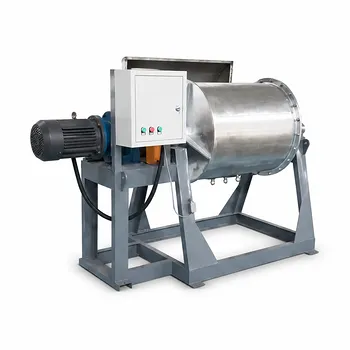
- Stainless Steel Laboratory Ball Mill for Dry Powder and Liquid with Ceramic Polyurethane Lining
- Laboratory Jar Ball Mill with Alumina Zirconia Grinding Jar and Balls
- High Energy Planetary Ball Mill for Laboratory Horizontal Tank Type Milling Machine
- Mini Planetary Ball Mill Machine for Laboratory Milling
- Laboratory Micro Tissue Grinding Mill Grinder
People Also Ask
- How do laboratory ball mills facilitate the mechanochemical synthesis of ZIF-8? Solvent-Free Synthesis Explained
- What is the primary function of a laboratory ball mill in the modification of sulfide-based solid electrolytes with LiPO2F2?
- How does a laboratory ball mill ensure the mixing quality of Mn3Zn0.8Sn0.2N and Ti? Achieve Perfect Homogeneity
- What is the function of a laboratory ball mill in the preparation of AMMCs? Optimize Dispersion & Grain Refinement
- In what way does a laboratory ball mill affect material properties when modifying PHBV/pulp fiber composites?