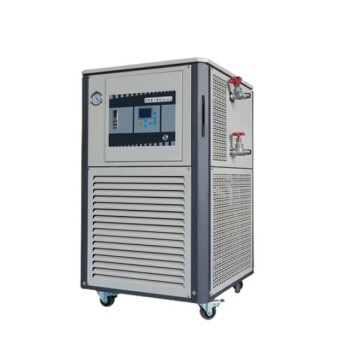
The primary function of a high-temperature laboratory reactor in this context is to create a precisely controlled thermal and mechanical environment essential for condensation reactions. Specifically, it maintains a steady temperature of 190 °C while continuously stirring oil components and ethylenediamine. Crucially, the system facilitates the immediate removal of byproducts, driving the chemical conversion toward the desired alkyl imidazoline.
The reactor's utility extends beyond simple heating; it acts as an equilibrium-shifting device by integrating distillation capabilities to continuously remove water and excess amines during the reaction.
The Mechanics of the Reaction Environment
Precise Thermal Regulation
For the synthesis of alkyl imidazoline, maintaining a specific thermal threshold is critical. The reactor must sustain a stable temperature of 190 °C.
This high temperature provides the necessary energy to drive the condensation reaction between the starting oil components and ethylenediamine.
Continuous Mechanical Agitation
Heat alone is insufficient for this synthesis; the reactants must be kept in constant motion. The reactor employs continuous stirring mechanisms.
This ensures the thorough mixing of the viscous oil components with the amine, maximizing the surface area contact between reactants and preventing localized hot spots.
Managing Chemical Equilibrium
Integration of Distillation Components
The physical design of the reactor is tailored to support the attachment of condensation and distillation equipment.
This integration allows the system to actively separate volatile components from the main reaction vessel during the synthesis process.
Driving the Reaction Forward
The synthesis of alkyl imidazoline produces byproducts, specifically water and excess amines.
By continuously removing these byproducts via the distillation setup, the reactor shifts the reaction equilibrium toward the right. This prevents the reaction from stalling and ensures a higher yield of the final alkyl imidazoline product.
Understanding the Operational Trade-offs
Temperature Sensitivity
While 190 °C is the target, deviations can be detrimental.
If the temperature drops significantly, the condensation reaction rate slows, leading to incomplete conversion. Conversely, uncontrolled temperature spikes could degrade the organic components.
The Necessity of Removal
The effectiveness of the reactor is entirely dependent on its ability to vent byproducts.
If the distillation path becomes blocked or inefficient, water remains in the vessel. This creates a chemical ceiling, limiting the maximum possible yield regardless of how long the mixture is heated or stirred.
Optimizing Your Synthesis Strategy
To achieve the best results in alkyl imidazoline synthesis, consider your specific operational goals:
- If your primary focus is maximizing product yield: Prioritize the efficiency of the distillation integration to ensure rapid and complete removal of water from the reaction mix.
- If your primary focus is reaction consistency: Ensure your reactor's heating element and stirring mechanism can maintain the strict 190 °C parameter uniformly throughout the vessel.
The reactor is not just a heating vessel, but an active participant in shifting chemical equilibrium to favor your desired compound.
Summary Table:
| Feature | Function in Imidazoline Synthesis | Importance |
|---|---|---|
| Thermal Regulation | Maintains a stable 190 °C environment | Provides energy for the condensation reaction |
| Mechanical Agitation | Continuous stirring of oil and ethylenediamine | Ensures reactant contact and prevents hot spots |
| Distillation Setup | Active removal of water and excess amines | Shifts chemical equilibrium to maximize yield |
| Atmosphere Control | Vents byproducts and prevents degradation | Ensures high product purity and consistency |
Elevate Your Chemical Synthesis with KINTEK Precision
Maximize your product yield and ensure chemical consistency with KINTEK’s premium high-temperature high-pressure reactors and autoclaves. Specifically designed for demanding processes like alkyl imidazoline synthesis, our equipment provides the precise thermal regulation and integrated distillation capabilities required to shift your reaction equilibrium forward.
From high-performance crushing and milling systems to specialized PTFE and ceramic consumables, KINTEK offers a comprehensive ecosystem for laboratory excellence. Whether you are conducting battery research or complex organic synthesis, our team is ready to equip your lab with the most reliable tools in the industry.
Ready to optimize your synthesis strategy? Contact us today to find the perfect reactor for your lab!
References
- Nikolai Gomelya, Anna Homenko. Devising a corrosion inhibitor for steel ST37-2 in a water-oil mixture. DOI: 10.15587/1729-4061.2020.199849
This article is also based on technical information from Kintek Solution Knowledge Base .
Related Products
- Customizable Laboratory High Temperature High Pressure Reactors for Diverse Scientific Applications
- High Temperature Constant Temperature Heating Circulator Water Bath Chiller Circulator for Reaction Bath
- High Pressure Laboratory Autoclave Reactor for Hydrothermal Synthesis
- Stainless High Pressure Autoclave Reactor Laboratory Pressure Reactor
- 1700℃ Laboratory High Temperature Tube Furnace with Alumina Tube
People Also Ask
- How do high-pressure and high-temperature reactors ensure the effective treatment of lignocellulosic wastewater in WAO?
- What equipment is required for high-pressure high-temperature reactions? Master Extreme Chemistry Safely
- How do you control high pressure in a reactor? A Guide to Safe & Stable Operation
- Why is argon better than nitrogen for inert atmosphere? Ensure Absolute Reactivity & Stability
- How does initial oxygen pressure affect the wet oxidation of pharmaceutical sludge? Master Your Oxidation Depth