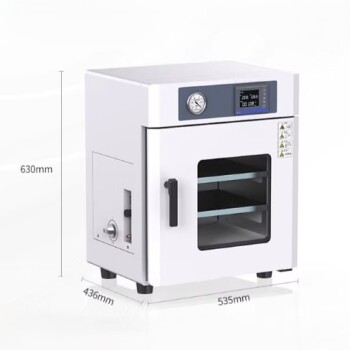
The primary function of a laboratory oven in Refuse-Derived Fuel (RDF) pre-treatment is controlled desiccation. Specifically, it is used to dry samples at a constant, moderate temperature—such as 75°C—to remove physical moisture while preparing the physical state of the material for further processing.
By removing moisture at a controlled temperature, the laboratory oven transforms raw waste into a stable, brittle state suitable for grinding, ensuring that subsequent analyses are not compromised by biological degradation or handling issues.
The Objectives of Thermal Pre-Treatment
Facilitating Mechanical Reduction
Raw RDF typically contains significant moisture, making it pliable or sticky.
The oven dries the material until it reaches a brittle state.
This brittleness is critical because it allows the sample to be effectively crushed or ground into a fine powder without clogging milling equipment.
Preventing Sample Spoilage
Refuse-derived fuel is organic and prone to biological activity.
Extended drying halts the growth of mold and bacteria.
This preservation is essential to prevent component degradation, ensuring the sample remains chemically representative between the time of collection and analysis.
Standardizing the Sample
Analysis requires a consistent baseline.
The oven removes physical moisture, which varies wildly in waste samples.
This allows for accurate comparison and characterization of the fuel's properties based on its dry mass.
Understanding the Trade-offs
Temperature Sensitivity
The process relies on maintaining a temperature around 75°C.
If the temperature is too high, you risk combusting or volatilizing chemical components, which alters the fuel's energy profile.
If the temperature is too low, the material will not reach the necessary brittleness for grinding.
Time Investment
This method requires extended periods to be effective.
It acts as a bottleneck in the laboratory workflow compared to rapid analysis techniques.
However, cutting the drying time short results in a "gummy" sample that fails to grind properly, compromising the entire workflow.
Ensuring Analytical Success
To maximize the effectiveness of your pre-treatment process:
- If your primary focus is Process Efficiency: Ensure samples are spread thinly to reduce the time required to reach a brittle state.
- If your primary focus is Equipment Maintenance: Verify the sample is completely dry before grinding to prevent residue buildup and mechanical strain on your mills.
Correctly utilizing the laboratory oven is the single most important step in converting raw waste into a workable laboratory sample.
Summary Table:
| Stage of Pre-treatment | Role of Laboratory Oven | Benefit to RDF Analysis |
|---|---|---|
| Moisture Removal | Controlled desiccation (approx. 75°C) | Prevents biological degradation and spoilage. |
| Material Preparation | Transformation to a brittle state | Facilitates efficient grinding without clogging mills. |
| Standardization | Removing physical moisture variance | Provides a consistent baseline for dry mass comparison. |
| Chemical Preservation | Moderate temperature control | Avoids loss of volatile components or combustion. |
Streamline Your RDF Analysis with KINTEK Precision
Ensure the integrity of your waste-to-energy research with KINTEK’s high-performance laboratory solutions. From specialized drying ovens that achieve the perfect brittle state for RDF, to our rugged crushing and milling systems and sieving equipment, we provide the end-to-end tools necessary for professional pre-treatment.
Whether you are processing refuse-derived fuel or conducting advanced material research, KINTEK offers a comprehensive range of high-temperature furnaces, hydraulic presses, and essential lab consumables (PTFE, ceramics, crucibles) to optimize your workflow. Don't let moisture compromise your results—contact our technical experts today to find the right equipment for your lab!
References
- Gizem Ayas, Hakan F. Öztop. Thermal analysis of different Refuse Derived Fuels samples. DOI: 10.2298/tsci201010249a
This article is also based on technical information from Kintek Solution Knowledge Base .
Related Products
- Laboratory Scientific Electric Heating Blast Drying Oven
- 56L Vertical Laboratory Vacuum Drying Oven
- 23L Laboratory Vacuum Drying Oven
- 1200℃ Muffle Furnace Oven for Laboratory
- 1700℃ Muffle Oven Furnace for Laboratory
People Also Ask
- How does a laboratory electric drying oven contribute to the formation of the initial coating? Expert Insights
- What role does a precision laboratory drying oven play in the synthesis of GO-PANI nanocomposites? Protect Material Integrity
- What role does a laboratory drying oven play in the preparation of zinc oxide nanoparticle precursors?
- What is the necessity of using a laboratory drying oven when processing MoO3/GO composite nanopowders? Find out here.
- What is the role of a laboratory drying oven in cellulose citrate production? Ensure Material Stability & Purity