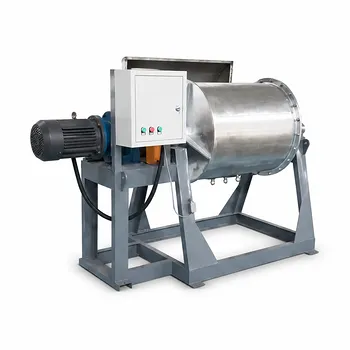
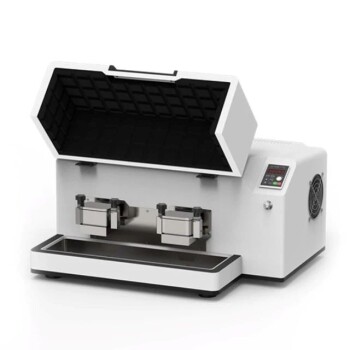
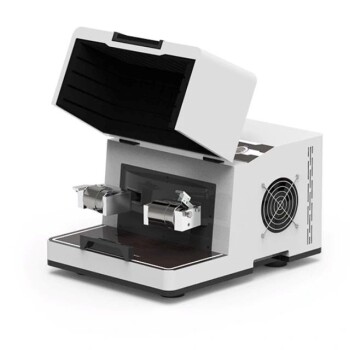
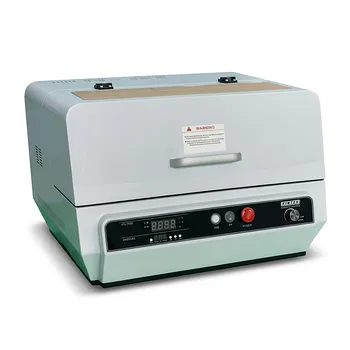
The primary function of a planetary ball mill in this specific application is to facilitate the high-energy mixing and dispersion of Silicon Carbide (SiC) ultrafine powder with Aluminum, Boron, and Carbon black sintering additives. Operating in an anhydrous ethanol medium, the mill utilizes grinding balls to apply intense impact and shear forces. This action breaks down powder agglomerates to create a thoroughly homogeneous slurry, which is the foundational requirement for consistent microstructural development during sintering.
By converting raw powder ingredients into a uniform, de-agglomerated mixture, the planetary ball mill acts as the critical bridge between raw materials and a high-quality ceramic. It ensures that sintering additives are evenly distributed at the microscopic level, preventing structural defects in the final product.
The Mechanism of High-Energy Mixing
Application of Shear and Impact Forces
A planetary ball mill does not simply stir materials; it subjects them to high-energy mechanical stresses. The rotation generates significant centrifugal and shear forces between the grinding balls and the slurry. This mechanical energy is necessary to overcome the natural cohesive forces that hold fine powders together.
Breaking Down Agglomerates
SiC ultrafine powders naturally tend to clump together, forming agglomerates that can act as defects in the final ceramic. The mill's primary physical task is to shatter these agglomerates via collision. This exposes the individual particle surfaces to the sintering additives and the liquid medium.
The Role of the Medium
The process is conducted in anhydrous ethanol, which serves as a carrier fluid. This medium facilitates the movement of particles and prevents the oxidation that might occur with water-based solvents. It ensures the forces are transmitted hydrodynamically as well as mechanically.
Achieving Microstructural Homogeneity
Uniform Dispersion of Additives
The specific additives used—Aluminum powder, Boron powder, and carbon black—must be distributed evenly throughout the SiC matrix. If these are not mixed uniformly, the chemical reactions required for densification will occur unevenly. The ball mill forces these distinct materials into a cohesive, uniform blend.
Ensuring Consistent Sintering
The quality of the precursor slurry directly dictates the quality of the sintered ceramic. A homogeneous precursor guarantees that the microstructure develops consistently under heat. This prevents areas of low density or composition segregation that would weaken the final SiC ceramic.
Understanding Process Trade-offs
Balancing Impact Energy
While high energy is required to break agglomerates, it must be carefully controlled. The goal is effective dispersion without introducing excessive heat or wear contamination from the grinding media. The process relies on finding the correct operational parameters (such as speed and duration) to maximize mixing while minimizing contamination.
Optimization of Media Interaction
The efficiency of the mill depends heavily on the interaction between the balls and the material. An incorrect ratio or size of grinding balls can lead to inefficient mixing or "dead zones" where agglomerates remain. The process demands a specific setup to ensure every particle acts as part of the conductive network or structural matrix.
Making the Right Choice for Your Goal
To ensure the success of your SiC ceramic preparation, consider your specific objectives:
- If your primary focus is Structural Integrity: Ensure the milling duration is sufficient to fully de-agglomerate the SiC powder, as residual clumps will become stress concentrators in the final part.
- If your primary focus is Sintering Density: Prioritize the uniform dispersion of the Al-B-C additives, as their even distribution is what activates the liquid-phase sintering mechanism across the entire volume.
The planetary ball mill is not just a mixer; it is a microstructural engineering tool that defines the ultimate performance limits of your ceramic material.
Summary Table:
| Feature | Function in SiC Slurry Preparation |
|---|---|
| Milling Medium | Anhydrous ethanol to prevent oxidation and facilitate particle movement. |
| Force Mechanism | High-energy shear and impact forces to break down SiC powder agglomerates. |
| Additive Distribution | Ensures Al, B, and Carbon black are microscopically dispersed for uniform densification. |
| Key Outcome | Creation of a homogeneous precursor that guarantees consistent ceramic microstructure. |
Elevate Your Advanced Ceramic Processing with KINTEK
Precise material synthesis begins with superior dispersion. At KINTEK, we specialize in providing high-performance planetary ball mills, crushing and milling systems, and sieving equipment designed to meet the rigorous demands of Silicon Carbide and advanced ceramic research.
Whether you are optimizing Al-B-C sintering additives or scaling up high-temperature production, our comprehensive portfolio—including high-temperature furnaces (vacuum, CVD, atmosphere), hydraulic presses, and specialized ceramics/crucibles—ensures your lab achieves maximum structural integrity and sintering density.
Ready to refine your laboratory workflow? Contact our technical experts today to find the perfect equipment solution for your specific research goals.
Related Products
- High Energy Planetary Ball Mill for Laboratory Horizontal Tank Type Milling Machine
- Laboratory Planetary Ball Mill Rotating Ball Milling Machine
- High-Energy Omnidirectional Planetary Ball Mill Milling Machine for Laboratory
- High Energy Planetary Ball Mill Milling Machine for Laboratory
- Laboratory Horizontal Planetary Ball Mill Milling Machine
People Also Ask
- What is the role of a planetary ball mill in sulfide-based solid-state batteries? Engineer High-Performance Cathodes
- What are the parameters of a planetary ball mill? Master Speed, Time, and Media for Perfect Grinding
- What is the function of a planetary ball mill for nanostructured eutectic steel? Essential Prep for High-Strength Alloys
- What role does a planetary ball mill play in the preparation of NASICON-type solid electrolytes like LATP and LAGP?
- What is the function of a planetary ball mill in solid-state electrolyte prep? Milling vs. SDS Methods Explained