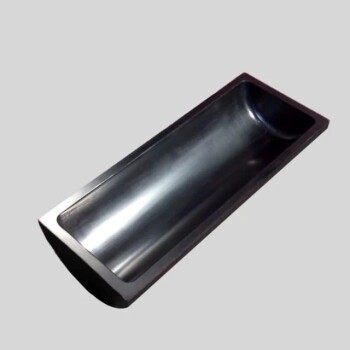
The primary function of a quartz boat is to serve as a chemically inert reaction vessel that holds metal powders, such as titanium or yttrium, during the hydrogenation phase. It allows these materials to undergo continuous heating at 420 °C in a hydrogen atmosphere without reacting with the container, thereby preserving the purity of the resulting precursor hydrides.
The quartz boat provides a stable, non-reactive environment essential for alloy preparation. Its specific combination of high-temperature resistance and chemical stability prevents vessel-to-powder contamination, ensuring the final alloy meets strict purity standards.
The Role of the Vessel in Hydrogenation
Withstanding High Thermal Loads
During the preparation of Ti-Al-Y alloys, the hydrogenation stage involves continuous heating at 420 °C.
The vessel holding the precursor materials must maintain structural integrity under this thermal stress. A quartz boat is specifically selected because it resists deformation and degradation at these sustained operating temperatures.
Ensuring Chemical Inertness
The process involves exposing metal powders—specifically titanium or yttrium—to a hydrogen atmosphere.
These metals are highly reactive, particularly when heated. The quartz boat acts as a neutral barrier, ensuring that the powders react only with the hydrogen gas and not with the container walls. This chemical stability is the defining characteristic that dictates the use of quartz over other common materials.
Preserving Precursor Purity
The ultimate goal of the hydrogenation phase is to produce high-purity precursor hydrides.
Any interaction between the metal powders and the boat would introduce impurities, compromising the chemical composition of the final alloy. By eliminating vessel reactivity, the quartz boat guarantees that the hydride forms exactly as intended.
Critical Considerations for Vessel Selection
The Risk of Contamination
The choice of vessel is not merely about holding the powder; it is about preventing failure modes associated with reactivity.
If a vessel with lower chemical stability were used, the metal powders could bond with the container surface at 420 °C. This would not only damage the equipment but also permanently contaminate the feedstock, rendering the synthesis unsuccessful.
Environmental Control
The quartz boat facilitates a controlled reaction within a specific hydrogen atmosphere.
It must support the unhindered flow and interaction of gas with the metal powders. The open boat design typically allows for maximum surface area exposure to the hydrogen, driving the reaction to completion efficiently.
Making the Right Choice for Your Goal
To ensure the success of your Ti-Al-Y alloy preparation, the selection of the reaction vessel is as critical as the raw materials themselves.
- If your primary focus is Chemical Purity: Ensure the quartz boat is free of micro-cracks or surface defects that could trap contaminants or fail under thermal stress.
- If your primary focus is Process Consistency: Verify that the heating profile acts uniformly on the boat to maintain the target 420 °C temperature across all powder layers.
Select the correct apparatus to turn a volatile chemical process into a predictable, high-quality synthesis.
Summary Table:
| Feature | Function in Hydrogenation Phase |
|---|---|
| Material | High-purity Quartz |
| Operating Temp | 420 °C (Continuous heating) |
| Chemical Property | Chemically inert to Ti, Y, and Hydrogen |
| Primary Role | Prevents vessel-to-powder contamination |
| Atmosphere | Stable within Hydrogen environments |
| Key Benefit | Preserves integrity of precursor hydrides |
Elevate Your Materials Research with KINTEK
Precision in alloy synthesis starts with the right environment. At KINTEK, we specialize in providing high-performance laboratory equipment and consumables designed for the most demanding thermal and chemical processes.
Whether you are performing hydrogenation in our high-temperature tube or atmosphere furnaces or require premium PTFE, ceramic, or quartz crucibles and boats, we ensure your research maintains the highest purity standards. From high-pressure reactors to crushing and milling systems for precursor preparation, KINTEK is your partner in advanced material science.
Ready to optimize your Ti-Al-Y alloy preparation? Contact our specialists today to find the perfect equipment for your lab.
References
- Natalia Karakchieva, И. А. Курзина. Influence of Yttrium on the Phase Composition of the Ti-Al System Obtained by the ‘Hydride Technology’. DOI: 10.3390/met12091481
This article is also based on technical information from Kintek Solution Knowledge Base .
Related Products
- Optical Window Glass Substrate Wafer Quartz Plate JGS1 JGS2 JGS3
- Molybdenum Tungsten Tantalum Special Shape Evaporation Boat
- Hemispherical Bottom Tungsten Molybdenum Evaporation Boat
- Tungsten Evaporation Boat for Thin Film Deposition
- Aluminized Ceramic Evaporation Boat for Thin Film Deposition
People Also Ask
- What is optical quartz? The Ultimate Material for UV and High-Temp Optics
- Can quartz glass be heated? Mastering High-Temperature Applications with Quartz
- What is the temperature range of quartz glass? Master Its Thermal Limits for Demanding Applications
- What is the working temperature of quartz glass? Master Its High-Temp Limits & Applications
- What temperature does quartz glass melt at? Understanding Its Softening Point and Practical Limits