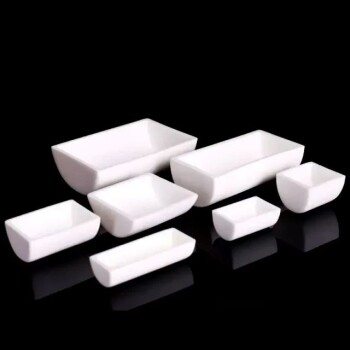
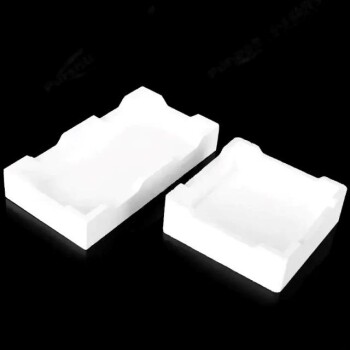
Ceramic combustion boats are selected for T91 steel chlorine corrosion testing primarily due to their exceptional chemical inertness and thermal stability. In the aggressive environment of high-temperature chlorine exposure, these carriers provide a neutral platform that supports the specimen without becoming an active variable in the chemical reaction.
The integrity of corrosion kinetics data relies on isolating the variable being tested. Ceramic boats are used because they remain passive, ensuring that any measured change in mass is exclusively attributable to the corrosion of the T91 steel, not an interaction with the container.
The Critical Role of Chemical Stability
Eliminating Cross-Reactivity
In chlorine corrosion testing, the environment is deliberately aggressive. The carrier material must not react with the corrosive flue gases introduced into the chamber.
Ceramic boats possess superior stability in these conditions. They resist degradation and do not release byproducts that could alter the chemical composition of the test atmosphere.
Isolating the Specimen and Ash
T91 steel specimens are frequently tested in the presence of deposited synthetic ash. It is vital that the carrier does not interact chemically with either the metal specimen or the ash coating.
Ceramics prevent the "sticking" or chemical bonding that might occur with metallic carriers. This isolation ensures that the reactions observed are strictly between the T91 steel, the ash, and the gas.
Ensuring Gravimetric Accuracy
Protecting the Weighing Experiment
Corrosion kinetics are typically quantified by measuring mass change (weight gain) over time. This requires extreme precision.
If the carrier boat were to react, oxidize, or degrade, its mass would change. This would corrupt the data, making it impossible to distinguish between the weight gained by the corroding steel and the weight lost or gained by the boat.
High-Temperature Endurance
These experiments often involve extended exposure to high heat. The carrier must maintain its structural form without softening, warping, or outgassing.
Ceramic combustion boats offer the necessary high-temperature tolerance. They remain dimensionally stable, ensuring the specimen stays properly positioned throughout the duration of the test.
Understanding the Trade-offs
Mechanical Fragility
While ceramics are chemically superior, they are mechanically brittle compared to metal alternatives.
Handling Risks
Great care must be taken during the loading and weighing processes. Even a microscopic chip or fracture caused by rough handling can alter the weight of the boat. This loss of mass would introduce the very error the material was chosen to avoid.
Ensuring Data Precision in Corrosion Testing
Choosing the correct carrier is effectively about controlling variables to protect data integrity.
- If your primary focus is chemical accuracy: Rely on ceramic boats to provide a completely inert baseline that will not skew gravimetric data.
- If your primary focus is procedural consistency: Implement strict handling protocols to prevent mechanical damage to the brittle ceramic, which would invalidate weight measurements.
Ultimately, the use of ceramic combustion boats is the industry standard for isolating the specific corrosion behaviors of T91 steel without interference.
Summary Table:
| Feature | Benefit for T91 Chlorine Testing | Impact on Research |
|---|---|---|
| Chemical Inertness | Prevents cross-reactivity with flue gases and synthetic ash. | Ensures isolated corrosion variables. |
| Thermal Stability | Maintains structural integrity at high temperatures. | Guarantees specimen positioning. |
| Mass Consistency | Resistant to oxidation and degradation during tests. | Protects gravimetric accuracy. |
| Passive Surface | Prevents "sticking" between the specimen and carrier. | Facilitates clean post-test analysis. |
Elevate Your Corrosion Research with KINTEK Precision
Precision in corrosion kinetics starts with the quality of your consumables. KINTEK specializes in high-performance laboratory equipment and consumables designed for the most demanding research environments. Whether you are conducting high-temperature chlorine exposure or complex material characterization, our premium ceramic boats, crucibles, and high-temperature furnaces ensure your data remains untainted by experimental variables.
From muffle and tube furnaces for precise thermal control to specialized PTFE and ceramic consumables, KINTEK provides the tools needed for rigorous material science.
Ready to eliminate variables and achieve superior data integrity?
Contact KINTEK Today for Expert Solutions
References
- Yongzheng Wang, Yungang Li. Reaction Kinetics of Chlorine Corrosion to Heating Surfaces during Coal and Biomass Cofiring. DOI: 10.1155/2020/2175795
This article is also based on technical information from Kintek Solution Knowledge Base .
Related Products
- Aluminized Ceramic Evaporation Boat for Thin Film Deposition
- Ceramic Evaporation Boat Set Alumina Crucible for Laboratory Use
- Alumina Al2O3 Ceramic Crucible Semicircle Boat with Lid for Engineering Advanced Fine Ceramics
- Molybdenum Tungsten Tantalum Special Shape Evaporation Boat
- Hemispherical Bottom Tungsten Molybdenum Evaporation Boat
People Also Ask
- What is the source of evaporation for thin film? Choosing Between Thermal and E-Beam Methods
- Why are high-purity ceramic boats used for lignin activation? Ensure Purity & Thermal Stability
- Why is an alumina boat and Ti3AlC2 powder bed necessary for Ti2AlC sintering? Protect MAX Phase Purity
- Why use an alumina boat for high-temperature carbon activation? Ensure Maximum Material Purity & Thermal Stability
- Why is an alumina boat selected for catalyst precursors? Ensure Sample Purity at 1000 °C