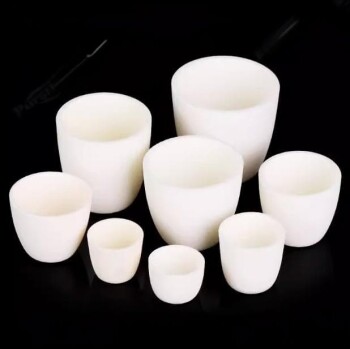
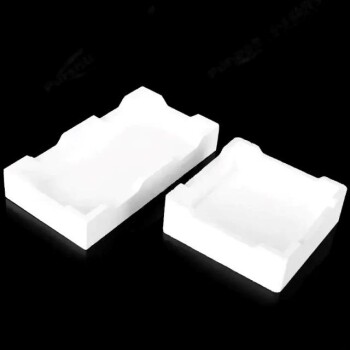
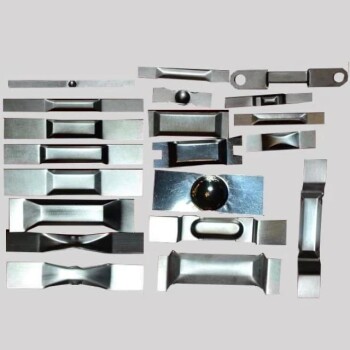
High-purity alumina (Al₂O₃) ceramic carriers are strictly required to ensure data integrity during high-temperature oxidation experiments. In environments exceeding 1200°C, these vessels provide the necessary chemical inertness to prevent reaction with FeCrAl alloy samples. This neutrality is essential for isolating the specific oxidation behaviors of the alloy without interference from container contamination.
The core function of high-purity alumina in this context is to act as a "silent witness." It must physically support the sample while remaining thermodynamically invisible, ensuring that any measured weight gain or surface change is derived solely from the alloy's oxidation process.
Preserving Chemical Integrity at Extremes
Absolute Chemical Inertness
The primary reason for selecting high-purity alumina is its resistance to chemical interaction at temperatures above 1200°C.
FeCrAl alloys generate a specific oxide scale during these experiments.
Alumina carriers ensure that neither the base alloy nor its developing oxide scale reacts with the vessel, which would otherwise alter the sample's chemical composition.
Preventing Cross-Contamination
Standard ceramics often contain impurities that can migrate into a sample at high heat.
High-purity alumina eliminates this variable, preventing foreign elements from diffusing into the FeCrAl alloy.
This ensures that the surface morphology analysis reflects the alloy's true characteristics rather than artifacts caused by contact reactions.
Ensuring Accuracy in Quantitative Analysis
Stability for Mass Measurement
Oxidation experiments often rely on precise thermogravimetric analysis (measuring weight change over time).
High-purity alumina maintains a constant mass throughout the heating cycle, resisting volatilization or weight loss.
This stability guarantees that real-time weight changes recorded by electronic balances are attributed exclusively to the oxidation reaction of the alloy, not the degradation of the carrier.
Structural Reliability
At temperatures around 1200°C, materials can soften or deform under load.
Alumina possesses excellent thermal stability and structural strength, allowing it to support the weight of the alloy without warping.
This maintains consistent sample positioning, which is vital for uniform exposure to the oxidizing atmosphere.
Distinctions and Common Pitfalls
The Importance of Purity
Not all alumina is created equal; "high-purity" is the operative requirement.
Lower-grade ceramics may contain binders or silicates that can melt or react at lower temperatures, compromising the experiment.
Always verify the purity grade to ensure it matches the thermal requirements of the 1200°C+ environment.
Solid-State vs. Liquid-Phase Distinctions
It is critical to distinguish between solid-state oxidation experiments and liquid-phase smelting.
While alumina is ideal for solid oxidation studies, other materials like Magnesia are preferred for smelting molten FeCrAl alloys to resist corrosion from the liquid metal.
Using the correct crucible material for the specific phase of the metal (solid vs. molten) is essential for preventing catastrophic container failure.
Making the Right Choice for Your Goal
When designing your experimental setup, select your carrier based on the specific analytical outcome you require.
- If your primary focus is Mass Gain Analysis: Ensure the alumina carrier has been pre-fired or verified for constant mass to prevent baseline drift in your weight measurements.
- If your primary focus is Surface Microscopy: Prioritize the highest available purity to prevent micro-adhesion between the sample and the boat, which could tear the oxide scale upon removal.
High-purity alumina provides the clean, stable baseline necessary to turn high-temperature variables into reliable data.
Summary Table:
| Feature | High-Purity Alumina (Al₂O₃) | Lower-Grade Ceramics |
|---|---|---|
| Chemical Inertness | Absolute; prevents reaction with FeCrAl | Risk of reaction with alloy/oxide scale |
| Thermal Stability | Maintains structure up to 1200°C+ | Potential softening or deformation |
| Mass Stability | Constant mass (no volatilization) | Variable mass due to binder loss |
| Purity Impact | Zero diffusion of impurities | Risk of silicate/impurity migration |
| Best Use Case | Solid-state oxidation & TGA | Low-temperature general heating |
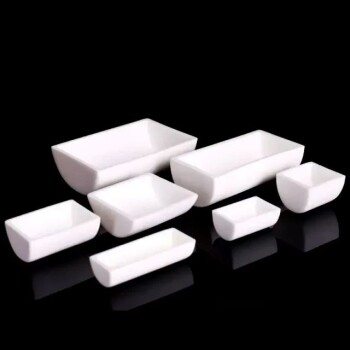
Precision in material science begins with the right consumables. KINTEK provides the high-purity alumina boats, crucibles, and ceramics necessary for high-accuracy FeCrAl oxidation studies. Beyond premium ceramics, we offer a full suite of laboratory solutions—from high-temperature muffle and vacuum furnaces to advanced crushing systems and hydraulic presses. Ensure your data's integrity with KINTEK's specialized equipment for battery research, cooling, and heat treatment. Contact us today to optimize your experimental setup!
References
- Vipul Gupta, Raúl B. Rebak. Utilizing FeCrAl Oxidation Resistance Properties in Water, Air and Steam for Accident Tolerant Fuel Cladding. DOI: 10.1149/08502.0003ecst
This article is also based on technical information from Kintek Solution Knowledge Base .
Related Products
- Alumina Al2O3 Ceramic Crucible Semicircle Boat with Lid for Engineering Advanced Fine Ceramics
- Aluminized Ceramic Evaporation Boat for Thin Film Deposition
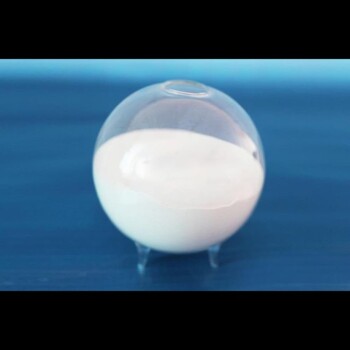
- High Purity Alumina Granulated Powder for Engineering Advanced Fine Ceramics
- Ceramic Evaporation Boat Set Alumina Crucible for Laboratory Use
- High Quality Alumina Ceramic Screw for Engineering Advanced Fine Ceramics with High Temperature Resistance and Insulation
People Also Ask
- Why are alumina crucibles and mother powder essential for LATP sintering? Optimize Your Solid Electrolyte Performance
- Why are high-purity alumina crucibles used for liquid lead corrosion experiments? Ensure Data Accuracy at 550°C
- Why Use Alumina Crucibles & Powder Burial for NaSICON? Ensure Phase Purity and Prevent Elemental Volatilization
- What is the primary purpose of using alumina crucibles for LLTO ceramics? Optimize Your High-Temperature Sintering
- What are the benefits of using an alumina crucible with a lid for TiB2 nanopowder heat treatment? Ensure High Purity