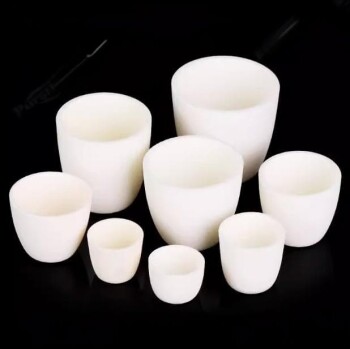
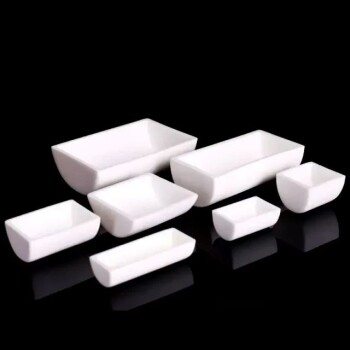
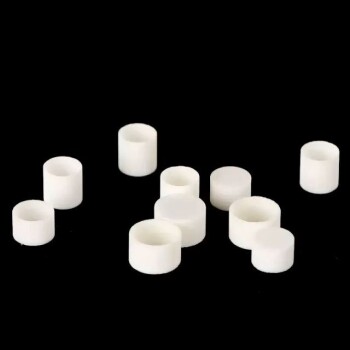
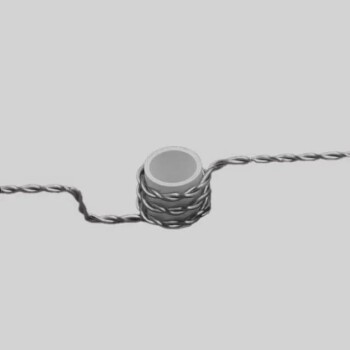
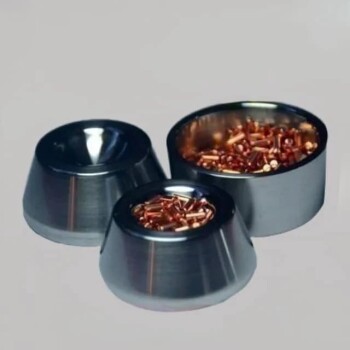
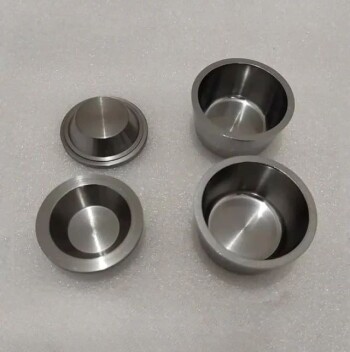
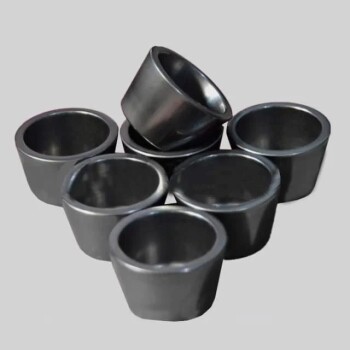
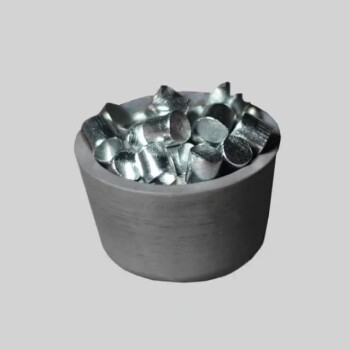
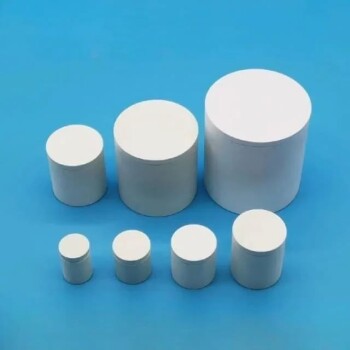
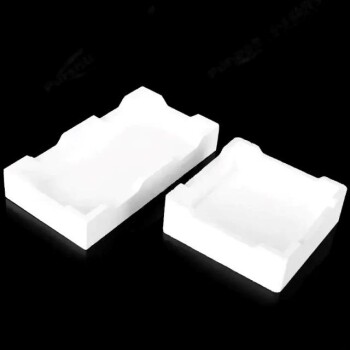
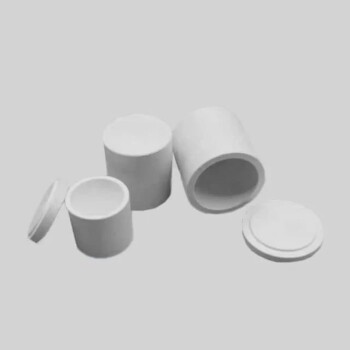
Alumina crucibles and combustion boats primarily serve as thermally stable reaction vessels designed to withstand the rigors of calcining LLZO green pellets at 1000°C. Beyond acting as a physical container, they play a critical active role in stabilizing the material's crystal structure and managing the volatile chemical environment required for high-performance solid electrolytes.
Core Insight: While the alumina vessel provides the necessary structural integrity for high-temperature synthesis, its value extends to chemical stabilization. It can act as a passive source of aluminum dopant to maintain the highly conductive cubic phase of LLZO and, when sealed, creates a micro-environment that minimizes critical lithium loss.
Thermal and Structural Integrity
Withstanding Extreme Heat
The primary reference establishes that alumina vessels are selected for their ability to maintain structural integrity in high-temperature oxidizing environments.
At 1000°C, many materials soften or degrade. Alumina remains rigid and stable, ensuring the green pellets are held securely throughout the prolonged calcination process.
Resistance to Thermal Shock
The heating and cooling cycles involved in calcination place immense stress on reaction vessels.
Alumina possesses sufficient thermal shock resistance to endure these rapid temperature changes without cracking. This ensures the physical safety of the synthesized powder and prevents equipment failure inside the furnace.
Chemical Interaction and Phase Stabilization
The Role of Aluminum Doping
Unlike completely inert vessels, alumina crucibles can interact beneficially with LLZO during synthesis.
At high temperatures, the crucible can act as a source of aluminum. This aluminum diffuses into the LLZO pellets, serving as a dopant.
Stabilizing the Cubic Phase
This unintended or calculated doping is chemically significant. The introduction of aluminum helps stabilize the cubic phase structure of the LLZO.
Without this stabilization, LLZO tends to revert to the tetragonal phase during cooling. The tetragonal phase has significantly lower ionic conductivity, rendering the material less effective as a solid electrolyte.
Managing Atmosphere and Volatility
Counteracting Lithium Volatility
A major challenge in sintering LLZO is the high volatility of lithium at 1000°C.
If lithium evaporates unchecked, the material undergoes surface phase transitions and loses ionic conductivity. The crucible acts as the first line of defense in containing the local atmosphere.
Creating a Lithium-Rich Environment
To be effective against volatility, the specific configuration of the crucible matters.
Utilizing a sealed alumina crucible allows you to maintain a lithium-rich atmosphere around the pellets. This is often enhanced by covering samples with "mother powder" (sacrificial powder of the same composition) within the crucible to compensate for any lithium loss.
Understanding the Trade-offs
The Risk of Uncontrolled Doping
While aluminum diffusion from the crucible can be beneficial for phase stability, it is an uncontrolled process.
Relying solely on the crucible for doping can lead to inconsistent aluminum concentrations in your final pellets. This may affect the precise stoichiometry required for specific electrochemical baselines.
Limitations of Open Boats
Combustion boats are typically open-top vessels.
While they effectively hold pellets and withstand heat, an open boat offers minimal protection against lithium volatilization compared to a sealed crucible. Using an open boat requires more aggressive compensation strategies, such as excess lithium in the starting precursor, to offset the inevitable loss.
Making the Right Choice for Your Goal
To ensure the best results for your specific synthesis targets, apply the following guidelines:
- If your primary focus is maximizing ionic conductivity: Use a sealed alumina crucible to retain lithium and leverage the aluminum doping effect to stabilize the high-conductivity cubic phase.
- If your primary focus is precise stoichiometry control: Be aware that the crucible will introduce aluminum; you may need to account for this in your precursor calculations or consider a liner if zero aluminum contamination is required.
Alumina crucibles are more than just containers; they are active participants in the synthesis chemistry that determine the final phase purity and performance of your LLZO electrolyte.
Summary Table:
| Feature | Function in LLZO Calcination | Key Benefit |
|---|---|---|
| Thermal Stability | Withstands 1000°C in air atmosphere | Maintains structural integrity & sample safety |
| Phase Stabilization | Acts as a source for aluminum doping | Stabilizes high-conductivity cubic phase |
| Atmosphere Control | Contains local lithium-rich environment | Minimizes lithium loss due to high volatility |
| Physical Containment | Resists thermal shock during cycles | Prevents cracking and sample contamination |
Elevate Your Battery Research with KINTEK
Precision in calcination is critical for high-performance LLZO solid electrolytes. KINTEK provides specialized laboratory equipment, including high-purity alumina crucibles, combustion boats, and muffle furnaces, specifically designed to withstand extreme thermal stress while ensuring chemical stability.
Whether you are focusing on precise stoichiometry or maximizing ionic conductivity, our team offers the high-temperature solutions and ceramics (PTFE, crucibles, and liners) your lab needs for consistent results.
Ready to optimize your synthesis process? Contact KINTEK today for expert guidance and high-quality lab consumables!
Related Products
- Arc-Shaped Alumina Ceramic Crucible High Temperature Resistant for Engineering Advanced Fine Ceramics
- Alumina Al2O3 Ceramic Crucible Semicircle Boat with Lid for Engineering Advanced Fine Ceramics
- Engineering Advanced Fine Ceramics Alumina Al2O3 Crucible With Lid Cylindrical Laboratory Crucible
- Engineering Advanced Fine Ceramics Alumina Crucibles (Al2O3) for Thermal Analysis TGA DTA
- Engineering Advanced Fine Alumina Al2O3 Ceramic Crucible for Laboratory Muffle Furnace
People Also Ask
- Why Use Alumina Crucibles & Powder Burial for NaSICON? Ensure Phase Purity and Prevent Elemental Volatilization
- What is the primary purpose of using alumina crucibles for LLTO ceramics? Optimize Your High-Temperature Sintering
- Why are alumina crucibles and mother powder essential for LATP sintering? Optimize Your Solid Electrolyte Performance
- Why are high-purity alumina crucibles used for liquid lead corrosion experiments? Ensure Data Accuracy at 550°C
- Primary considerations for choosing alumina crucibles and quartz tubes in indium intercalation: Ensure Material Purity