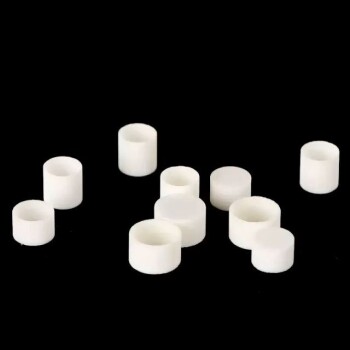
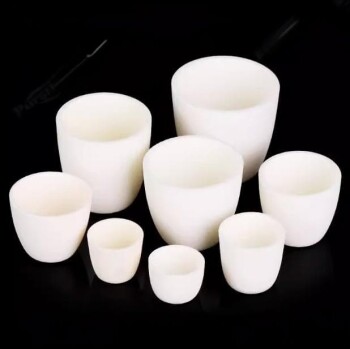
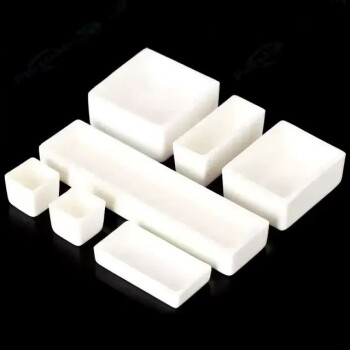
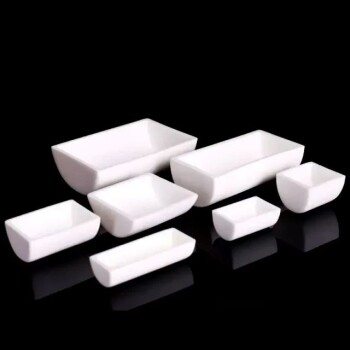
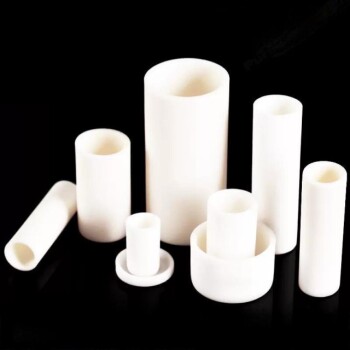
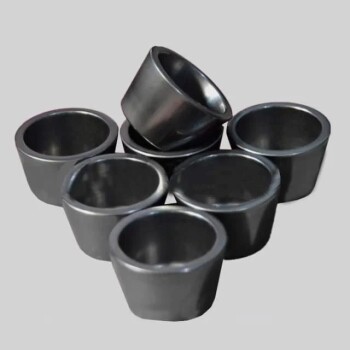
The primary reason for using Alumina (Al2O3) crucibles in the Thermogravimetric Analysis (TGA) of Bicyclic Carbonates is their chemical inertness and thermal stability. These properties ensure that the crucible acts as a completely passive container, preventing any chemical reactions with the sample that could skew the mass loss data.
Core Takeaway Alumina crucibles provide a neutral testing environment up to 600 °C, ensuring that measured mass loss is solely due to the Bicyclic Carbonate's own degradation mechanisms—specifically carbonate pyrolysis and ether bond breakage—rather than interaction with the crucible.
The Critical Role of Chemical Inertness
Preventing Reaction Artifacts
In TGA, the integrity of the data depends on the sample reacting only to heat, not to the container holding it.
Alumina is chosen because it remains chemically inert when in contact with Bicyclic Carbonates.
This prevents the formation of secondary compounds that would alter the weight of the sample and invalidate the results.
Isolating Decomposition Mechanisms
Bicyclic Carbonates degrade in specific, measurable stages.
The first stage typically involves carbonate pyrolysis, followed by a second stage of ether bond breakage.
Because the Alumina crucible does not interfere, researchers can distinctly observe these specific chemical events without "noise" from crucible-sample interactions.
Thermal Stability and Data Precision
Withstanding High Temperatures
The analysis of Bicyclic Carbonates requires heating samples to significant temperatures to induce breakdown.
Alumina crucibles maintain their structural and chemical integrity up to 600 °C in an inert atmosphere.
This stability allows the experiment to cover the full decomposition range of the material without the crucible degrading or off-gassing.
Accurate Decomposition Metrics
The goal of TGA is to identify specific metrics, such as the initial decomposition temperature and the maximum decomposition rate.
If the crucible were to react or catalyze the sample, these temperature points would shift.
Using Alumina ensures that the thermal profile recorded reflects the true properties of the Bicyclic Carbonate.
Understanding the Trade-offs
Thermal Conductivity Considerations
While Alumina is chemically superior for this application, it has lower thermal conductivity than metal crucibles like platinum.
This can theoretically introduce a slight thermal lag between the furnace temperature and the sample temperature, though this is generally negligible for standard degradation studies.
Porosity and Cleaning
Alumina surfaces can be slightly porous compared to metals.
If the Bicyclic Carbonate melts before decomposing, residues might penetrate the surface, making the crucible difficult to clean perfectly for reuse.
Making the Right Choice for Your Goal
To ensure your TGA data is valid, select your crucible based on your specific analytical requirements:
- If your primary focus is Chemical Accuracy: Use Alumina to guarantee that all mass loss is attributed strictly to the sample's pyrolysis and bond breakage.
- If your primary focus is Temperature Range: Rely on Alumina for experiments requiring stability up to 600 °C in inert atmospheres.
Ultimately, the choice of Alumina is a choice for data purity, isolating the sample's behavior from its environment.
Summary Table:
| Feature | Benefit for Bicyclic Carbonate TGA |
|---|---|
| Chemical Inertness | Prevents reactions between sample and crucible, ensuring pure mass loss data. |
| Thermal Stability | Maintains structural integrity up to 600 °C in inert atmospheres. |
| Mechanism Isolation | Allows clear observation of carbonate pyrolysis and ether bond breakage. |
| Data Precision | Ensures accurate detection of initial decomposition and maximum rate temperatures. |
Elevate Your Thermal Analysis with KINTEK Precision
Don't let crucible interference compromise your research integrity. KINTEK specializes in high-performance laboratory equipment and consumables designed for the most demanding analytical environments. From our chemically inert Alumina and ceramic crucibles to our advanced high-temperature furnaces and TGA-compatible solutions, we provide the tools you need for absolute data accuracy.
Whether you are analyzing bicyclic carbonates, developing battery materials, or conducting high-pressure research, KINTEK offers a comprehensive range of:
- Crucibles & Ceramics: Alumina, PTFE, and high-purity ceramic consumables.
- Thermal Processing: Muffle, tube, and vacuum furnaces for precise heat treatment.
- Advanced Reactors: High-temperature high-pressure reactors and autoclaves.
- Lab Essentials: Hydraulic presses, milling systems, and cooling solutions.
Ready to optimize your lab's performance? Contact our technical experts today to find the perfect fit for your specific application!
References
- Edyta Hebda, Krzysztof Pielichowski. Synthesis of Bis(cyclic carbonates) from Epoxy Resin under Microwave Irradiation: The Structural Analysis and Evaluation of Thermal Properties. DOI: 10.3390/molecules29010250
This article is also based on technical information from Kintek Solution Knowledge Base .
Related Products
- Engineering Advanced Fine Ceramics Alumina Crucibles (Al2O3) for Thermal Analysis TGA DTA
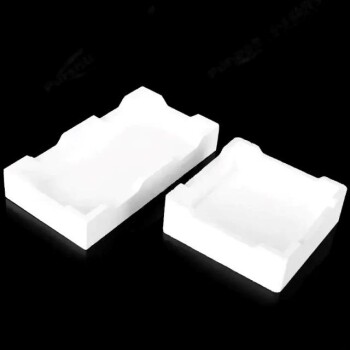
- Arc-Shaped Alumina Ceramic Crucible High Temperature Resistant for Engineering Advanced Fine Ceramics
- Engineering Advanced Fine Alumina Al2O3 Ceramic Crucible for Laboratory Muffle Furnace
- Alumina Al2O3 Ceramic Crucible Semicircle Boat with Lid for Engineering Advanced Fine Ceramics
- Engineering Advanced Fine Ceramics Alumina Al2O3 Crucible With Lid Cylindrical Laboratory Crucible
People Also Ask
- Why are alumina crucibles and mother powder essential for LATP sintering? Optimize Your Solid Electrolyte Performance
- Why are high-purity alumina crucibles used for liquid lead corrosion experiments? Ensure Data Accuracy at 550°C
- What is the primary purpose of using alumina crucibles for LLTO ceramics? Optimize Your High-Temperature Sintering
- Why Use Alumina Crucibles & Powder Burial for NaSICON? Ensure Phase Purity and Prevent Elemental Volatilization
- Primary considerations for choosing alumina crucibles and quartz tubes in indium intercalation: Ensure Material Purity