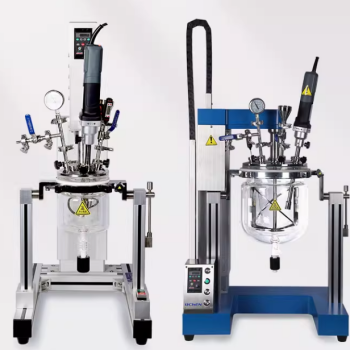
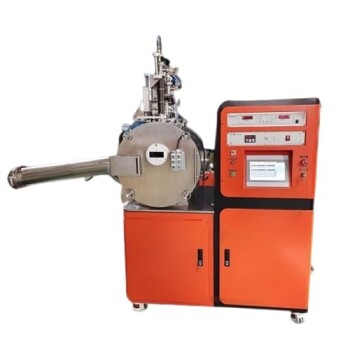
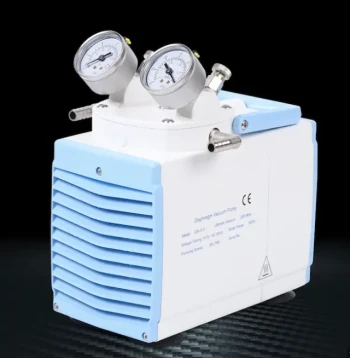
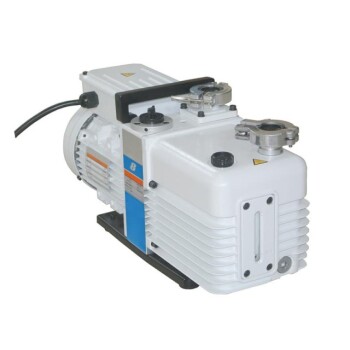
The primary function of a vacuum mixer in the preparation of all-solid-state battery electrodes is to blend active materials, conductive carbon, and binders within a solvent while simultaneously removing trapped gas. By operating in a vacuum environment, the device eliminates air bubbles from the slurry, ensuring the mixture is highly dispersed and uniform. This de-aeration process is essential for producing defect-free electrode coatings that serve as a reliable foundation for subsequent manufacturing steps.
The vacuum mixer serves a dual purpose: it creates a homogenous blend of electrode components and actively strips out micro-bubbles that would otherwise compromise the structural integrity of the coating.
The Mechanics of Defect-Free Slurries
Achieving Component Homogeneity
The fundamental task of the mixer is to combine three distinct elements: active materials, conductive carbon, and binders.
These components are mixed within a solvent to create a flowable slurry. This stage determines the initial distribution of particles, which dictates the electrical and ionic conductivity of the final electrode.
The Critical Role of De-aeration
Standard mixing introduces air into the slurry, creating trapped bubbles.
The vacuum mixer operates under low pressure to forcibly extract these air pockets during the agitation process. Eliminating these bubbles is not merely cosmetic; it prevents the formation of voids that would interrupt the conductive pathways in the dried electrode.
Why Vacuum Mixing is Critical for Solid-State Batteries
Ensuring Uniform Dispersion
In all-solid-state batteries, the contact between particles must be intimate and continuous.
The vacuum environment ensures that all components are highly and uniformly dispersed throughout the solvent. This uniformity prevents agglomeration (clumping), which is a primary cause of uneven current distribution and localized failure points.
Pre-requisite for Electrolyte Infiltration
The coating produced by the vacuum mixer acts as a porous skeleton or foundation.
According to standard fabrication protocols, this coating often undergoes subsequent electrolyte infiltration. If the initial slurry contains bubbles or defects, the infiltration process will be inconsistent, leading to poor interfacial contact and reduced battery performance.
Distinguishing Mixing from Drying: A Vital Clarification
Mixing vs. Moisture Removal
It is critical not to confuse the vacuum mixer with the vacuum drying oven.
The mixer removes air bubbles to ensure physical uniformity. The drying oven, used in later stages, utilizes low-pressure heating to eliminate organic solvents and trace moisture.
Handling Sensitive Electrolytes
While the mixer prepares the physical structure, downstream drying is required for chemical stability.
Sulfide electrolytes, such as Li10GeP2S12 (LGPS), are highly sensitive to moisture and can generate toxic hydrogen sulfide (H2S) gas if wet. Therefore, while the mixer ensures a bubble-free coating, a separate vacuum drying step is essential to prevent internal side reactions and ensure cycling stability.
Optimizing Your Electrode Fabrication Process
To ensure high-performance composite electrodes, you must align your equipment choices with your specific processing goals:
- If your primary focus is Structural Integrity: Prioritize vacuum mixing parameters that maximize de-aeration to prevent voids and ensure a defect-free coating for electrolyte infiltration.
- If your primary focus is Chemical Stability: Ensure your process flow includes a rigorous vacuum drying stage after coating to remove all solvents and moisture, protecting sensitive sulfide electrolytes.
A high-quality vacuum mixing process is the non-negotiable first step in creating the defect-free microstructure required for viable all-solid-state batteries.
Summary Table:
| Feature | Primary Function | Impact on Battery Quality |
|---|---|---|
| Homogenization | Blends active materials, carbon, and binders | Ensures uniform ionic and electrical conductivity |
| De-aeration | Removes trapped air bubbles under vacuum | Prevents voids and physical defects in electrode coating |
| Dispersion | Eliminates particle agglomeration | Provides a reliable foundation for electrolyte infiltration |
| Structural Integrity | Creates a dense, uniform slurry | Minimizes localized failure points and improves cycling stability |
Elevate Your Battery Research with KINTEK Precision
Achieving the perfect electrode microstructure requires more than just mixing—it requires total control over the vacuum environment. KINTEK specializes in advanced laboratory equipment designed for the rigorous demands of all-solid-state battery fabrication.
Our comprehensive range of vacuum mixers, high-temperature furnaces, and battery research tools ensures your slurries are defect-free and your electrolytes remain stable. Whether you are working with sensitive sulfide electrolytes or advanced composite electrodes, KINTEK provides the high-performance solutions—including hydraulic presses, planetary ball mills, and ULT freezers—needed to accelerate your energy storage innovations.
Ready to optimize your electrode fabrication process? Contact KINTEK today to discuss your project requirements!
Related Products
- High Performance Lab Homogenizer for Pharma Cosmetics and Food R&D
- Vacuum Cold Mounting Machine for Sample Preparation
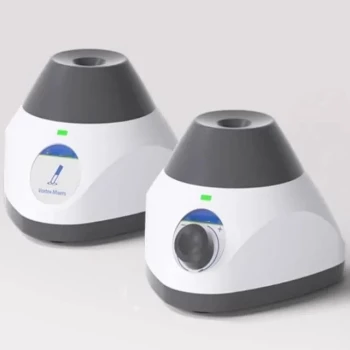
- Laboratory Vortex Mixer Orbital Shaker Multifunctional Rotation Oscillation Mixer
- Electric Heated Hydraulic Vacuum Heat Press for Lab
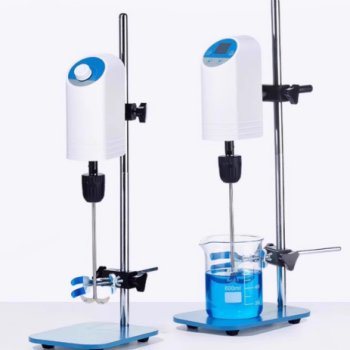
- High Performance Laboratory Stirrers for Diverse Applications
People Also Ask
- Why is a high-performance homogenizer essential for Fe3O4@C9 anode slurries? Boost Battery Performance & Stability.
- What is the primary function of high-performance homogenizers for SAPO-34 MMMs? Ensure Superior Gas Separation Efficiency
- How do lab stirrers & homogenizers ensure uniform distribution? Optimize Your Complex Multiphase Chemical Mixing
- What role does a laboratory homogenizer play in radioactive cesium detection? Ensure Accuracy in Wildlife Sampling
- How does a laboratory automatic masticator or homogenizer facilitate the processing of biofilm samples? Optimize Accuracy