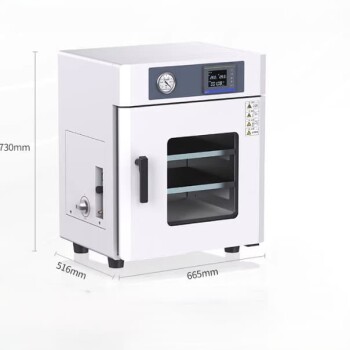
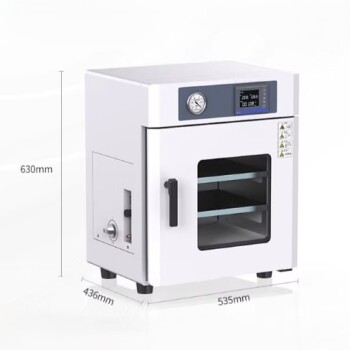
The primary function of laboratory ovens in this context is to isolate the dry mass of a sample by removing free water through constant temperature heating. This drying process serves as the standard method for determining moisture content, which is the critical baseline variable required to calibrate energy density and calculate all dry basis indicators.
Accurate moisture data is the non-negotiable prerequisite for thermochemical energy balance analyses. Because moisture content directly lowers net heating value, precise oven drying is essential to derive valid energy metrics from raw biomass.
The Role of Moisture in Energy Density
Establishing the Dry Basis
Laboratory ovens provide the controlled environment necessary to drive off moisture completely.
By weighing the sample before and after this drying process, you obtain the precise moisture content. This figure is mathematically required to convert raw data into "dry basis" indicators, which serve as the standard for comparing different biomass fuels.
Impact on Net Heating Value
The presence of water in biomass is not neutral; it actively degrades energy potential.
Moisture content directly lowers the net heating value of the fuel. Consequently, energy density calibration cannot be performed correctly without first quantifying exactly how much water must be accounted for and subtracted from the total mass.
Thermochemical Energy Balance
Beyond simple heat generation, accurate moisture data is vital for complex thermodynamic calculations.
The primary reference notes that obtaining this data via oven drying is a prerequisite for conducting full thermochemical energy balance analyses. Without this step, any theoretical model of the biomass's energy output will be fundamentally flawed.
Implications for Processing and Pyrolysis
Phase Separation Risks
Moisture determination extends beyond calculating heat; it also predicts physical behavior during processing.
Specifically, the moisture content affects phase separation in pyrolysis oil. Understanding the initial water content via oven testing helps predict the stability and quality of the resulting bio-oil products.
Common Pitfalls to Avoid
The Risk of Imprecise Equipment
The reference emphasizes the need for precise laboratory ovens.
Using equipment that fluctuates in temperature or fails to maintain a constant heat environment will result in incomplete drying or sample degradation.
Data Dependency Errors
A common error in energy calibration is treating moisture content as a secondary variable.
It must be treated as a prerequisite. If the initial moisture determination is inaccurate, every subsequent calculation—from dry basis indicators to energy density—will be incorrect, rendering the entire analysis invalid.
Making the Right Choice for Your Goal
To ensure your biomass characterization is actionable, prioritize the following based on your specific objectives:
- If your primary focus is Energy Valuation: Ensure your oven provides constant heating to accurately quantify the moisture that is lowering your net heating value.
- If your primary focus is Pyrolysis Processing: Use precise moisture data to anticipate potential issues with phase separation in your resulting bio-oils.
Reliable energy density calibration begins and ends with the accuracy of your moisture determination.
Summary Table:
| Process Variable | Role of Laboratory Oven | Impact on Energy Metrics |
|---|---|---|
| Moisture Content | Removes free water via constant heat | Essential for dry basis conversion |
| Net Heating Value | Quantifies energy-lowering water mass | Determines actual fuel energy density |
| Energy Balance | Provides critical baseline data | Prerequisite for thermodynamic models |
| Pyrolysis Quality | Predicts bio-oil stability | Prevents phase separation in bio-oil |
Elevate Your Biomass Research with KINTEK Precision
Accuracy in moisture determination is the cornerstone of energy density calibration. At KINTEK, we specialize in providing high-performance laboratory equipment including precision muffle and tube furnaces, high-temperature ovens, and crushing systems designed to meet the rigorous demands of biomass analysis and thermochemical research.
Whether you are performing energy valuation or complex pyrolysis processing, our solutions ensure consistent heat distribution and reliable data. Don't let imprecise drying compromise your energy metrics.
Contact KINTEK today to optimize your lab’s efficiency!
References
- Paul Tanger, Jan E. Leach. Biomass for thermochemical conversion: targets and challenges. DOI: 10.3389/fpls.2013.00218
This article is also based on technical information from Kintek Solution Knowledge Base .
Related Products
- Laboratory Scientific Electric Heating Blast Drying Oven
- 56L Vertical Laboratory Vacuum Drying Oven
- 23L Laboratory Vacuum Drying Oven
- 1200℃ Muffle Furnace Oven for Laboratory
- 1700℃ Muffle Oven Furnace for Laboratory
People Also Ask
- How does a laboratory electric drying oven contribute to the formation of the initial coating? Expert Insights
- What role does a precision laboratory drying oven play in the synthesis of GO-PANI nanocomposites? Protect Material Integrity
- What role does a laboratory drying oven play in the preparation of zinc oxide nanoparticle precursors?
- What is the necessity of using a laboratory drying oven when processing MoO3/GO composite nanopowders? Find out here.
- What is the role of a laboratory drying oven in cellulose citrate production? Ensure Material Stability & Purity