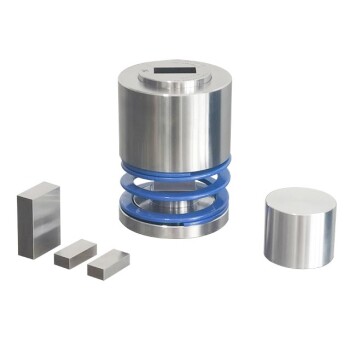
The primary role of a high-pressure reactor is to generate a sealed, high-energy environment that drives the hydrothermal or solvothermal synthesis of graphene oxide (GO)-based metal hybrid materials. This equipment facilitates high temperatures and pressures that are otherwise unattainable in open systems, significantly enhancing the solubility and reaction activity of precursor molecules. Consequently, this allows for the uniform nucleation and growth of metal oxide crystals—such as nickel oxide or copper oxide—directly onto graphene oxide nanosheets.
The reactor does not merely contain the reaction; it fundamentally alters the physical properties of the solvent and precursors to enable the construction of complex, three-dimensional hybrid structures with highly exposed active sites.
The Mechanics of Synthesis Enhancement
Elevating Precursor Solubility
In standard atmospheric conditions, many metal precursors exhibit limited solubility. The high-pressure environment within the reactor drastically increases this solubility. This ensures that reactants are fully dissolved and available for the synthesis process.
Driving Reaction Activity
The sealed environment allows the system to reach temperatures well above the boiling point of the solvent. This creates a high-energy state that accelerates reaction kinetics. The result is a more efficient conversion of precursors into the desired metal hybrid materials.
Uniform Crystal Nucleation
A major challenge in hybrid synthesis is preventing the aggregation of metal particles. The controlled environment promotes the uniform nucleation of metal oxides on the GO surface. This results in a consistent distribution of materials like nickel oxide or copper oxide across the nanosheets.
Engineering the Material Structure
Creating Three-Dimensional Architectures
The pressure-mediated process helps organize the materials into robust 3D structures. This structural integrity is vital for practical applications where material stability is required. Unlike simple 2D layering, these 3D forms often possess superior mechanical properties.
Maximizing Active Sites
The ultimate goal of this synthesis is often functional performance, such as pollutant removal. The high-pressure synthesis results in materials with highly exposed active sites. This maximizes the surface area available for chemical interactions, significantly improving the material's efficiency in water treatment applications.
Understanding the Trade-offs
Complexity of Process Control
While high-pressure reactors offer superior synthesis conditions, they require rigorous control systems. Operators must precisely manage temperature and pressure profiles using specialized closures and control units. A failure in these systems can lead to inconsistent crystallization or heterogeneous growth.
Hardware and Safety Demands
Utilizing subcritical or supercritical fluids necessitates robust hardware, often referred to as an autoclave. The equipment must include reliable pressure relief and secure closure mechanisms. This increases the operational cost and safety protocols compared to standard atmospheric synthesis methods.
Making the Right Choice for Your Goal
When deciding whether to employ a high-pressure reactor for your GO-hybrid synthesis, consider your specific performance metrics:
- If your primary focus is maximization of active sites: The high-pressure environment is critical for creating the 3D structures that expose the necessary surface area for pollutant removal.
- If your primary focus is material uniformity: The enhanced solubility provided by the reactor is the most reliable method to ensure homogeneous crystal growth across the graphene oxide surface.
By leveraging the high-pressure reactor, you transition from simple mixing to advanced crystal engineering, ensuring your hybrid materials achieve their full functional potential.
Summary Table:
| Feature | Role in GO-Metal Hybrid Synthesis | Benefit to Material Structure |
|---|---|---|
| High-Pressure Seal | Enables temperatures above boiling point | Accelerates reaction kinetics and solubility |
| Energy Environment | Drives hydrothermal/solvothermal processes | Promotes uniform nucleation on nanosheets |
| Structural Control | Facilitates 3D architecture formation | Prevents aggregation and ensures stability |
| Active Site Exposure | Maximizes accessible surface area | Enhances efficiency for water treatment/catalysis |
Elevate Your Material Research with KINTEK Precision
Are you looking to master the synthesis of complex graphene oxide hybrids or advanced metal-organic structures? KINTEK specializes in high-performance laboratory equipment, providing the robust high-temperature high-pressure reactors and autoclaves essential for achieving subcritical and supercritical synthesis conditions.
From crushing and milling systems for precursor preparation to precision heating solutions and hydraulic presses, we empower researchers and industrial labs with the tools needed for consistent, high-quality results. Let our expertise in high-pressure technology enhance your lab's efficiency and material performance.
Ready to optimize your synthesis process? Contact KINTEK today to find the perfect reactor for your application!
References
- Edith Flora Joel, Galina Lujanienė. Progress in Graphene Oxide Hybrids for Environmental Applications. DOI: 10.3390/environments9120153
This article is also based on technical information from Kintek Solution Knowledge Base .
Related Products
- Customizable Laboratory High Temperature High Pressure Reactors for Diverse Scientific Applications
- Customizable High Pressure Reactors for Advanced Scientific and Industrial Applications
- Stainless High Pressure Autoclave Reactor Laboratory Pressure Reactor
- Visual High-Pressure Reactor for In-Situ Observation
- Mini SS High Pressure Autoclave Reactor for Laboratory Use
People Also Ask
- How do high-pressure and high-temperature reactors ensure the effective treatment of lignocellulosic wastewater in WAO?
- What equipment is required for high-pressure high-temperature reactions? Master Extreme Chemistry Safely
- How do you control high pressure in a reactor? A Guide to Safe & Stable Operation
- Why is argon better than nitrogen for inert atmosphere? Ensure Absolute Reactivity & Stability
- How does initial oxygen pressure affect the wet oxidation of pharmaceutical sludge? Master Your Oxidation Depth