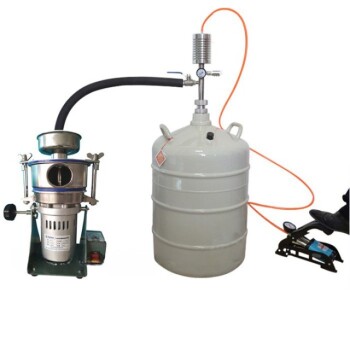
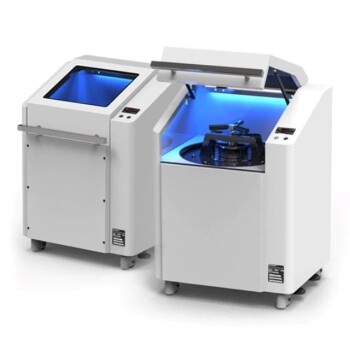
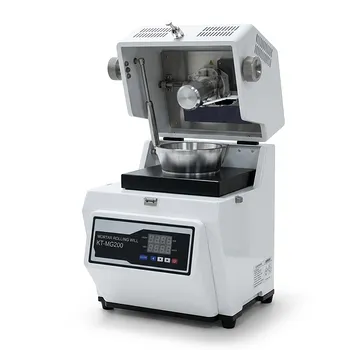
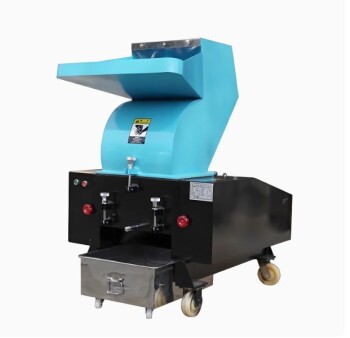
The use of a crushing and milling system followed by standard sieving is essential for transforming raw poplar wood into a standardized powder that ensures consistent heat and mass transfer. This specific preparation—typically involving a 40-60 mesh sieve—guarantees a uniform particle size, which is the foundational requirement for stabilizing the quality of biochar during subsequent thermal and chemical treatments.
By standardizing the physical dimensions of the biomass, researchers can eliminate variables related to particle geometry, allowing for predictable drying efficiency and uniform interaction between the wood matrix and chemical reagents.
Optimizing Heat and Mass Transfer Efficiency
Achieving Thermal Uniformity
During the torrefaction and carbonization phases, heat must penetrate the biomass uniformly to ensure a complete reaction. Uniform particle sizes prevent the "core-shell" effect, where the exterior of a large particle over-chars while the interior remains under-processed. This consistency is vital for maintaining a stable temperature gradient across all reactants.
Enhancing Drying and Mass Transfer
Small, uniform particles created by the milling process significantly improve drying efficiency by increasing the surface-area-to-volume ratio. This allows moisture and volatile gases to escape more freely during heating. Consequently, the mass transfer between the biomass particles and external agents (like ammonia or steam) becomes more predictable and efficient.
Maximizing Chemical Reactivity and Porosity
Increasing Geometric Specific Surface Area
Mechanical crushing breaks down the complex physical structure of wood chips into a fine powder, drastically increasing the geometric specific surface area. This physical modification ensures that a larger portion of the biomass is immediately accessible for chemical reactions. A higher surface area directly correlates to better performance in subsequent activation steps.
Promoting Uniform Contact with Modifiers
In biochar research involving chemical activation—such as the use of phosphoric acid or pore-forming agents—particle consistency is critical. A uniform powder ensures that chemical modifiers coat every particle evenly, preventing localized over-concentration or under-treatment. This results in a final biochar product with a highly consistent pore structure and homogenous chemical properties.
Ensuring Scientific Rigor and Reproducibility
Standardizing Experimental Variables
The use of standard sieving equipment (such as 40-60 mesh or 2 mm apertures) acts as a quality control gate that filters out outliers. By narrow-casting the particle size distribution, researchers ensure that every batch of biochar produced is physically identical. This standardization is fundamental for the reproducibility of adsorption data and other analytical results.
Facilitating Advanced Characterization
Consistent particle sizes are necessary for accurate downstream measurements, such as Zeta potential analysis or laser particle sizing. Milling biomass to a fine, micron-scale powder allows for the creation of stable suspensions required for these sensitive instruments. Without this preparation, macroscopic variations would mask the microscopic characteristics researchers aim to study.
Understanding the Trade-offs and Pitfalls
The Risk of Material Loss and Dust
Extensive milling and sieving can lead to significant material loss in the form of fine dust that passes through even the smallest sieves. This can be problematic if the starting raw material is limited. Additionally, excessive dust generation requires robust filtration and safety protocols to prevent inhalation hazards and laboratory contamination.
Impact of Over-Grinding on Structure
While smaller particles increase surface area, over-grinding can potentially destroy the natural tracheid and pore structures inherent in poplar wood. If the research goal is to utilize the wood's natural cellular architecture for filtration, excessive mechanical shear may be counterproductive. Balancing particle size with structural integrity is a key technical challenge.
How to Apply This to Your Biochar Research
Proper preparation depends on the specific goals of your thermal or chemical processing.
- If your primary focus is consistent carbonization: Use a crushing system and a 40-60 mesh sieve to ensure that heat transfer is uniform across all particles, preventing structural gradients.
- If your primary focus is chemical activation and porosity: Prioritize high-speed pulverization to maximize the specific surface area, allowing pore-forming agents to react deeply with the biomass matrix.
- If your primary focus is reproducible adsorption studies: Employ a strict sieving protocol to ensure a narrow particle size distribution, which stabilizes the contact efficiency during experimental trials.
Standardizing the physical state of your poplar wood is the most effective way to ensure that your final biochar results are driven by chemical variables rather than physical inconsistencies.
Summary Table:
| Process Step | Key Function | Research Benefit |
|---|---|---|
| Crushing & Milling | Reduces biomass to fine powder | Increases surface area and chemical reactivity |
| Standard Sieving | Ensures uniform particle size | Prevents 'core-shell' effects and stabilizes quality |
| 40-60 Mesh Prep | Standardizes physical dimensions | Guarantees predictable heat and mass transfer |
Elevate the precision of your biochar research with KINTEK’s industry-leading laboratory solutions. We specialize in high-performance crushing and milling systems and standard sieving equipment to ensure your poplar wood preparation is flawless. Beyond sample prep, KINTEK offers a full suite of high-temperature furnaces, high-pressure reactors, and autoclaves to stabilize your carbonization and activation processes. Contact us today to discover how our specialized tools can ensure the reproducibility and scientific rigor of your experimental data.
References
- Yiting Mao, Zhongqing Ma. A sustainable preparation strategy for the nitrogen-doped hierarchical biochar with high surface area for the enhanced removal of organic dye. DOI: 10.1007/s42773-023-00269-z
This article is also based on technical information from Kintek Solution Knowledge Base .
Related Products
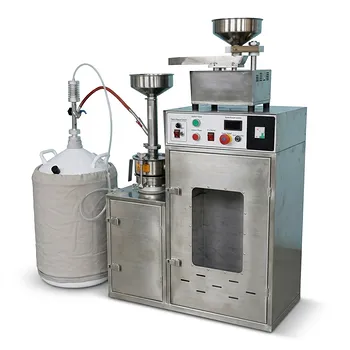
- Small Cryogenic Grinder Cryomill Cryogrinder with Liquid Nitrogen for Laboratory Use
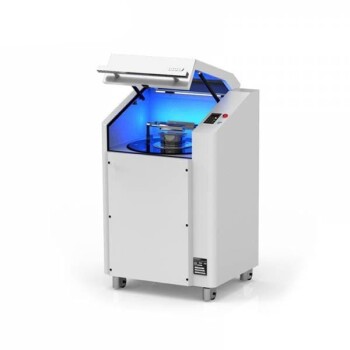
- Laboratory Jar Mill with Agate Grinding Jar and Balls
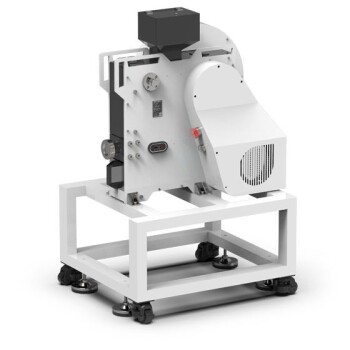
- High Energy Planetary Ball Mill Milling Machine for Laboratory
- High Energy Planetary Ball Mill Milling Machine for Laboratory
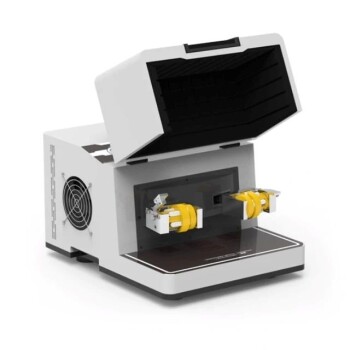
- Mini Planetary Ball Mill Machine for Laboratory Milling
People Also Ask
- What are the advantages of using a cryogenic grinder? Achieve Nanoscale Precision for All-Solid-State Battery Cathodes
- Why is a cryogenic grinder required for cured alkyd resin HRMAS NMR? Ensure Structural Integrity & Sample Precision
- What is the role of a cryogenic grinder in PET recycling? Transform Waste into High-Reactive Micron Powders
- What is cryogenic grinding of crumb rubber? Achieve Fine, High-Quality Rubber Powder
- What food is cryogenic grinding? The Ultimate Guide to Preserving Flavor & Aroma