Grinding is the essential bridge between raw dried material and a high-performance functional product. Processing dried nanocomposite powders through high-precision grinding or manual mortars is primarily done to break up agglomerates and reduce particle size to a fine, uniform state. This process increases the material's specific surface area, which is critical for ensuring uniform dispersion in slurries, improving coating quality, and maximizing the active sites available for electrochemical or chemical reactions.
The core purpose of precision grinding is to eliminate physical inconsistencies caused by material clustering during drying. By refining the powder, you ensure that the material can achieve its full theoretical performance during downstream processes like slurry preparation, sintering, or characterization.
Maximizing Material Reactivity and Consistency
Breaking Down Dried Agglomerates
During the drying phase, nanocomposite materials naturally form clusters or agglomerates that hinder performance. Using a grinding system or mortar applies mechanical force to separate these clusters back into individual particles or much smaller aggregates. This step is vital for transitioning from a "bulk gel" or "cake" state to a workable powder.
Increasing Specific Surface Area
Reducing particle size directly increases the exposed surface area of the material relative to its volume. A higher specific surface area provides more active sites for high-temperature heat treatments, photocatalytic reactions, and electrochemical interactions. This refinement ensures that the material reacts more efficiently and thoroughly.
Ensuring Representative Characterization
For researchers, the accuracy of testing depends on the sample's homogeneity. Grinding ensures that any small sample taken for characterization—such as XRD or SEM—is truly representative of the entire batch. Without this step, localized variations in the powder could lead to misleading data and poor reproducibility.
Impact on Downstream Manufacturing Processes
Improving Slurry Dispersion and Coating Quality
In battery manufacturing, powders must be mixed into a liquid slurry to coat current collectors. Precision grinding ensures that the powder can be uniformly dispersed, which prevents clumps and defects in the final coating. This uniformity is what allows for a smooth, high-quality electrode layer that maximizes the effective active area for energy storage.
Enhancing Sintering Activity and Density
When using techniques like Spark Plasma Sintering (SPS), the particle size distribution determines how well the powder packs into the mold. Grinding, often paired with sieving, reduces the "bridging effect" where large particles create empty voids. This results in a higher packing density and a final sintered composite with superior structural isotropy and strength.
Facilitating Mechanochemical Reactions
For certain synthesis routes, such as mixing Li2S and P2S5, manual grinding serves as a critical pre-treatment. By achieving macroscopically uniform mixing through grinding, subsequent mechanochemical reactions in a ball mill can proceed more rapidly. This reduces the presence of unreacted residual impurities in the final product.
Understanding the Trade-offs
The Risk of Material Contamination
While grinding is necessary, every contact between the powder and the equipment introduces a risk of contamination. Using high-quality tools like agate mortars or specialized pulverizers is essential to minimize the introduction of impurities from the grinding media itself.
Managing Heat and Material Degradation
High-precision mechanical grinding can generate significant localized heat, which may inadvertently alter the phase or crystal structure of sensitive nanocomposites. Manual grinding offers more control for delicate materials, but it lacks the throughput and extreme fineness achievable by automated industrial systems.
The Balance of Particle Size
Over-grinding can lead to particles that are too fine, which may cause them to re-agglomerate due to high surface energy. Finding the "sweet spot" for particle size is a technical necessity to maintain flowability and prevent processing bottlenecks in the later stages of production.
How to Apply Grinding to Your Project
Recommendations Based on Your Goal
Depending on your specific application, the approach to grinding should vary to prioritize the most important material properties.
- If your primary focus is electrochemical performance: Prioritize maximizing surface area through precision grinding to ensure the highest density of active reaction sites.
- If your primary focus is structural integrity and density: Use grinding in conjunction with precision sieving (e.g., 125 µm) to ensure a narrow particle size distribution for better mold packing.
- If your primary focus is chemical synthesis of raw materials: Utilize a manual mortar for intensive pre-mixing of precursors to ensure more thorough and rapid downstream reactions.
Precision grinding is the definitive step that transforms a raw, clustered material into a highly functional, reactive powder ready for advanced engineering applications.
Summary Table:
| Key Objective | Benefit for Nanocomposite Powders |
|---|---|
| Agglomerate Reduction | Breaks clusters to restore materials to a fine, uniform state. |
| Surface Area Boost | Increases active sites for better electrochemical and chemical reactions. |
| Homogenization | Ensures samples are representative for accurate XRD and SEM analysis. |
| Coating Excellence | Improves dispersion in slurries for defect-free battery electrode layers. |
| Sintering Efficiency | Increases packing density and structural strength in sintered composites. |
Elevate Your Material Performance with KINTEK Precision Solutions
Achieving the perfect particle size is critical for the success of your research and production. KINTEK specializes in high-performance laboratory equipment designed to bridge the gap between raw materials and functional products. We offer a comprehensive range of:
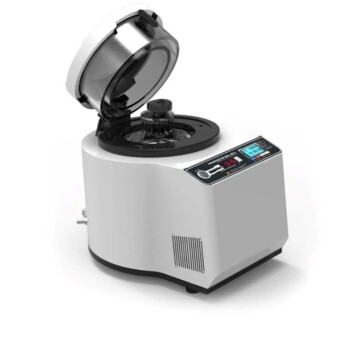
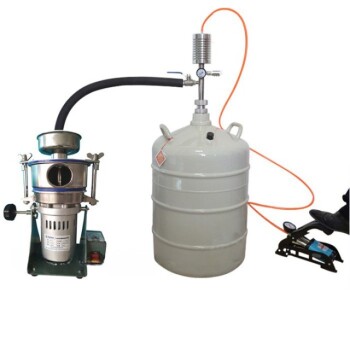
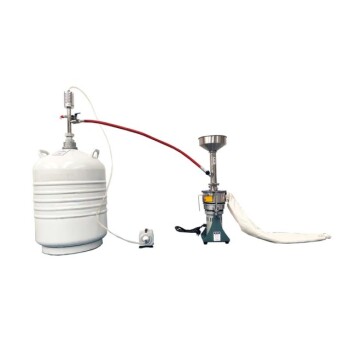
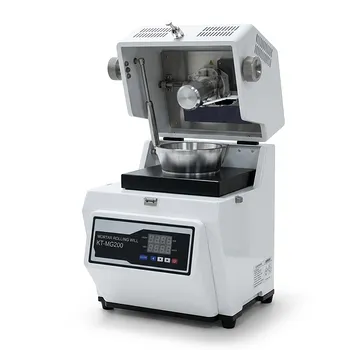
- Crushing & Milling Systems: High-precision grinders and pulverizers to eliminate agglomerates.
- Sieving Equipment: To ensure a narrow particle size distribution for superior density.
- Consumables: High-quality agate mortars, ceramic crucibles, and PTFE products to minimize contamination.
- Advanced Processing: From vacuum furnaces and hydraulic presses to high-pressure reactors and cooling solutions.
Whether you are refining battery slurries or synthesizing advanced ceramics, KINTEK provides the reliability and precision your lab demands.
Ready to optimize your powder processing workflow? Contact our technical experts today for a tailored solution!
References
- Shiva Bhardwaj, Ram K. Gupta. Bimetallic Co–Fe sulfide and phosphide as efficient electrode materials for overall water splitting and supercapacitor. DOI: 10.1186/s11671-023-03837-1
This article is also based on technical information from Kintek Solution Knowledge Base .
Related Products
- Laboratory High Throughput Tissue Grinding Mill Grinder
- Small Cryogenic Grinder Cryomill Cryogrinder with Liquid Nitrogen for Laboratory Use
- High Energy Planetary Ball Mill Milling Machine for Laboratory
- High Energy Planetary Ball Mill Milling Machine for Laboratory
- Liquid Nitrogen Cryogenic Grinder Mill Cryomill Airflow Ultrafine Pulverizer
People Also Ask
- What is the purpose of using a laboratory grinder and standard sieves? Unlock Precise Rice Husk Pretreatment
- What is the purpose of using a laboratory grinder with specific mesh sieves for oat straw? Optimize Pellet Quality
- What is the role of laboratory-grade grinders and sieves in sample prep? Ensure High-Precision Corrosion Analysis
- How do laboratory grinders and standard sieving systems ensure the quality of feedstock for torrefaction?
- What does a grinder do in a laboratory? Achieve Homogeneous Sample Preparation for Accurate Analysis