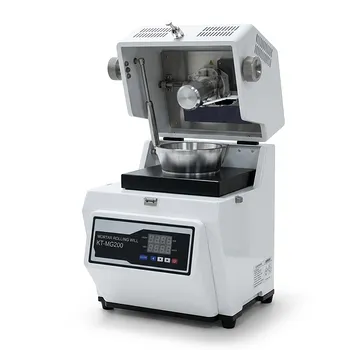
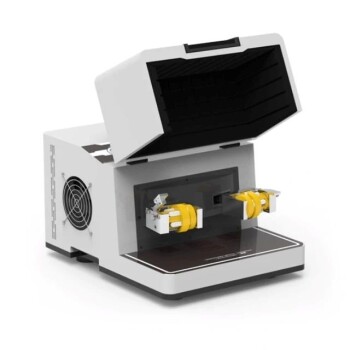
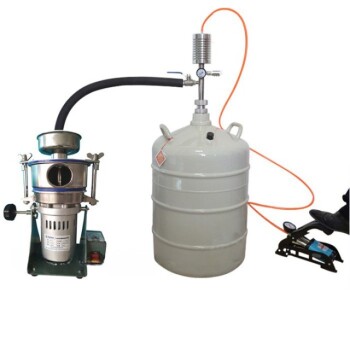
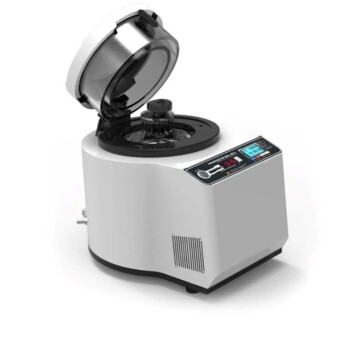
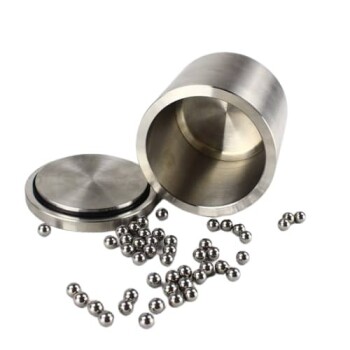
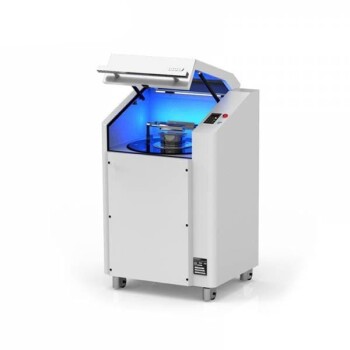
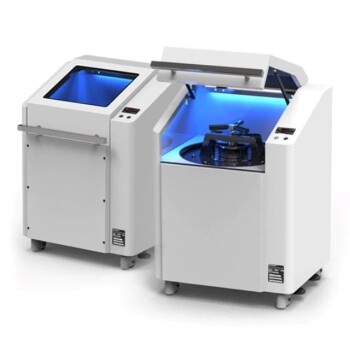
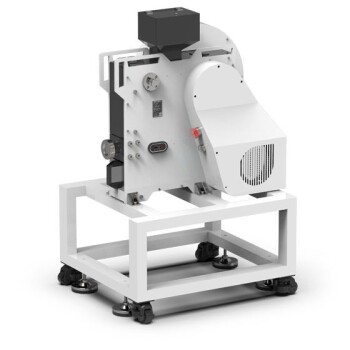
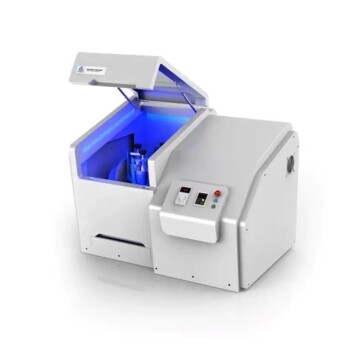
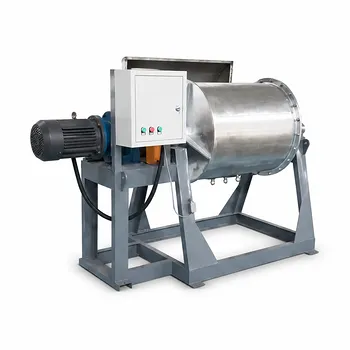
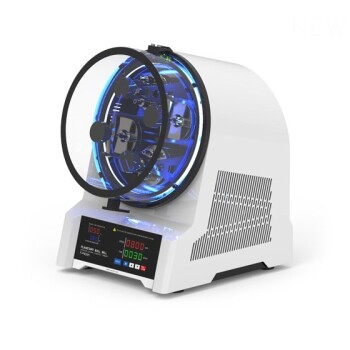
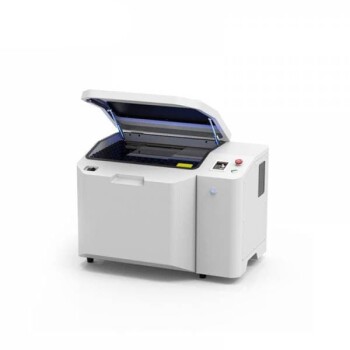
Laboratory grinding equipment is essential because it transforms solidified base glass into a fine powder, dramatically increasing its specific surface area. This physical transformation is the critical prerequisite for achieving microscopic contact between the glass host and the simulated fluoride waste. Without this step, the subsequent chemical integration during remelting would be inefficient and inconsistent.
The primary purpose of crushing and grinding is to maximize surface area, ensuring the solidified base glass and fluoride waste powders mix uniformly at a microscopic level. This intimate contact is strictly necessary to dissolve fluorides rapidly during thermal processing and achieve high waste loading capacities.
The Mechanics of Powder Preparation
Maximizing Surface Area
The grinding equipment mechanically breaks down the solidified base glass structure. This process exposes a significantly larger total surface area compared to bulk glass fragments.
Ensuring Microscopic Contact
High surface area allows the glass particles to interact physically with simulated radioactive powders. Specifically, it enables intimate contact with fluorides such as lithium fluoride (LiF), sodium fluoride (NaF), and potassium fluoride (KF).
Optimization of the Remelting Phase
Promoting Efficient Dissolution
The prepared mixture undergoes remelting at temperatures between 950°C and 1000°C. Because the particles are fine and well-mixed, the fluorides dissolve into the glass network rapidly and efficiently.
Achieving High Waste Loading
The ultimate goal of this process is high waste loading. Fine grinding ensures that the glass matrix can absorb the maximum amount of fluoride material, preventing the formation of undissolved waste pockets.
The Risks of Inadequate Preparation
Incomplete Mixing
Without fine grinding, the contact between the glass and waste remains macroscopic. This results in poor integration and heterogeneity within the final waste form.
Thermal Inefficiency
Larger particles inherently react slower. Omitting the grinding step would likely require higher temperatures or longer processing times to achieve the same level of chemical incorporation.
Making the Right Choice for Your Goal
To ensure the success of your vitrification process, consider your specific objectives:
- If your primary focus is Process Efficiency: Prioritize particle fineness to minimize the time required for dissolution at the 950°C to 1000°C range.
- If your primary focus is Waste Capacity: Focus on the uniformity of the mix to ensure the glass network can accommodate the highest possible volume of fluoride waste.
Effective waste immobilization begins not in the furnace, but in the physical preparation of the materials.
Summary Table:
| Process Phase | Key Benefit of Grinding | Technical Outcome |
|---|---|---|
| Preparation | Increased Surface Area | Maximum physical contact between glass and fluoride powders |
| Mixing | Microscopic Uniformity | Prevents undissolved waste pockets and ensures homogeneity |
| Remelting | Rapid Dissolution | Efficient chemical integration at 950°C - 1000°C |
| Final Form | High Waste Loading | Maximum absorption capacity of the glass matrix network |
Elevate Your Vitrification Research with KINTEK Precision
Successful waste immobilization starts with superior physical preparation. KINTEK specializes in advanced laboratory crushing and milling systems and sieving equipment designed to achieve the precise particle fineness required for fluoride waste integration.
Whether you are processing glass matrices or developing radioactive waste solutions, our comprehensive portfolio—including high-temperature furnaces, high-pressure reactors, and hydraulic pellet presses—provides the reliability your lab demands.
Ready to optimize your waste loading capacity and process efficiency? Contact our technical experts today to find the perfect grinding solution for your laboratory needs.
References
- Yaping Sun, Zhenghua Qian. Immobilization of simulated radioactive fluoride waste in phosphate glass. DOI: 10.1007/s40843-016-5010-x
This article is also based on technical information from Kintek Solution Knowledge Base .
Related Products
- Laboratory Grinding Mill Mortar Grinder for Sample Preparation
- Laboratory Hybrid Tissue Grinding Mill
- Vibrating Disc Mill Small Laboratory Grinding Machine
- Small Cryogenic Grinder Cryomill Cryogrinder with Liquid Nitrogen for Laboratory Use
- Laboratory High Throughput Tissue Grinding Mill Grinder
People Also Ask
- What laboratory apparatus is used for grinding? Match the Right Mill to Your Sample Material
- What is the function of a laboratory grinding mill? Achieve Precise Sample Preparation for Accurate Results
- What is the purpose of using a laboratory grinder and standard sieves? Unlock Precise Rice Husk Pretreatment
- What is the role of laboratory-grade grinders and sieves in sample prep? Ensure High-Precision Corrosion Analysis
- What is the purpose of using a laboratory grinder with specific mesh sieves for oat straw? Optimize Pellet Quality