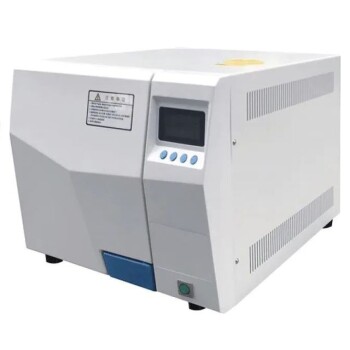
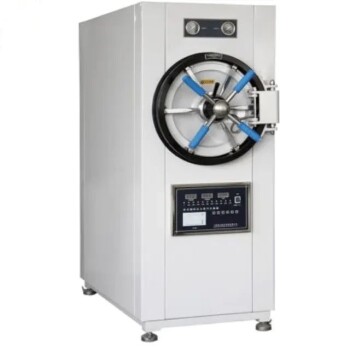
The primary purpose of using a high-temperature and high-pressure autoclave is to replicate the harsh operational environment of a Pressurized Water Reactor (PWR). By accurately establishing conditions such as 360°C and 18.8 MPa, researchers can subject Cr₂AlC coatings to a realistic simulation of the primary circuit's hydrothermal environment to test their durability.
An autoclave serves as a critical verification tool, ensuring that coatings can withstand reactor-grade heat and pressure without suffering from selective leaching or structural failure before they are deployed in active nuclear systems.
Replicating the Primary Circuit Environment
Precise Temperature and Pressure Control
The autoclave is essential because it allows for the precise maintenance of 360°C and 18.8 MPa. These specific parameters are not arbitrary; they represent the typical service conditions found within a PWR primary circuit.
Creating Hydrothermal Corrosion Conditions
Beyond simple heat and pressure, the device creates a specific hydrothermal environment. The autoclave can be configured to provide either static or dynamic flow conditions, mimicking the corrosive potential of the water chemistry found in an operating reactor.
Verifying Coating Stability
Detecting Selective Aluminum Leaching
A critical function of this testing is to determine if the coating acts chemically stable under stress. Specifically, the autoclave verifies whether the Cr₂AlC material will undergo selective aluminum leaching, a degradation process where aluminum atoms are stripped from the coating matrix.
Monitoring for Delamination
The test also assesses the mechanical integrity of the coating system. It determines if the combination of high pressure and thermal stress will cause the coating to separate from its substrate, known as coating delamination, during normal operations.
Understanding the Limitations
Simulation vs. Operational Complexity
While an autoclave effectively simulates thermal and hydraulic conditions, it is a controlled environment. It focuses specifically on hydrothermal corrosion, and users must distinguish between static tests and the dynamic flow realities of an active circuit.
Specificity of Failure Modes
The autoclave is designed to trigger specific failure modes like leaching and delamination. It is a tool for verification, meaning it confirms resilience against known threats rather than discovering undefined phenomena outside these hydrothermal parameters.
Making the Right Choice for Your Research
To effectively utilize autoclave testing for Cr₂AlC coatings, consider your specific objectives:
- If your primary focus is chemical stability: specific attention should be paid to post-test analysis for aluminum depletion, as this indicates how the material interacts with the hydrothermal environment.
- If your primary focus is mechanical longevity: prioritize checking for delamination, as this confirms the coating's ability to remain adhered under the physical stresses of 18.8 MPa pressure.
Ultimately, the autoclave provides the empirical data necessary to validate whether Cr₂AlC coatings can survive the rigor of nuclear power generation.
Summary Table:
| Feature | PWR Simulation Parameter | Research Objective |
|---|---|---|
| Temperature | 360°C | Replicate hydrothermal corrosion conditions |
| Pressure | 18.8 MPa | Assess mechanical integrity and delamination resistance |
| Environment | Primary Circuit Simulation | Detect selective aluminum leaching in coatings |
| Goal | Material Validation | Ensure safety and longevity in nuclear power systems |
Elevate Your Nuclear Research with Precision Engineering
To accurately simulate the harsh hydrothermal conditions of nuclear reactors, you need equipment that delivers uncompromising precision. KINTEK specializes in advanced laboratory solutions, offering high-performance high-temperature high-pressure reactors and autoclaves designed specifically for critical material stability testing.
Whether you are analyzing selective leaching in Cr2AlC coatings or testing the mechanical limits of next-generation materials, our comprehensive range—from muffle and vacuum furnaces to crushing systems and hydraulic presses—ensures your lab is equipped for success.
Ready to validate your material's performance? Contact us today to discover how KINTEK can enhance your laboratory’s research capabilities and ensure the durability of your innovations.
References
- Chongchong Tang, M. Steinbrück. High-temperature oxidation and hydrothermal corrosion of textured Cr2AlC-based coatings on zirconium alloy fuel cladding. DOI: 10.1016/j.surfcoat.2021.127263
This article is also based on technical information from Kintek Solution Knowledge Base .
Related Products
- High Pressure Laboratory Autoclave Reactor for Hydrothermal Synthesis
- Laboratory High Pressure Horizontal Autoclave Steam Sterilizer for Lab Use
- Stainless High Pressure Autoclave Reactor Laboratory Pressure Reactor
- Desktop Fast High Pressure Laboratory Autoclave Sterilizer 16L 24L for Lab Use
- Mini SS High Pressure Autoclave Reactor for Laboratory Use
People Also Ask
- What role does a high-pressure reactor (autoclave) play in the synthesis of NiCuFe-LDH? Master Hydrothermal Growth
- What Role Does a High-Pressure Reactor or Autoclave Play in HA Catalyst Synthesis? Achieve High Surface Area Materials
- What equipment is required for hydrothermal synthesis of Ga0.25Zn4.67S5.08? Optimize Your Semiconductor Production
- What is the function of a high-pressure reactor in the hydrothermal synthesis of boehmite? Expert Process Insights
- What role does an autoclave play in the synthesis of MnO2 nanofibers? Mastering Hydrothermal Growth