The primary purpose of a three-electrode electrolytic cell system is to isolate the intrinsic performance of a specific electrode, typically the anode, by removing interference from the rest of the electrolysis environment. This configuration allows researchers to decouple the Oxygen Evolution Reaction (OER) activity from external variables such as membrane resistance and cathode polarization.
By introducing a reference electrode, this system allows for the precise measurement of fundamental kinetic parameters in alkaline electrolytes, serving as a critical screening tool before assembling complex full-cell stacks.
Decoupling Intrinsic Activity
Eliminating System Interference
In a full-cell Anion Exchange Membrane Water Electrolysis (AEMWE) setup, performance data is often clouded by the resistance of the membrane and the activity of the opposing electrode.
Focusing on the Anode
The three-electrode system removes these variables. It allows you to observe the intrinsic activity of the anode's oxygen evolution reaction without the "noise" of the full cell.
Precise Voltage Measurement
By using a standard reference electrode, you can measure the potential of the working electrode (the material you are testing) independently of the counter electrode.
Key Performance Metrics
Measuring Overpotential
This setup enables the accurate calculation of overpotential, which indicates the energy efficiency of the electrode material.
Determining Reaction Kinetics
Researchers use this system to derive the Tafel slope. This metric reveals the speed and mechanism of the electrochemical reaction occurring at the electrode surface.
Assessing Surface Area
The configuration allows for the measurement of double-layer capacitance. This data point provides insight into the electrochemically active surface area of nano-processed porous transport layers.
The Role of System Components
The Counter Electrode
A counter electrode, often made of a material like a graphite rod, completes the electrical circuit. It balances the reaction occurring at the working electrode without interfering with the voltage measurement.
The Rotating Disk Electrode (RDE)
In advanced screening scenarios, the three-electrode system is often paired with a Rotating Disk Electrode (RDE).
Eliminating Mass Transfer Resistance
By strictly controlling the rotation frequency of the disk, the RDE establishes a stable diffusion layer. This eliminates mass transfer resistance, ensuring that the data reflects the catalyst's true kinetic limits rather than diffusion limitations.
Understanding the Trade-offs
Ideal vs. Reality
While the three-electrode system provides excellent kinetic data, it represents an idealized environment. It does not perfectly mimic the geometric and physical constraints of a commercial AEMWE stack.
Missing Interface Interactions
This method excludes the Membrane Electrode Assembly (MEA) interface. Consequently, it cannot predict performance losses caused by poor contact or chemical interactions between the specific membrane and the electrode in a real-world scenario.
Making the Right Choice for Your Evaluation
Different stages of development require different testing methodologies.
- If your primary focus is rapid material screening: Use the three-electrode system (potentially with RDE) to identify the intrinsic kinetic activity of catalysts like Ruthenium or Nickel without building a full cell.
- If your primary focus is system-level efficiency: Transition to a full-cell MEA test to evaluate how membrane resistance and mass transport affect performance under actual operating conditions.
The three-electrode system is the definitive tool for validating the fundamental chemistry of your electrode before tackling the engineering challenges of a full stack.
Summary Table:
| Feature | Purpose in Performance Evaluation |
|---|---|
| Primary Goal | Isolate intrinsic electrode activity & decouple kinetic parameters |
| Key Metric: Overpotential | Determines energy efficiency of the specific catalyst material |
| Key Metric: Tafel Slope | Reveals reaction speed and electrochemical mechanisms |
| Key Metric: Capacitance | Estimates electrochemically active surface area (ECSA) |
| Working Electrode | The specific anode or cathode material under evaluation |
| Reference Electrode | Provides a stable potential for precise voltage measurement |
| Counter Electrode | Completes the circuit (e.g., Graphite rod) without interference |
Accelerate Your Electrochemical Research with KINTEK
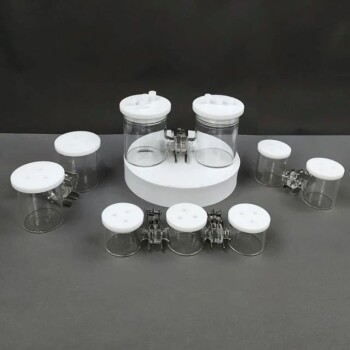
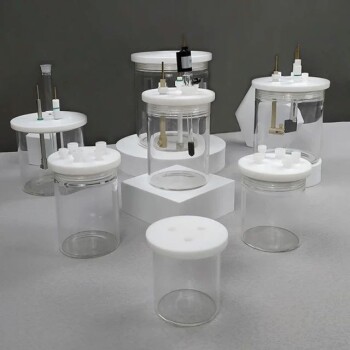
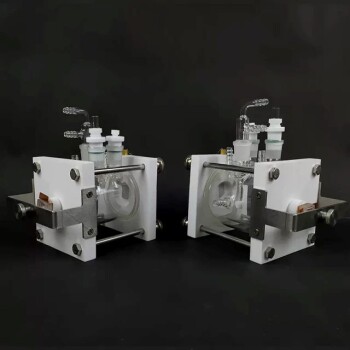
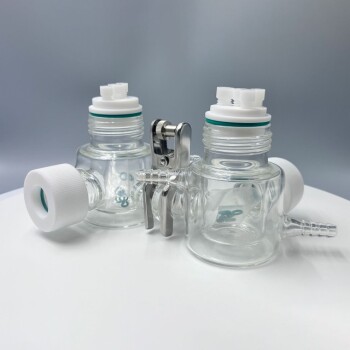
Precise electrode evaluation requires high-quality instrumentation. KINTEK specializes in advanced laboratory solutions, providing the specialized electrolytic cells and electrodes necessary for accurate three-electrode system setups. Whether you are conducting rapid material screening or complex kinetic studies, our portfolio supports every stage of your hydrogen energy research.
From high-performance catalysts to high-temperature furnaces, crushing systems, and hydraulic presses for material preparation, KINTEK delivers the reliability your lab demands. Let us help you bridge the gap between material discovery and system-level efficiency.
Ready to optimize your AEMWE testing? Contact our experts today to find the perfect cell configuration!
References
- Ameya Ranade, Mihalis N. Tsampas. Nanostructured Ni-Based Alloys as Electroactive Porous Transport Layers for Anion-Exchange Membrane Water Electrolysis. DOI: 10.1021/acssuschemeng.5c03298
This article is also based on technical information from Kintek Solution Knowledge Base .
Related Products
- H Type Electrolytic Cell Triple Electrochemical Cell
- PTFE Electrolytic Cell Electrochemical Cell Corrosion-Resistant Sealed and Non-Sealed
- Electrolytic Electrochemical Cell Gas Diffusion Liquid Flow Reaction Cell
- Electrolytic Electrochemical Cell with Five-Port
- Super Sealed Electrolytic Electrochemical Cell
People Also Ask
- What is a H type cell? A Guide to Divided Electrochemical Cells for Accurate Experiments
- How should the electrolyte be prepared and added to the H-type electrolytic cell? Best Practices for Purity and Safety
- What is the technical necessity of using an H-type electrolytic cell for NO3RR tests? Protect Your Ammonia Yields
- How does the design of an H-type electrolytic cell benefit the neutral water electrolysis process for metal recovery?
- What is the primary function of an H-type electrolytic cell in NitRR? Ensure Accurate Product Yields