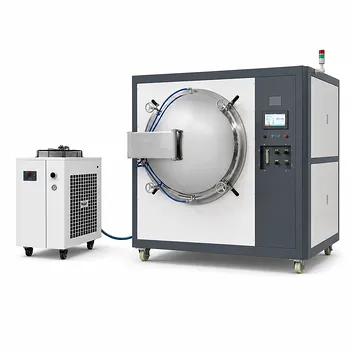
The primary purpose of using a vacuum drying oven after acid pickling graphite films is to achieve deep moisture removal while strictly preventing surface oxidation.
By creating a reduced-pressure environment, the oven allows residual water to evaporate efficiently at a controlled temperature of 80°C. Crucially, this method isolates the chemically active graphite from atmospheric oxygen, ensuring the material remains pristine for subsequent coating steps.
The vacuum drying process serves a dual critical function: it lowers the boiling point of water to facilitate drying and removes oxygen to prevent chemical degradation. This ensures the graphite film provides a clean, stable substrate essential for high-quality coating applications.
The Mechanics of Efficient Drying
Lowering the Boiling Point
The fundamental advantage of a vacuum oven is its ability to reduce the environmental pressure surrounding the graphite film. This pressure reduction significantly lowers the boiling point of water.
Consequently, moisture can be removed effectively at a moderate temperature of 80°C. This avoids the need for excessive heat, which could otherwise damage the material or alter its structural properties.
Deep Moisture Removal
Acid pickling leaves the graphite film with residual moisture that is difficult to remove under standard atmospheric conditions.
The vacuum environment ensures that moisture is drawn out from the deep microstructure of the film. This results in a thoroughly dry sample, which is a non-negotiable requirement for the stability of future processing steps.
Preserving Chemical Integrity
Isolating Oxygen
After acid pickling, graphite films become chemically active. This state makes them highly susceptible to reacting with oxygen in the air.
If dried in a standard oven, the combination of heat and atmospheric oxygen would likely cause rapid oxidation. The vacuum oven eliminates this risk by removing the air, creating an inert environment that preserves the film's chemical composition.
Ensuring Substrate Stability
The ultimate goal of this pretreatment phase is to prepare the graphite for subsequent coating procedures.
Any oxidation or residual moisture would compromise the adhesion and quality of the coating. By using vacuum drying, you generate a substrate that is both chemically stable and physically clean.
Common Pitfalls to Avoid
Inadequate Vacuum Levels
The success of this process relies entirely on maintaining a consistent vacuum.
If the vacuum seal is compromised or the pressure is not sufficiently low, oxygen will remain in the chamber. Given the heightened reactivity of the acid-pickled graphite, even trace amounts of oxygen during heating can lead to surface degradation.
Temperature Mismanagement
While the vacuum facilitates drying, temperature control remains vital.
Adhering to the recommended 80°C set point is critical. Deviating significantly from this temperature can either result in incomplete drying (if too low) or unnecessary thermal stress on the material (if too high).
Making the Right Choice for Your Goal
To ensure the highest quality pretreatment for your graphite films, align your process parameters with your specific objectives:
- If your primary focus is Oxidation Prevention: Ensure your vacuum pump is capable of maintaining a deep vacuum throughout the entire heating cycle to fully isolate the chemically active surface.
- If your primary focus is Process Efficiency: rigorous adherence to the 80°C temperature setting will maximize evaporation rates without risking thermal degradation.
By controlling the atmosphere and temperature simultaneously, you transform a fragile, wet film into a robust foundation for advanced coating applications.
Summary Table:
| Feature | Vacuum Drying (at 80°C) | Standard Atmospheric Drying |
|---|---|---|
| Boiling Point of Water | Significantly Lowered | 100°C |
| Oxidation Risk | Near Zero (Oxygen Isolated) | High (Heat + Air Exposure) |
| Drying Depth | Deep Microstructure Removal | Surface-Level Drying |
| Substrate Integrity | Preserved & Chemically Stable | High Risk of Surface Degradation |
| Coating Readiness | Optimal Adhesion | Poor Adhesion Potential |
Elevate Your Materials Research with KINTEK Precision
Ensure the integrity of your graphite films and sensitive materials with KINTEK’s advanced vacuum drying solutions. Whether you are performing acid pickling pretreatment or complex battery research, our high-performance vacuum ovens and thermal processing systems provide the precise temperature control and deep vacuum levels required to prevent oxidation and ensure deep moisture removal.
From high-temperature furnaces (muffle, tube, vacuum, CVD) to hydraulic presses and cooling solutions, KINTEK specializes in providing laboratories with the robust equipment and consumables needed for superior results. Don't let oxidation compromise your substrate—partner with KINTEK today for reliable, high-quality laboratory equipment.
Contact Our Experts Today to find the perfect fit for your research goals!
Related Products
- 56L Vertical Laboratory Vacuum Drying Oven
- 23L Laboratory Vacuum Drying Oven
- Laboratory Scientific Electric Heating Blast Drying Oven
- Benchtop Laboratory Vacuum Freeze Dryer
- Dental Porcelain Zirconia Sintering Ceramic Vacuum Press Furnace
People Also Ask
- Why is a laboratory vacuum drying oven recommended for rice straw residues? Protect Your Biomass Integrity
- What role does a laboratory vacuum drying oven play in the preparation of modified multi-walled carbon nanotubes?
- What is the importance of using a laboratory vacuum drying oven? Preserving Slow-Release Microcapsule Integrity
- Why is a Laboratory Vacuum Drying Oven recommended for PBAT microspheres? Protect Sensitive Polymer Integrity
- What role does a laboratory vacuum drying oven play in processing nanoparticle powder samples? Protect Sample Integrity