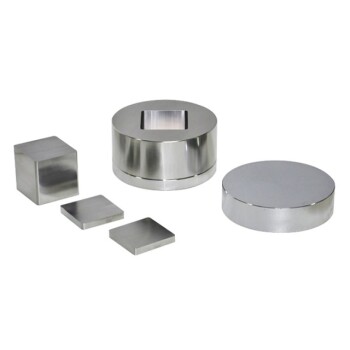
A customized pressure cell is a specialized testing instrument designed to maintain the mechanical integrity of battery electrodes during high-stress operations. By applying continuous external pressure—such as 3.2 MPa—via bolts or springs, it forces electrode particles to remain in tight contact, counteracting the natural volume expansion and contraction that occurs during charging and discharging.
In high-loading and high-rate scenarios, standard testing setups often fail because electrode materials physically disconnect as they swell. The customized pressure cell solves this by mechanically constraining the volume, preventing spikes in internal resistance and ensuring reliable cycling stability.
The Physical Challenge of High Capacities
Counteracting Volume Changes
When batteries are tested at high areal capacities, the volume of the active material changes drastically during cycling. As ions move in and out of the electrode, the material expands and contracts.
Without physical constraint, this repetitive "breathing" causes the electrode structure to loosen over time. The customized pressure cell functions specifically to counteract these volume changes by applying a constant, opposing force.
Preserving Particle Contact
The primary risk during volume expansion is the loss of contact between active material particles. If particles separate, the electrical pathway is broken.
By maintaining tight contact between particles, the pressure cell ensures the conductive network remains intact. This is critical for high-loading tests where the sheer amount of material increases the likelihood of structural degradation.
Mechanisms of Performance Improvement
Applying Continuous External Pressure
The device typically uses mechanical means, such as bolts or calibrated springs, to apply a precise force. The reference highlights a pressure of 3.2 MPa as an effective benchmark for these applications.
This continuous pressure acts as a stabilizer. It ensures that even as the internal chemistry shifts, the physical environment remains constant.
Preventing Internal Resistance Increases
When electrode contact is poor, internal resistance rises sharply. High resistance generates excess heat and throttles the battery's ability to deliver power.
By preventing the separation of particles, the pressure cell keeps internal resistance low. This directly translates to excellent cycling stability and rate performance, allowing the battery to operate efficiently even under demanding conditions.
Understanding the Trade-offs
Mechanical Complexity vs. Standard Testing
While effective, using a customized pressure cell introduces mechanical complexity. Unlike standard coin cells or pouch cells, these devices require precise assembly and calibration of the pressure mechanism (e.g., tightening bolts to the exact torque).
The Reality of Applied Pressure
It is important to note that the performance data obtained is dependent on the specific pressure applied. If the pressure (e.g., 3.2 MPa) is significantly higher than what would be present in a commercial battery pack, the test results may represent an "idealized" scenario rather than real-world performance.
Making the Right Choice for Your Goal
To determine if a customized pressure cell is necessary for your testing protocols, consider your specific objectives:
- If your primary focus is High-Rate Performance: You must use a pressure cell to minimize internal resistance, ensuring the data reflects the chemistry's potential rather than contact limitations.
- If your primary focus is Cycle Life Stability: You should use this setup to prevent mechanical degradation from masking the true electrochemical longevity of the material.
By mechanically enforcing particle contact, you transform a variable physical system into a stable platform for accurate electrochemical analysis.
Summary Table:
| Feature | Role in High-Areal Capacity Testing | Impact on Battery Performance |
|---|---|---|
| Mechanical Constraint | Counteracts volume expansion/contraction | Prevents structural loosening and electrode degradation |
| Particle Contact | Maintains tight physical contact via 3.2 MPa pressure | Ensures a continuous conductive network and electrical pathway |
| Internal Resistance | Prevents spikes caused by material separation | Enhances rate performance and minimizes heat generation |
| Cycling Stability | Stabilizes the physical environment during ions movement | Provides reliable, long-term electrochemical analysis |
Elevate Your Battery Research with KINTEK Precision
Unlock the full potential of your high-loading battery materials by eliminating mechanical failure. KINTEK specializes in advanced laboratory solutions, offering high-performance hydraulic presses (pellet, hot, isostatic) and specialized battery research tools designed to maintain precise pressure environments.
Whether you are developing next-generation electrodes or testing high-areal capacities, our expertise in high-pressure systems ensures your data reflects true electrochemical performance, not contact limitations.
Ready to stabilize your testing results? Contact KINTEK today to find the perfect pressure solution for your lab!
Related Products
- Customizable High Pressure Reactors for Advanced Scientific and Industrial Applications
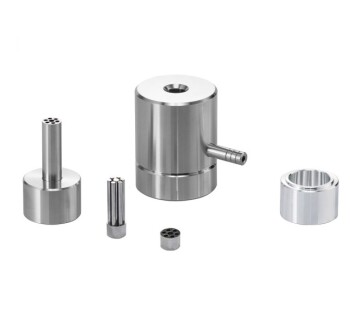
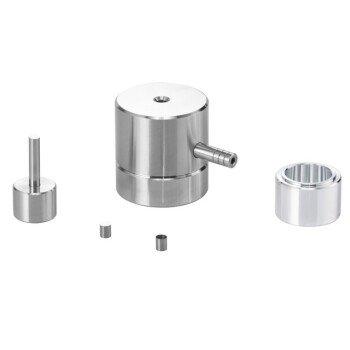
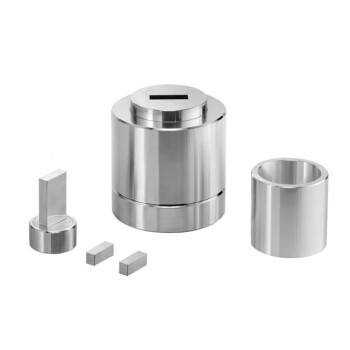
- Special Shape Press Mold for Lab
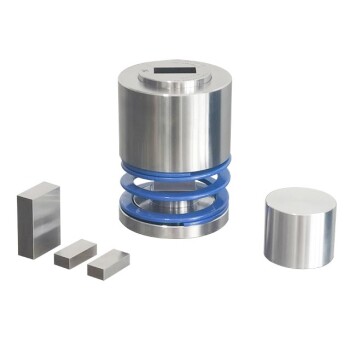
- Square Bidirectional Pressure Mold for Lab Use
- Ring Press Mold for Lab Applications
- Cylindrical Press Mold for Lab Applications
People Also Ask
- What is the function of high-pressure reactors in the synthesis of MFI-type zeolites? Master Dry Gel Conversion.
- Graphene Fiber Synthesis: Key High-Pressure Reactor Processing Conditions Explained
- What reactor is used for high pressure reactions? Select the Right Autoclave for Your Lab
- What is the primary function of a high-pressure reactor in NiMoO4 preparation? Optimize Hydrothermal Catalyst Synthesis
- What are the hazards of high pressure reactors? A Guide to Managing Explosive Risks