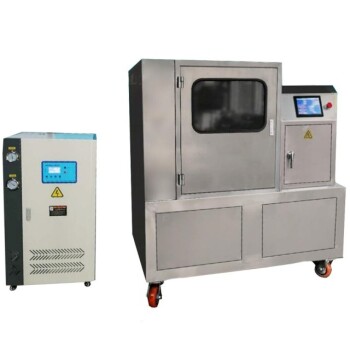
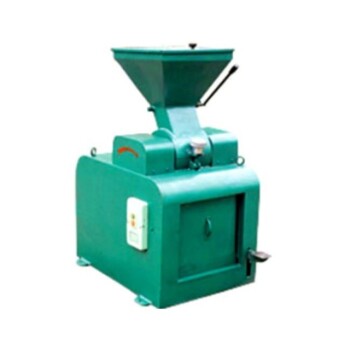
The primary function of a fast sample pulverizer is to utilize high-energy impact forces to mechanically reduce slate particles into an ultra-fine powder capable of passing through a 100-mesh standard sieve. This process is the foundational step in slate processing, serving not just to shrink particle size, but to activate the material for high-temperature chemical reactions.
By achieving a specific level of high fineness, the pulverizer unlocks the slate's sintering activity. This mechanical preparation is essential for facilitating the chemical uniformity required to produce high-quality expanded ceramsite.
The Mechanical Process
High-Energy Impact Forces
The fast sample pulverizer does not rely on simple compression or abrasion.
It employs high-energy impact forces to shatter the slate structure. This aggressive method ensures that the material is broken down efficiently and consistently.
Achieving the 100-Mesh Standard
The target output for this equipment is specific: the slate must be ground to a fineness that passes a 100-mesh standard sieve.
Reaching this specific particle size is the critical threshold that differentiates raw crushed stone from reactive industrial powder.
Impact on Material Behavior
Enhancing Sintering Activity
The reduction in particle size leads to a massive increase in surface area.
This increased surface area significantly enhances the sintering activity of the material, making it more reactive when subjected to heat.
Promoting Solid-Phase Reactions
At high temperatures, slate components must undergo complex chemical changes.
The fine powder produced by the pulverizer promotes solid-phase reactions between these chemical components, ensuring the material changes state predictably during firing.
Forming a Uniform Molten Shell
During the foaming stage of processing, the consistency of the material is paramount.
High fineness facilitates the formation of a uniform molten shell, which is necessary to trap gases effectively.
Improving Expansion Performance
The ultimate goal of using the pulverizer is to optimize the end product's physical properties.
By ensuring a uniform shell and proper reaction, the process directly improves the expansion performance of the ceramsite, leading to a lighter, better-structured final material.
Understanding the Operational Necessity
The Consequence of Coarse Particles
It is vital to understand that this pulverization is not optional for high-quality results.
If the slate is not ground to the 100-mesh standard, the solid-phase reactions may remain incomplete due to limited surface contact between particles.
Uniformity vs. Inconsistency
The machine acts as a homogenizer for the material's physical state.
Without the high-energy impact grinding, the molten shell formed during foaming may be uneven, leading to poor expansion characteristics and structural weaknesses in the final ceramsite.
Making the Right Choice for Your Goal
To maximize the quality of your slate-based production, consider the following key objectives:
- If your primary focus is Chemical Reactivity: Ensure your pulverizer is calibrated to consistently yield particles passing the 100-mesh sieve to maximize solid-phase reactions.
- If your primary focus is Product Structure: Prioritize the uniformity of the grind to guarantee a stable molten shell and optimal expansion during the foaming stage.
The fast sample pulverizer is the bridge between raw raw slate and a chemically active, high-performance industrial material.
Summary Table:
| Feature | Impact on Slate Processing | Benefit for Ceramsite Production |
|---|---|---|
| High-Energy Impact | Reduces particles to <100-mesh | Ensures uniform material consistency |
| Increased Surface Area | Enhances sintering activity | Facilitates rapid solid-phase reactions |
| Particle Fineness | Promotes chemical uniformity | Improves foaming and expansion performance |
| Homogenization | Forms a uniform molten shell | Prevents structural weaknesses in final product |
Upgrade Your Material Processing with KINTEK Precision
Maximize the potential of your raw materials with KINTEK’s high-performance crushing and milling systems. Whether you are preparing slate for ceramsite production or conducting advanced geological research, our fast sample pulverizers ensure the precise 100-mesh fineness required for optimal sintering and chemical reactivity.
Beyond milling, KINTEK specializes in a comprehensive range of laboratory equipment including high-temperature furnaces, hydraulic pellet presses, and sieving equipment to streamline your entire workflow.
Ready to achieve superior grinding results? Contact our experts today to find the perfect equipment solution for your laboratory or industrial needs!
References
- Zhen Li, Xiao-Wei Duan. Manufacturing of Ultra-light Ceramsite from Slate Wastes in Shangri-la, China. DOI: 10.4191/kcers.2018.55.1.02
This article is also based on technical information from Kintek Solution Knowledge Base .
Related Products
- Low-Temperature Water-Cooled Touchscreen Vibratory Ultrafine Pulverizer
- Laboratory Sealed Hammer Crusher for Efficient Sample Preparation
- Automatic Laboratory Hydraulic Pellet Press Machine for Lab Use
- XRF & KBR plastic ring lab Powder Pellet Pressing Mold for FTIR
People Also Ask
- What is the function of an industrial vibratory mill? Optimize Fe-Cr-Al Alloy Powder Production
- How does a Vibratory Mill improve niobium recovery efficiency? Optimize Waste Pre-treatment for Maximum Yield
- Why use stainless steel jars and balls for solid-state battery slurries? Maximize Dispersion and Conductivity
- What role does ultra-low temperature cooling equipment play in hydrogel preparation? Master Light-Driven Actuation
- Why is a low-temperature cooling solution necessary for nanoparticle toxicity? Ensure Scientific Accuracy & Stability