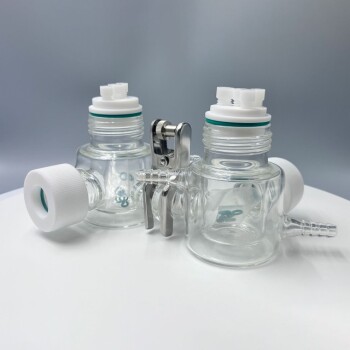
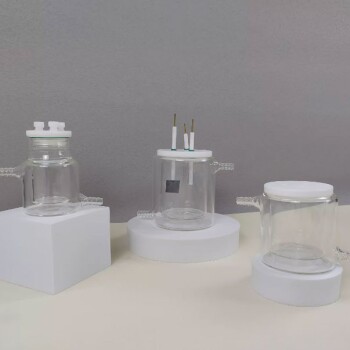
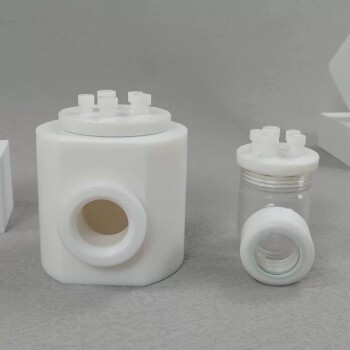
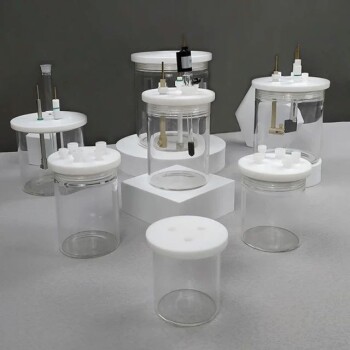
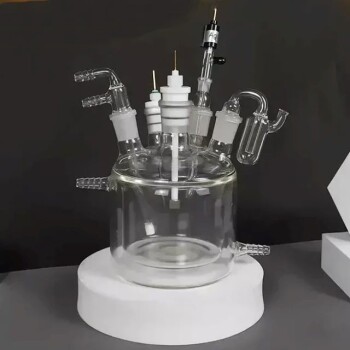
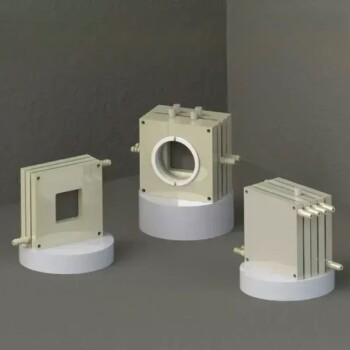
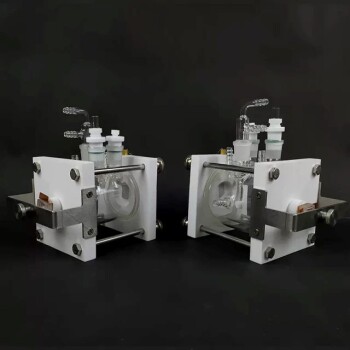
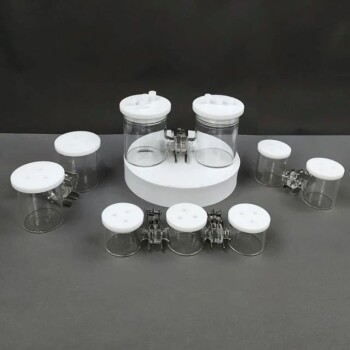
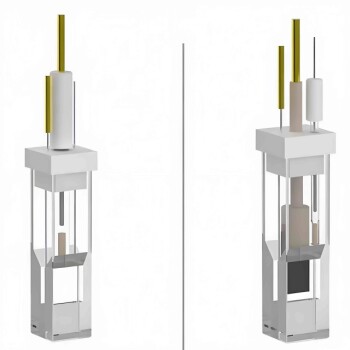
A glass electrolytic cell equipped with a heater and thermostat serves as a precision instrument for simulating aggressive thermal environments in corrosion research. Its primary role is to heat high-concentration plutonium nitrate solutions to specific thermal targets—often the boiling point—while maintaining exact stability. This allows researchers to accurately measure how materials respond to the extreme conditions found in industrial processing.
Precise temperature control is not merely a feature; it is a fundamental requirement for evaluating material safety. Because corrosion potential is highly sensitive to heat, this setup ensures accurate assessment of chemical stability in critical equipment like evaporators.
Creating a Controlled Thermal Environment
Replicating Extreme Process Conditions
Industrial reprocessing often involves handling solutions at their boiling points. The heater within the electrolytic cell allows researchers to elevate high-concentration plutonium nitrate to these exact temperatures. This mimics the harsh reality inside industrial equipment, such as evaporators.
Maintaining Thermal Stability
Fluctuations in heat can ruin experimental data. The thermostat ensures the temperature remains constant throughout the duration of the test. This eliminates variables that could lead to false conclusions about material safety.
The Critical Link Between Heat and Corrosion
Zirconium’s Thermal Sensitivity
The primary reference highlights zirconium as a key material of interest. Its resistance to corrosion changes drastically depending on the temperature. Even small deviations in heat can significantly alter its electrochemical behavior in nitric acid environments.
Evaluating Passivation Behavior
Passivation refers to the formation of a protective surface layer on the metal. The stability of this layer is heavily dependent on thermal conditions. The controlled cell allows scientists to observe whether this protection holds or fails at specific thermal thresholds.
Understanding the Trade-offs
The Risk of Thermal Variance
In simpler setups without a thermostat, temperature often drifts. This renders corrosion potential data unreliable. The "trade-off" here is that while the equipment is more complex, it is strictly necessary because chemical stability cannot be guessed; it must be measured under constant conditions.
Specificity to High Concentrations
This setup is specifically designed to handle high-concentration solutions safely. Standard equipment may not withstand the combination of high heat and corrosive plutonium nitrate. The glass construction combined with precise heating is a specialized solution for this unique chemical context.
Applying Precision to Material Selection
If you are evaluating materials for nuclear reprocessing environments, consider the following:
- If your primary focus is Industrial Safety: Ensure your testing environment replicates the boiling point of the solution to simulate the worst-case scenario for evaporators.
- If your primary focus is Material Science: Focus on the passivation behavior of zirconium, using the thermostat to test stability across a range of specific temperatures.
Accurate thermal simulation is the only way to guarantee the reliability of materials used in high-stakes nuclear processing.
Summary Table:
| Feature | Function in Corrosion Research | Benefit for Material Science |
|---|---|---|
| Integrated Heater | Replicates industrial boiling points | Simulates worst-case evaporator conditions |
| Thermostat Control | Maintains constant thermal stability | Eliminates data variables for reliable results |
| Glass Construction | Resists aggressive chemical reactions | Provides a safe, transparent testing vessel |
| Precise Monitoring | Evaluates zirconium passivation behavior | Ensures accurate material safety assessments |
Elevate Your Nuclear Research with KINTEK Precision
Ensure the integrity of your material safety assessments with KINTEK’s specialized laboratory solutions. From advanced electrolytic cells and electrodes to precision-engineered high-temperature furnaces and high-pressure reactors, we provide the tools necessary to simulate the most demanding industrial environments.
Whether you are studying zirconium passivation or testing material durability in corrosive plutonium nitrate solutions, KINTEK delivers the reliability and thermal stability your research demands. Our comprehensive portfolio, including PTFE products, ceramics, and cooling solutions, is designed to support the rigorous needs of nuclear reprocessing and material science experts.
Ready to optimize your lab’s precision? Contact our technical specialists today to find the perfect equipment for your high-stakes research.
References
- Masaumi Nakahara, Hitoshi Abe. Electrochemical properties of zirconium in highly concentrated plutonium nitrate solution. DOI: 10.15669/pnst.5.52
This article is also based on technical information from Kintek Solution Knowledge Base .
Related Products
- H-Type Double-Layer Optical Electrolytic Electrochemical Cell with Water Bath
- Double-Layer Water Bath Electrolytic Electrochemical Cell
- Side Window Optical Electrolytic Electrochemical Cell
- Optical Water Bath Electrolytic Electrochemical Cell
- Electrolytic Electrochemical Cell with Five-Port
People Also Ask
- What is the overall structure of the H-type double-layer optical water bath electrolytic cell? Precision Design for Controlled Experiments
- How is the electrolyte managed in H-type electrolytic cells for specific reactions? Achieve Precise Control and High Purity
- What checks should be performed on the H-type electrolytic cell before use? Ensure Accurate Electrochemical Data
- What is important regarding temperature control for the H-type electrolytic cell? Ensure Precision and Data Integrity
- What is the overall structure of the H-type electrolytic cell? Understanding Dual-Chamber Electrochemical Designs