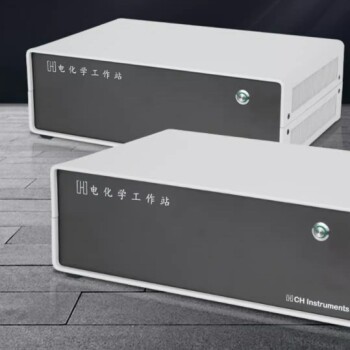
A high-precision potentiostat serves as the definitive analytical engine for characterizing the reduction behavior of indium ions. It functions by applying a strictly controlled overpotential to the electrochemical cell and measuring the resulting response current in real-time. This precision allows researchers to rigorously evaluate different electrolyte systems—such as chlorides, sulfates, and nitrates—to determine which environment best supports efficient indium deposition.
The core value of the workstation lies in its ability to isolate specific kinetic barriers. By performing continuous polarization curve tests, it quantifies the starting potential of deposition and the limiting current density, while simultaneously detecting interference from hydrogen evolution reactions.
Unlocking Kinetic Characteristics
Controlling Overpotential
To understand how indium behaves, you must control the driving force of the reaction.
The potentiostat provides an accurate bias voltage, clamping the electrode at specific potentials. This reveals the exact energy threshold required to initiate indium reduction in a specific solution.
Identifying the Limiting Current Density
Speed is often limited by how fast ions can travel to the electrode.
The workstation records the response current to identify the limiting current density. This metric tells you the maximum rate at which indium can be deposited before the process becomes mass-transfer limited.
Comparing Electrolyte Systems
Not all chemical environments yield the same results.
By running identical polarization tests across chlorides, sulfates, and nitrates, the device generates comparative data. This allows you to objectively select the electrolyte system that offers the best trade-off between solubility and deposition efficiency.
Advanced Diagnostic Methods
Linear Sweep and Cyclic Voltammetry
Standard steady-state measurements often miss dynamic behaviors.
Techniques like Linear Sweep Voltammetry (LSV) and Cyclic Voltammetry (CV) allow for the quantitative analysis of electrode kinetics. These tests map the reaction path, showing reversibility and intermediate steps in the reduction process.
Electrochemical Impedance Spectroscopy (EIS)
Resistance is not always static; it changes with frequency and surface conditions.
Using EIS, the workstation measures charge transfer resistance. This data helps distinguish between resistance caused by the electrolyte solution and resistance caused by the electrochemical reaction itself at the electrode surface.
Understanding the Trade-offs
The Hydrogen Evolution Interference
A major challenge in indium electrowinning is that hydrogen generation often competes with indium deposition.
While the potentiostat detects the total current, it cannot physically separate current generated by indium reduction from current generated by hydrogen evolution on its own.
Interpreting Composite Signals
The device provides the data, but the user must interpret the "interference level."
High precision is required here because the onset of hydrogen evolution often obscures the clear "plateau" of indium limiting current. Misinterpreting this composite signal can lead to overestimating the efficiency of the electrolyte system.
Making the Right Choice for Your Goal
- If your primary focus is Electrolyte Selection: Prioritize continuous polarization curve tests to compare the starting potentials and solubility limits of chlorides versus sulfates.
- If your primary focus is Process Efficiency: Focus on the limiting current density data to determine the maximum theoretical production rate without triggering side reactions.
- If your primary focus is Mechanism Analysis: Utilize Electrochemical Impedance Spectroscopy (EIS) to isolate charge transfer resistance and identify kinetic bottlenecks at the electrode surface.
The potentiostat transforms raw electrical signals into a kinetic map, guiding you toward the most efficient parameters for indium recovery.
Summary Table:
| Feature | Kinetic Insight Provided | Research Benefit |
|---|---|---|
| Overpotential Control | Identifies energy thresholds | Determines initiation of indium reduction |
| Current Density Mapping | Detects limiting current density | Sets maximum deposition rates for efficiency |
| Polarization Curves | Compares electrolyte systems | Selects optimal media (Chlorides vs. Sulfates) |
| EIS Analysis | Measures charge transfer resistance | Isolates kinetic bottlenecks at electrode surface |
| LSV & CV Testing | Maps reaction pathways | Quantifies electrode kinetics and reversibility |
Elevate Your Electrochemical Research with KINTEK
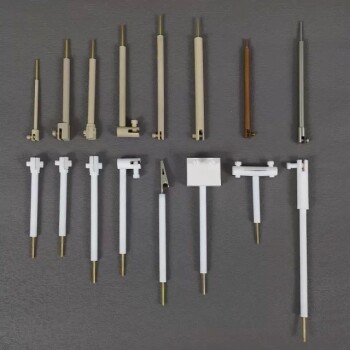
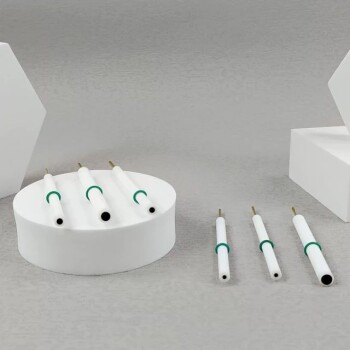
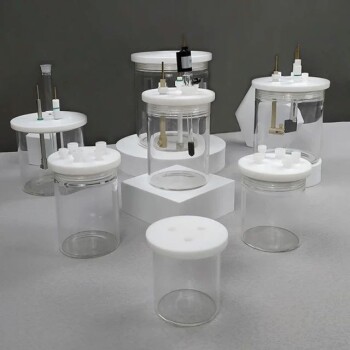
Precision is the foundation of breakthrough kinetic studies. KINTEK provides state-of-the-art electrochemical workstations, electrolytic cells, and high-performance electrodes designed to meet the rigorous demands of indium electrowinning and battery research. Whether you are identifying limiting current densities or analyzing charge transfer resistance via EIS, our laboratory solutions deliver the accuracy you need to eliminate interference and optimize deposition efficiency.
From high-temperature furnaces and reactors to specialized PTFE consumables and crucibles, KINTEK is your partner in advanced material science.
Ready to refine your electrolyte systems and maximize production rates?
Contact our technical experts today for a tailored solution!
References
- István B. Illés, Tamás Kékesi. The relative efficiency of electrowinning indium from chloride electrolytes. DOI: 10.1007/s10800-022-01779-7
This article is also based on technical information from Kintek Solution Knowledge Base .
Related Products
- Lab Electrochemical Workstation Potentiostat for Laboratory Use
- Electrode Fixture for Electrochemical Experiments
- Glassy Carbon Electrochemical Electrode
- Electrolytic Electrochemical Cell with Five-Port
- Sample Support Body for Electrochemical Tests
People Also Ask
- How does an electrochemical workstation assist in assessing corrosion resistance? Quantify Laser-Remelted Steel Performance
- How does an electrochemical testing system evaluate mesoporous oxide electrodes? Precision Analysis for Battery Research
- What are the primary functions of an electrochemical workstation (Potentiostat)? Expert Titanium Alloy Corrosion Analysis
- What is the primary function of a high-precision electrochemical workstation? Optimize Your Reactor Performance
- What role do electrochemical workstations play in researching the corrosion resistance of carbon coatings? Expert Guide