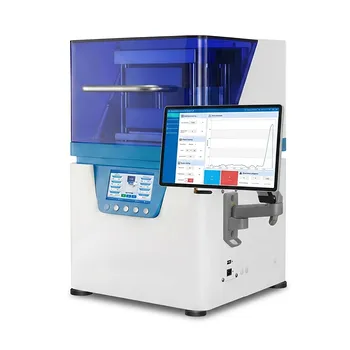
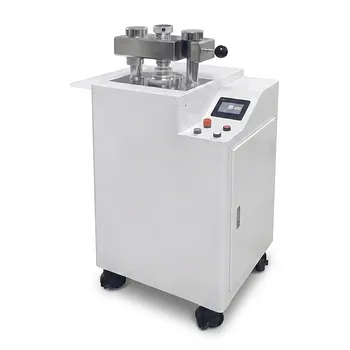
The high-pressure reactor serves as the essential vessel for achieving chemical homogeneity. In the synthesis of Fe3C@N-CS carbon sheet precursors, it provides a sealed, 140°C environment that enables the complete dissociation and recombination of folic acid and iron ions. This controlled setting is the fundamental requirement for creating the uniform chemical composition necessary to eventually form a graphene-like layered structure.
The autoclave facilitates a solvothermal environment where high autogenous pressure allows reactants to interact far more effectively than under ambient conditions. This process ensures that iron and nitrogen sources are thoroughly integrated, setting the structural foundation for high-performance carbon sheets.
The Mechanism of Solvothermal Precursor Formation
Facilitating Reactant Dissociation
The high-temperature environment within the reactor provides the thermal energy required to break down complex organic molecules like folic acid. This dissociation is the first step in allowing iron ions to interact freely with the nitrogen-rich organic framework.
Promoting Thorough Recombination
Once dissociated, the iron ions and organic ligands undergo recombination under pressure. The sealed nature of the autoclave ensures that these components remain in close contact, forcing a more complete and uniform chemical reaction than would occur in an open system.
Ensuring Chemical Uniformity
Uniformity is critical for the final material's performance. The reactor prevents the localized clumping of iron, ensuring that the Fe3C nanoparticles are evenly distributed across the nitrogen-doped carbon sheets during the subsequent carbonization stages.
Structural Evolution and Environmental Control
Overcoming Boiling Point Limitations
By creating a sealed system, the autoclave allows solvents to reach temperatures well above their standard boiling points while remaining in a liquid or supercritical state. This "solvothermal" condition dramatically increases the solubility of precursors that would otherwise remain undissolved.
Driving Graphene-like Layered Growth
The internal pressure generated during the reaction acts as a physical template-directing force. This environment is essential for the precursors to organize into the layered, graphene-like structures that characterize high-quality N-doped carbon sheets.
Accelerating Reaction Kinetics
High pressure increases the frequency of molecular collisions and lowers the activation energy for coordination reactions. This acceleration ensures that the precursors achieve a highly ordered, crystalline state rather than an amorphous, disorganized mixture.
Understanding the Trade-offs
Equipment Costs and Safety
High-pressure reactors require specialized materials, such as stainless steel with PTFE liners, to withstand autogenous pressure and corrosive solvents. This increases the initial capital investment and necessitates strict safety protocols to manage the risks of high-pressure operations.
Scalability and Monitoring Challenges
While autoclaves are excellent for precision at the laboratory scale, scaling the process to industrial volumes can be difficult. Additionally, because the reaction happens inside a sealed, opaque vessel, real-time monitoring of the precursor formation is technically challenging.
Sensitivity to Temperature Fluctuations
The internal pressure is highly dependent on precise temperature control. Even minor deviations from the target 140°C setpoint can lead to significant changes in pressure, potentially resulting in inconsistent precursor morphology or incomplete reactions.
How to Apply This to Your Synthesis Project
Successful synthesis depends on balancing the chemical environment within the reactor to match your specific material goals.
- If your primary focus is uniform iron distribution: Ensure the reactor maintains a constant temperature of 140°C to allow for the complete dissociation of folic acid before recombination begins.
- If your primary focus is achieving a layered structure: Use a high-pressure autoclave to maximize the autogenous pressure, which facilitates the self-assembly of graphene-like sheets.
- If your primary focus is maximizing specific surface area: Select a solvent system, such as a mix of DMF or alcohols, that generates optimal pressure to induce porous defects during the solvothermal phase.
By precisely controlling the high-pressure environment of the autoclave, you can dictate the molecular architecture of your precursors and ensure the quality of the final Fe3C@N-CS carbon sheets.
Summary Table:
| Feature/Mechanism | Role in Fe3C@N-CS Synthesis | Primary Benefit |
|---|---|---|
| 140°C Sealed Setting | Facilitates dissociation of folic acid and iron ions | Enables complete reactant recombination |
| Autogenous Pressure | Overcomes solvent boiling points; increases solubility | Drives graphene-like layered growth |
| Sealed Environment | Prevents localized clumping of iron nanoparticles | Ensures uniform chemical composition |
| Reaction Kinetics | Increases molecular collision frequency | Accelerates formation of ordered precursors |
| Reactor Liner | PTFE/Stainless Steel construction | Withstands corrosive solvothermal conditions |
Elevate Your Material Synthesis with KINTEK Precision
Achieving the perfect graphene-like layered structure requires more than just chemistry—it requires the right environment. KINTEK specializes in high-performance laboratory equipment designed to meet the rigorous demands of solvothermal synthesis. Our industry-leading high-pressure reactors and autoclaves provide the precise temperature control and pressure stability necessary for uniform $Fe_3C@N-CS$ precursor formation.
Beyond reactors, KINTEK offers a comprehensive suite of tools for advanced material research, including:
- Thermal Processing: Muffle, tube, vacuum, and CVD/PECVD furnaces.
- Sample Preparation: Crushing, milling, and hydraulic pellet presses.
- Advanced Lab Solutions: Electrolytic cells, battery research tools, and ultra-low temperature freezers.
- Essential Consumables: High-purity PTFE products, ceramics, and crucibles.
Ready to optimize your synthesis workflow? Contact our technical experts today to find the ideal reactor configuration for your laboratory and experience the KINTEK advantage in reliability and precision.
References
- Zenghui Lin, Jianjun Song. Fe3C-Decorated Folic Acid-Derived Graphene-like Carbon-Modified Separator as a Polysulfide Barrier for High-Performance Lithium-Sulfur Batteries. DOI: 10.3390/batteries9060296
This article is also based on technical information from Kintek Solution Knowledge Base .
Related Products
- Stainless High Pressure Autoclave Reactor Laboratory Pressure Reactor
- High Pressure Laboratory Autoclave Reactor for Hydrothermal Synthesis
- Customizable High Pressure Reactors for Advanced Scientific and Industrial Applications
- Mini SS High Pressure Autoclave Reactor for Laboratory Use
- Customizable Laboratory High Temperature High Pressure Reactors for Diverse Scientific Applications
People Also Ask
- Why is a laboratory high-pressure reactor used in the hydrothermal synthesis of hydroxyapatite catalysts?
- What role does a laboratory high-pressure reactor play in the leaching process of spent cathode materials? Optimize Recovery
- Why is a laboratory high-pressure reactor necessary for synthesizing fly ash-based zeolite? Achieve Pure Crystallization
- What conditions do laboratory high-pressure reactors provide for HTC? Optimize Your Biochar Production Processes
- What is the function of a high-pressure reactor autoclave? Enhancing Cu/N Co-Doped Carbon Catalyst Synthesis