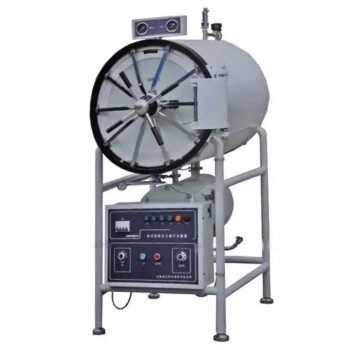
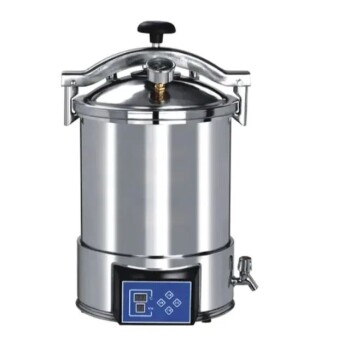
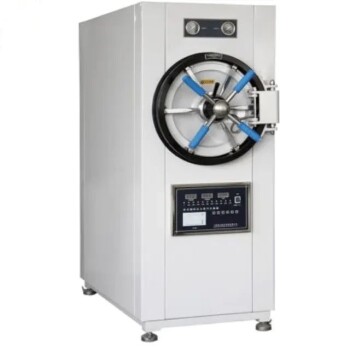
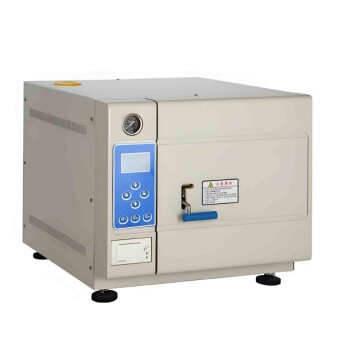
The high-pressure reactor, or autoclave, is the indispensable vessel that creates the subcritical environment necessary for Sn MOF synthesis. By providing a sealed, high-temperature chamber, it allows solvents to remain in a liquid state well above their atmospheric boiling points. This creates the internal pressure required to increase ligand solubility and drive the coordination chemistry between tin (Sn) ions and organic ligands into highly crystalline, porous frameworks.
The core role of an autoclave in Sn MOF synthesis is to provide a high-energy, controlled environment that forces reactants to overcome activation energy barriers, enabling precise control over crystal nucleation, growth, and final morphology.
Establishing the Subcritical Environment
Overcoming Solvent Boiling Points
In a standard open vessel, heating a solvent is limited by its boiling point. A high-pressure reactor provides a sealed environment that prevents evaporation, allowing the reaction to reach temperatures that would otherwise cause the solvent to vaporize.
Generating Internal Pressure
As the temperature rises inside the sealed autoclave, the internal pressure increases significantly. This autogenous pressure is critical because it forces the solvent into a subcritical state, which fundamentally alters its physical and chemical properties to favor complex chemical reactions.
Enhancing Reactivity and Solubility
Increasing Ligand Solubility
Many organic ligands used in Sn MOF precursors have poor solubility at room temperature. The high-temperature and high-pressure conditions inside the autoclave significantly enhance the solubility of these ligands, ensuring they are fully available to react with the tin metal ions.
Accelerating Coordination Kinetics
The high-energy environment within the reactor provides the necessary thermal energy to overcome activation energy barriers. This accelerates the coordination reaction between the organic linkers and the Sn metal centers, facilitating the self-assembly of the molecular framework.
Controlling Crystal Growth and Morphology
Promoting Homogeneous Nucleation
Precision control over temperature and pressure allows for controlled nucleation. The autoclave environment ensures that the formation of crystal nuclei occurs uniformly throughout the solution, rather than randomly, which is essential for achieving high-purity precursors.
Ensuring High Crystallinity
By maintaining stable conditions over extended periods, the reactor promotes oriented growth. This results in Sn MOFs with superior crystallinity and well-defined three-dimensional porous structures, which are vital for their performance in applications like gas storage or catalysis.
Understanding the Trade-offs and Limitations
Safety and Pressure Management
Operating at high temperatures and pressures introduces significant safety risks. Autoclaves must be constructed from high-grade stainless steel and equipped with pressure-relief valves to prevent catastrophic failure if the reaction exceeds design limits.
Complexity of Parameter Tuning
Small changes in temperature or pressure can lead to dramatic shifts in morphology. While this allows for precision, it also means that the synthesis is highly sensitive; even minor deviations in the heating rate or the fill level of the reactor can result in inconsistent batches or unwanted phases.
How to Optimize Your Synthesis Strategy
Applying Reactor Principles to Your Project
To achieve the best results when synthesizing Sn MOF precursors, your choice of reactor parameters should align with your specific material requirements.
- If your primary focus is High Crystallinity: Prioritize longer reaction times at stable, moderate temperatures to allow the crystal lattice to form without defects.
- If your primary focus is Specific Morphologies: Use precise temperature ramping and cooling rates within the autoclave to induce the growth of specific shapes, such as nanosheets or cubes.
- If your primary focus is Scalability: Ensure the reactor's "fill factor" (the ratio of liquid to total volume) is consistent across batches to maintain reproducible internal pressure levels.
By leveraging the unique high-pressure environment of the autoclave, researchers can unlock the full structural potential of tin-based metal-organic frameworks.
Summary Table:
| Feature | Role in Sn MOF Synthesis | Key Benefit |
|---|---|---|
| Subcritical Environment | Keeps solvents liquid above boiling points | Enables high-temperature reactions without evaporation |
| Autogenous Pressure | Increases internal chamber pressure | Forces reactants into a high-energy state for better solubility |
| Kinetic Control | Overcomes activation energy barriers | Accelerates the coordination of Sn ions and organic ligands |
| Nucleation Control | Ensures uniform temperature/pressure | Produces highly crystalline, porous frameworks with precise shapes |
Elevate Your Materials Synthesis with KINTEK Precision
Unlock the full potential of your Sn MOF precursors with KINTEK’s industry-leading high-temperature high-pressure reactors and autoclaves. Designed for researchers who demand precision, our reactors provide the stable, subcritical environments necessary for superior crystal nucleation and morphology control.
Why choose KINTEK?
- Advanced Safety: High-grade stainless steel construction with integrated pressure-relief systems.
- Versatile Solutions: A comprehensive range of lab equipment, from CVD/PECVD furnaces to hydrothermal autoclaves and hydraulic presses.
- Expert Support: We help you match reactor parameters to your specific material requirements, ensuring scalability and reproducibility.
Ready to optimize your lab’s efficiency? Contact KINTEK today to find the perfect reactor for your next breakthrough!
References
- Zuxin Xu, Hailong Qiu. Metal–Organic Framework‐Derived SnS<sub>2</sub>/C/CNT as Anode Material for Lithium‐Ion Batteries with High Capacity and Stability. DOI: 10.1002/ente.202300890
This article is also based on technical information from Kintek Solution Knowledge Base .
Related Products
- Stainless High Pressure Autoclave Reactor Laboratory Pressure Reactor
- Mini SS High Pressure Autoclave Reactor for Laboratory Use
- High Pressure Laboratory Autoclave Reactor for Hydrothermal Synthesis
- Customizable High Pressure Reactors for Advanced Scientific and Industrial Applications
- Portable High Pressure Laboratory Autoclave Steam Sterilizer for Lab Use
People Also Ask
- Why is a laboratory high-pressure reactor used in the hydrothermal synthesis of hydroxyapatite catalysts?
- What role does a laboratory high-pressure reactor play in the leaching process of spent cathode materials? Optimize Recovery
- Why is a laboratory high-pressure reactor necessary for synthesizing fly ash-based zeolite? Achieve Pure Crystallization
- What conditions do laboratory high-pressure reactors provide for HTC? Optimize Your Biochar Production Processes
- What is the function of a high-pressure reactor autoclave? Enhancing Cu/N Co-Doped Carbon Catalyst Synthesis