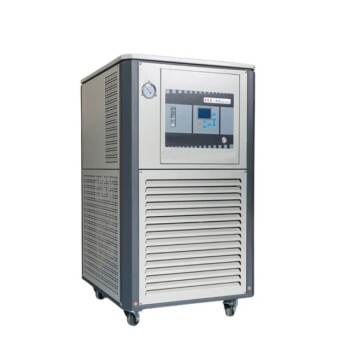
The high-temperature high-pressure reactor serves as the essential containment vessel required to convert Napier grass into fuel. By creating a sealed environment, it generates autogenous pressure that maintains water in a liquid or saturated steam state at temperatures ranging from 190 to 220 °C. This specific environment allows for Hydrothermal Carbonization (HTC) or Vapor-phase Hydrothermal Carbonization (VTC), transforming raw biomass into energy-dense hydrochar.
The reactor is not merely a heating device; it is a pressure chamber that forces water to remain reactive at high temperatures. This subcritical environment drives the breakdown of tough plant structures, ensuring the consistent conversion of low-value grass into stable, high-energy fuel.
Creating the Critical Reaction Environment
Generating Subcritical Conditions
The reactor’s primary engineering function is to sustain a subcritical water or high-pressure saturated steam environment. By sealing the vessel completely, the system generates autogenous pressure as it heats up.
This pressure prevents the water from boiling away, even as temperatures climb well above the normal boiling point. Maintaining this state is the prerequisite for initiating the chemical reactions necessary for carbonization.
Facilitating Chemical Transformation
Within this pressurized zone, the reactor facilitates Hydrothermal Carbonization (HTC) or Vapor-phase Hydrothermal Carbonization (VTC). These processes chemically alter the Napier grass, stripping away oxygen and hydrogen to leave behind a carbon-rich product.
The result is the conversion of raw, fibrous biomass into high-energy-density hydrochar. Without the reactor's ability to hold high pressure at 190–220 °C, this transformation would not occur efficiently.
Ensuring Process Stability and Quality
Precise Thermal Management
To work effectively, the reactor relies on high-power resistance heating systems coupled with advanced temperature controllers. These systems provide stable heating rates, such as 2 K/min, and ensure the biomass is held at the target temperature for the exact required duration.
Uniform Degradation of Biomass
The reactor's controlled environment promotes the uniform degradation of complex macromolecules, specifically hemicellulose and cellulose. This uniformity is vital for creating a homogeneous fuel product rather than a mix of burnt and raw material.
By managing the thermal input rigorously, the system guarantees the stability of key fuel properties. This includes consistent mass yield, carbon content, and higher heating value.
Understanding the Trade-offs
The Risk of Localized Overheating
While the reactor aims for uniformity, poor thermal management can lead to localized overheating. This results in uneven carbonization, where parts of the Napier grass are over-processed while others remain under-converted.
Reproducibility Challenges
The quality of the hydrochar is strictly tied to the stability of the reactor's environment. If the system cannot maintain precise heating rates and pressure, the reproducibility of the fuel properties will suffer. Consistent operation is the only way to ensure every batch meets the same energy standards.
Making the Right Choice for Your Goal
To maximize the efficiency of Napier grass carbonization, align your reactor operations with your specific objectives:
- If your primary focus is maximizing energy density: Ensure your reactor is rated to safely and consistently maintain the upper temperature range (near 220 °C) to drive deeper chemical conversion.
- If your primary focus is product consistency: Prioritize heating systems with precise controllers to maintain a strict 2 K/min heating rate, preventing uneven degradation of cellulose.
The reactor provides the essential pressure-cooker environment required to turn raw grass into a viable, renewable energy resource.
Summary Table:
| Feature | Role in Carbonization | Impact on Napier Grass |
|---|---|---|
| Pressure Containment | Generates autogenous pressure | Keeps water subcritical at 190–220 °C |
| Thermal Management | Precise resistance heating (e.g., 2 K/min) | Ensures uniform degradation of cellulose |
| Reaction Environment | Seals vessel for HTC or VTC | Facilitates chemical transformation to hydrochar |
| Process Stability | Regulates temperature/pressure holds | Guarantees consistent mass yield and energy density |
Elevate Your Bioenergy Research with KINTEK
Unlock the full potential of biomass conversion with KINTEK’s precision-engineered high-temperature high-pressure reactors and autoclaves. Specifically designed to handle the rigorous demands of Hydrothermal Carbonization (HTC), our reactors provide the stable subcritical environment and precise thermal control necessary to transform Napier grass into high-quality hydrochar.
From high-performance furnaces to advanced crushing systems and specialized consumables like PTFE and ceramics, KINTEK offers a comprehensive laboratory portfolio for renewable energy research. Ensure reproducibility and maximize energy density in your lab today.
Contact KINTEK to find your reactor solution
References
- Daniela Moloeznik Paniagua, J.T. van der Linden. Enhancing Fuel Properties of Napier Grass via Carbonization: A Comparison of Vapothermal and Hydrothermal Carbonization Treatments. DOI: 10.3390/agronomy13122881
This article is also based on technical information from Kintek Solution Knowledge Base .
Related Products
- Customizable Laboratory High Temperature High Pressure Reactors for Diverse Scientific Applications
- High Pressure Laboratory Autoclave Reactor for Hydrothermal Synthesis
- Stainless High Pressure Autoclave Reactor Laboratory Pressure Reactor
- Customizable High Pressure Reactors for Advanced Scientific and Industrial Applications
- Mini SS High Pressure Autoclave Reactor for Laboratory Use
People Also Ask
- How do high-pressure and high-temperature reactors ensure the effective treatment of lignocellulosic wastewater in WAO?
- What equipment is required for high-pressure high-temperature reactions? Master Extreme Chemistry Safely
- How do you control high pressure in a reactor? A Guide to Safe & Stable Operation
- How does initial oxygen pressure affect the wet oxidation of pharmaceutical sludge? Master Your Oxidation Depth
- Why is argon better than nitrogen for inert atmosphere? Ensure Absolute Reactivity & Stability