A laboratory coin cell crimping machine serves the dual purpose of creating a hermetic seal and establishing critical internal pressure during battery fabrication. By applying precise mechanical force to casings such as the CR2025, it isolates sensitive components from environmental contaminants while optimizing the physical interface between solid materials.
The crimper is not just a packaging tool; it is an enabler of electrochemical performance. It ensures the battery is chemically isolated and mechanically compressed to minimize contact resistance, a requirement for reliable solid-state testing.
Ensuring Environmental Integrity
The Necessity of a Permanent Seal
The primary mechanical function of the crimping machine is to deform the battery casing to create a permanent closure. This process uses precision molds to compress the casing around the internal stack.
Preventing External Contamination
Solid-state battery components are highly sensitive to the atmosphere. The crimper creates a barrier that prevents the ingress of water and oxygen.
Isolating the Chemistry
By tightly sealing the casing, spacers, and electrodes, the machine ensures the internal chemistry remains pure. This isolation is strictly necessary to prevent degradation before testing even begins.
Optimizing Electrochemical Performance
The Critical Role of Stack Pressure
In solid-state batteries, ions move through solid materials rather than liquid. The crimping machine provides the necessary stack pressure to facilitate this movement.
Minimizing Contact Resistance
Without sufficient pressure, gaps remain between the solid electrolyte pellet and the electrodes. The crimper compresses these layers to ensure robust physical contact, thereby minimizing contact resistance at the solid-state interfaces.
Enabling Reliable Data
Stable electrochemical performance testing is only possible when the internal structure is mechanically sound. The crimping process standardizes this internal environment, allowing for reproducible results.
Understanding the Trade-offs
Precision vs. Force
While pressure is vital, it must be applied with high precision. Inadequate force results in a poor seal, leading to immediate contamination and failure.
The Risk of Inconsistency
If the crimping machine applies uneven pressure, contact resistance will vary across the cell. This inconsistency compromises the validity of performance data, making it difficult to distinguish between material failure and fabrication error.
Making the Right Choice for Your Goal
To maximize the effectiveness of your coin cell fabrication, align your focus with your specific testing objectives:
- If your primary focus is Cycle Life and Stability: Prioritize the sealing quality of the crimp to ensure zero ingress of oxygen or moisture over long testing periods.
- If your primary focus is Power and Efficiency: Focus on the stack pressure capabilities to ensure minimum contact resistance at the solid-state interfaces.
A perfectly crimped cell is the invisible foundation of every accurate solid-state battery experiment.
Summary Table:
| Feature | Function in Solid-State Fabrication | Impact on Battery Performance |
|---|---|---|
| Hermetic Sealing | Isolates chemistry from moisture & oxygen | Prevents degradation & ensures long-term stability |
| Mechanical Force | Compresses solid electrolyte & electrode layers | Minimizes contact resistance for efficient ion transport |
| Precision Molds | Standardizes casing deformation (e.g., CR2025) | Ensures reproducible data & prevents fabrication errors |
| Stack Pressure | Maintains physical interface contact | Improves power density and electrochemical efficiency |
Elevate Your Battery Research with KINTEK Precision
Don't let inconsistent fabrication compromise your solid-state breakthroughs. KINTEK specializes in high-performance laboratory equipment designed to meet the rigorous demands of modern energy research. From precision coin cell crimping machines and hydraulic pellet presses for solid electrolyte preparation to vacuum furnaces, glovebox-ready tools, and battery research consumables, we provide the comprehensive solutions you need for reliable, reproducible results.
Whether you are optimizing cycle life or maximizing power efficiency, our technical experts are ready to help you select the ideal equipment for your workflow. Contact KINTEK today to enhance your lab's capabilities!
Related Products
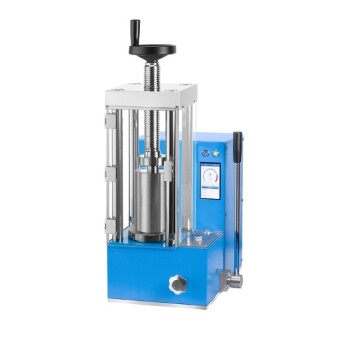
- Electric Lab Cold Isostatic Press CIP Machine for Cold Isostatic Pressing
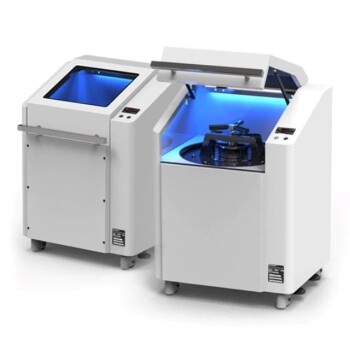
- Laboratory Disc Cup Vibratory Mill for Sample Grinding
- Automatic Laboratory Hydraulic Pellet Press Machine for Lab Use
- Laboratory manual slicer
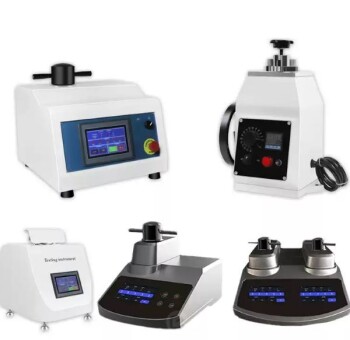
- Metallographic Specimen Mounting Machine for Laboratory Materials and Analysis
People Also Ask
- What role does cold isostatic pressing play in the formation of feed rods for single crystal growth? Ensure Stability.
- What is isostatic pressing method for ceramics? Achieve Uniform Density for Complex Parts
- In what ways does Cold Isostatic Pressing (CIP) enhance LiFePO4 battery performance? Boost Density and Conductivity
- How does Cold Isostatic Pressing (CIP) benefit SiC ceramic reactors? Achieve Flawless Material Integrity
- Why is a cold isostatic press advantageous for Argyrodite sulfide solid-state batteries? Achieve Optimal Densification