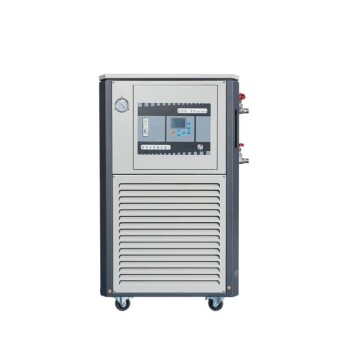
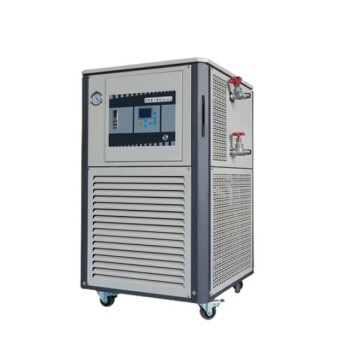
A laboratory constant temperature drying oven is the primary instrument used to determine the Total Solids (TS) content of anaerobic digestion feedstock. By subjecting samples to a consistent temperature range of 103°C to 105°C, the oven drives off all moisture until the sample reaches a constant weight, isolating the dry matter for analysis.
Core Takeaway The drying oven facilitates the precise removal of moisture, which is the foundational step for calculating dry matter content. This metric is essential for establishing accurate mass balance accounting and determining the organic matter conversion efficiency of the anaerobic digestion system.
The Mechanics of Total Solids Analysis
Temperature Precision
The oven's primary role is to maintain a rigorous thermal environment, specifically between 103°C and 105°C.
This specific temperature range is the industry standard for Total Solids (TS) analysis. It is high enough to evaporate water efficiently but controlled to standardize the drying process across different samples.
Achieving Constant Weight
The process is not defined by a set time, but by a specific outcome: constant weight.
The sample remains in the oven until subsequent weighings show no further mass loss. This ensures that the evaporation process is complete and the final measurement reflects the true dry matter content, free of residual moisture.
The Strategic Value of Dry Matter Data
Establishing Mass Balance
Accurate mass balance accounting is impossible without knowing the exact dry solid input.
Water adds weight but contributes nothing to the biological breakdown process. The drying oven removes this variable, allowing operators to calculate exactly how much physical material is entering the system.
Calculating Conversion Efficiency
To understand how well a digester is performing, you must quantify the organic matter conversion efficiency.
This calculation relies on comparing the dry matter input against the output. If the initial dry matter measurement is skewed by moisture retention, the efficiency data will be incorrect, leading to poor operational decisions.
Understanding the Trade-offs
Standard Drying vs. Specialized Methods
While the constant temperature oven is the standard for Total Solids, it is an aggressive thermal process.
For standard feedstock analysis (manure, sludge, food waste), this is necessary to ensure complete drying. However, for highly sensitive materials where surface structure preservation is required (such as nanoparticles), this method may cause oxidation or aggregation.
Efficiency vs. Time
The requirement for "constant weight" means this is not a rapid test.
Operators must accept a longer processing time to achieve data integrity. Rushing this step by pulling samples before they stabilize will result in artificially high solid readings, throwing off the entire mass balance calculation.
Making the Right Choice for Your Goal
To apply this to your laboratory operations, consider your specific analytical needs:
- If your primary focus is Mass Balance Accuracy: Ensure samples remain in the oven at 103°C–105°C until weight variance is negligible to guarantee precise input data.
- If your primary focus is Process Optimization: Use the dry matter data derived from the oven to normalize gas production rates, allowing for a true comparison of conversion efficiency.
Accurate moisture removal is not just a preparation step; it is the baseline requirement for valid anaerobic digestion metrics.
Summary Table:
| Feature | Specification/Role in AD Analysis |
|---|---|
| Standard Temperature | 103°C to 105°C (Industry Standard) |
| Primary Metric | Total Solids (TS) / Dry Matter Content |
| Success Criteria | Achieving constant weight (zero mass loss variance) |
| Analytical Goal | Establishing mass balance & organic conversion efficiency |
| Suitable Feedstock | Manure, sludge, food waste, and organic biomass |
Enhance Your Lab's Analytical Precision with KINTEK
Precise moisture removal is the foundation of reliable anaerobic digestion data. KINTEK specializes in high-performance laboratory equipment designed to meet the rigorous standards of bioenergy and material research. Whether you need a high-precision constant temperature drying oven for Total Solids analysis, muffle furnaces for volatile solids testing, or crushing and milling systems for sample preparation, our solutions ensure data integrity and operational efficiency.
From high-temperature reactors to PTFE consumables and cooling solutions, KINTEK provides the comprehensive tools your laboratory needs to optimize process efficiency and mass balance accuracy.
Ready to upgrade your research capabilities? Contact KINTEK today to discuss your equipment needs!
References
- Rodrigo A. Labatut, Curt Gooch. A Practical Approach for Estimating Influent-Effluent Mass Flow Differences in Dairy Manure-Based Anaerobic Co-Digestion Systems. DOI: 10.13031/aea.14180
This article is also based on technical information from Kintek Solution Knowledge Base .
Related Products
- 23L Laboratory Vacuum Drying Oven
- 56L Vertical Laboratory Vacuum Drying Oven
- Laboratory Scientific Electric Heating Blast Drying Oven
- 1700℃ Muffle Oven Furnace for Laboratory
- 1400℃ Muffle Oven Furnace for Laboratory
People Also Ask
- Why is a laboratory vacuum drying oven recommended for rice straw residues? Protect Your Biomass Integrity
- What role does a laboratory vacuum drying oven play in the preparation of modified multi-walled carbon nanotubes?
- What is the importance of using a laboratory vacuum drying oven? Preserving Slow-Release Microcapsule Integrity
- Why is a Laboratory Vacuum Drying Oven recommended for PBAT microspheres? Protect Sensitive Polymer Integrity
- What role does a laboratory vacuum drying oven play in processing nanoparticle powder samples? Protect Sample Integrity