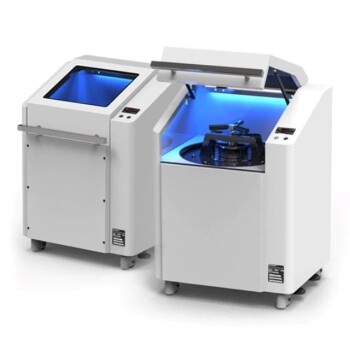
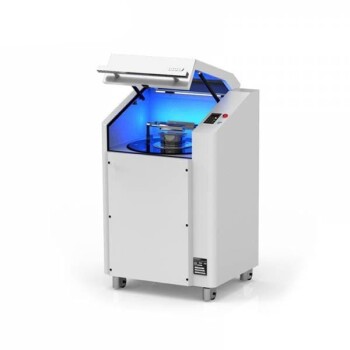
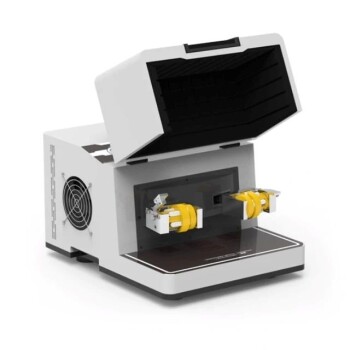
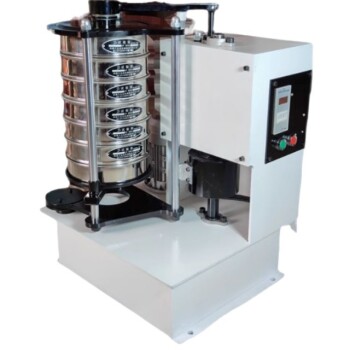
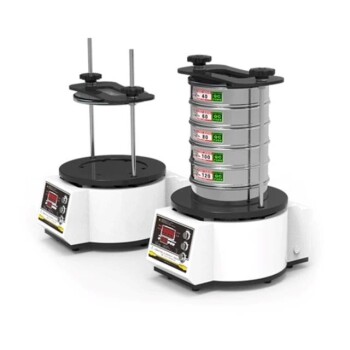
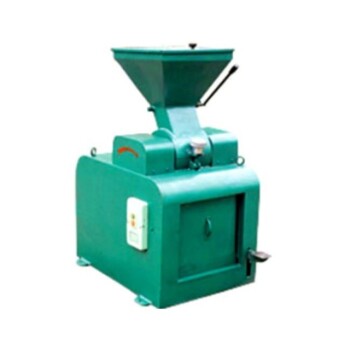
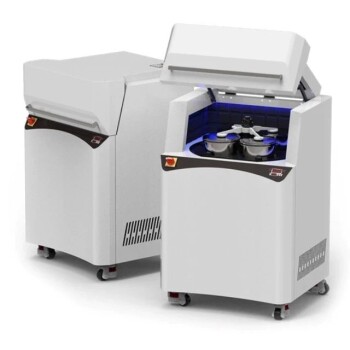
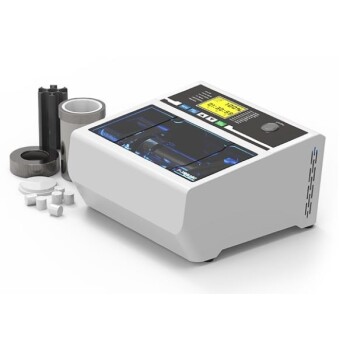
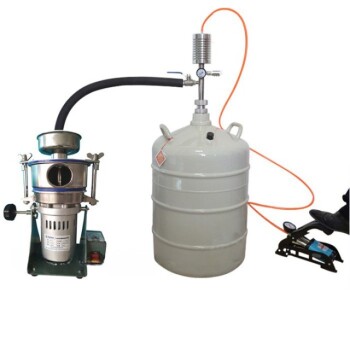
In the post-analysis of smelting products, a laboratory vibratory sample grinder is the critical bridge between raw, solidified melt and accurate analytical data. This specialized equipment pulverizes extremely hard materials—such as high-carbon ferrochrome alloys and complex silicate slags—into micron-level ultra-fine powders. By achieving this level of refinement, the grinder ensures that samples are representative and ready for advanced spectroscopic and chemical evaluation.
The primary role of a vibratory sample grinder is to eliminate mineral and particle size effects, creating a high-homogeneity powder that allows for precise elemental analysis and mineral phase identification. This process transforms non-uniform smelting waste and alloys into a standardized format required for reliable laboratory testing.
Ensuring Analytical Precision in XRF and XRD
Eliminating the Particle Size Effect
For X-ray Fluorescence (XRF) analysis, the excitation beam must uniformly penetrate the sample to yield reliable results. Vibratory grinders reduce materials to a consistent, ultra-fine state, preventing larger grains from shadowing smaller ones or causing uneven X-ray scattering. This standardization is a non-negotiable prerequisite for obtaining accurate elemental composition data.
Enhancing Phase Identification
In X-ray Diffraction (XRD), the orientation of crystals in a powder sample dictates the clarity of the resulting peaks. By pulverizing complex silicate slags into micron-level powders, the grinder ensures a random distribution of particles. This allows for the precise identification of mineral phases, which is vital for understanding the cooling history and chemical stability of the smelting product.
Preparing Samples for Chemical and Kinetic Evaluation
Homogeneity for Chemical Titration
Determining the total iron content or specific oxidation states, such as the ratio of Fe2+ to Fe3+, requires a sample that is perfectly representative of the entire melt. High-performance grinders, such as ring mills, ensure that even small test portions accurately reflect the bulk material's chemistry. This data is often used to verify the reliability of other physical measurements, such as viscosity data recorded during the smelting process.
Surface Activation for Leaching
Beyond simple analysis, grinding plays a role in determining the recovery potential of valuable metals from slag. Pulverizing material to less than 80 microns breaks down silicate particles that may encapsulate sulfide minerals. This surface activation exposes the minerals to chemical reagents, significantly increasing the efficiency of processes like sulfuric acid leaching.
Understanding the Trade-offs and Limitations
Potential for Cross-Contamination
The high-energy impact required to pulverize hard alloys can lead to material wear from the grinding media (e.g., chrome steel or tungsten carbide). If the grinding bowl material is present in the sample's target elements, it can introduce analytical bias. Selecting the correct bowl material is essential to maintain the integrity of the trace element analysis.
Heat Generation and Phase Alteration
Rapid vibratory grinding generates significant friction and heat, which can potentially alter the oxidation state of sensitive minerals. For certain smelting products, excessive grinding times may lead to the unintended transformation of phases or the loss of volatile components. Users must balance the need for fineness with the risk of physically or chemically altering the sample.
How to Apply This to Your Post-Analysis Workflow
Selecting the Right Approach for Your Goal
To maximize the value of your post-analysis, the grinding strategy must align with your specific research or quality control objectives.
- If your primary focus is Precise Elemental Analysis (XRF): Prioritize grinding to a uniform, ultra-fine powder to ensure the X-ray beam achieves maximum and consistent penetration.
- If your primary focus is Mineral Recovery and Leaching: Focus on breaking down encapsulation and achieving a particle size below 80 microns to maximize the exposed surface area for chemical reactions.
- If your primary focus is Phase Identification (XRD): Ensure the sample is ground finely enough to eliminate preferred orientation effects without over-grinding and inducing amorphous structures.
By mastering the transition from solid melt to ultra-fine powder, you ensure that every subsequent analytical step is built on a foundation of accuracy and representativeness.
Summary Table:
| Application | Role of Grinder | Primary Benefit |
|---|---|---|
| XRF Analysis | Pulverizes to uniform, micron-level powder | Eliminates particle size effects for accurate elemental data |
| XRD Identification | Ensures random crystal orientation | Precise mineral phase identification and peak clarity |
| Chemical Titration | Homogenizes bulk melt samples | Guarantees representative results for iron oxidation states |
| Leaching/Recovery | Surface activation & particle breakdown | Maximizes chemical reaction efficiency for metal recovery |
Transform your raw smelting products into precise analytical insights with KINTEK’s industry-leading laboratory solutions. We specialize in high-performance crushing and milling systems, including vibratory grinders and ring mills designed to achieve micron-level homogeneity while minimizing contamination.
Beyond sample preparation, KINTEK offers a comprehensive suite of equipment for metallurgical excellence, including high-temperature furnaces, high-pressure reactors, and hydraulic pellet presses. Whether you are optimizing alloy compositions or managing complex slag analysis, our tools are engineered for durability and scientific rigor. Contact us today to discover how KINTEK can elevate your laboratory’s analytical capabilities and workflow efficiency!
References
- Almagul Ultarakova, Zhadyra Yerzhanova. Physical and Chemical Studies of Smelting Products of Calcinated Composite Pellets Produced from Chromium Production Waste. DOI: 10.3390/jcs7090386
This article is also based on technical information from Kintek Solution Knowledge Base .
Related Products
- Laboratory Disc Cup Vibratory Mill for Sample Grinding
- Lab Vibration Mill
- Vibrating Disc Mill Small Laboratory Grinding Machine
- High Energy Vibratory Laboratory Ball Mill Grinding Mill Single Tank Type
- Laboratory Grinding Mill Mortar Grinder for Sample Preparation
People Also Ask
- What function does a laboratory vibratory mill serve? Achieve 1–5 µm Precision for Cs-Aluminosilicate Powder
- What is the function of an industrial vibratory mill? Optimize Fe-Cr-Al Alloy Powder Production
- Why use stainless steel jars and balls for solid-state battery slurries? Maximize Dispersion and Conductivity
- How does a Vibratory Mill improve niobium recovery efficiency? Optimize Waste Pre-treatment for Maximum Yield
- What are the different types of laboratory mills? Choose the Right Grinder for Your Sample Material