The magnetic stirrer serves as the critical regulator of diffusion and kinetics during the preparation of nanoporous gold (npAu) supported catalysts. By maintaining continuous, 24-hour agitation of the ethanol-based precursor solution at room temperature, it ensures that precursor molecules do not settle but are actively circulated around and within the gold scaffold.
The stirrer’s role extends beyond simple mixing; it is the primary driver of structural uniformity. By facilitating the deep diffusion of precursors into the nanoporous architecture, it enables the formation of a compositionally homogeneous and thickness-controlled oxide layer directly on the gold ligaments.
Mechanisms of Uniform Coating
Facilitating Deep Pore Diffusion
The nanoporous gold scaffold possesses a complex, highly porous structure that resists passive coating methods. Continuous agitation is required to force the precursor solution—containing elements like tetrabutyl titanate and cerium nitrate—deep into these microscopic pores.
Without this driven diffusion, the precursors would likely coat only the exterior surface of the scaffold. The magnetic stirrer ensures the solution penetrates the entire depth of the material, exposing the internal gold ligaments to the reactants.
Controlling Reaction Kinetics
The sol-gel process involves delicate hydrolysis and condensation reactions that transform liquid precursors into a solid oxide network. The magnetic stirrer controls the kinetics of these reactions by maintaining a consistent chemical environment.
By preventing the formation of concentration gradients, the stirrer ensures that the conversion from sol to gel occurs at a steady, predictable rate across the entire sample. This is essential for preventing the solution from reacting too quickly in localized spots, which would result in uneven deposits.
Ensuring Layer Homogeneity
To create an effective mixed oxide catalyst, the oxide layer must be uniform in both composition and thickness. Mechanical agitation prevents the agglomeration of precursor molecules before they bind to the gold surface.
This molecular-level mixing ensures that the resulting oxide layer is smooth and continuous. It prevents the formation of "clumps" or structural defects that could block pores or reduce the available surface area of the active sites.
Common Pitfalls to Avoid
While agitation is necessary, inconsistent or inadequate stirring leads to structural failure. The primary risk during this phase is the localized agglomeration of components.
If the stirring speed fluctuates or stops, the precursors may aggregate in the bulk solution rather than depositing as a thin film on the gold ligaments. This results in a catalyst with blocked pores and uneven active site distribution, significantly degrading its performance.
Making the Right Choice for Your Goal
To ensure the successful synthesis of high-performance npAu-supported catalysts, consider the following operational focuses:
- If your primary focus is deep structural penetration: maintain continuous, uninterrupted stirring for the full 24-hour cycle to overcome diffusion resistance within the porous scaffold.
- If your primary focus is compositional consistency: ensure the stirring speed is sufficient to induce molecular-level mixing of multiple precursors (e.g., Titanium and Cerium) to prevent phase separation.
Ultimately, the precision of your agitation defines the uniformity of your catalyst's active surface.
Summary Table:
| Mechanism | Role of Magnetic Stirrer | Impact on Catalyst |
|---|---|---|
| Pore Diffusion | Forces precursor solution deep into microscopic pores | Enables full internal ligament coating |
| Reaction Kinetics | Maintains a consistent chemical environment | Prevents localized reaction & uneven deposits |
| Homogeneity | Prevents molecular agglomeration & concentration gradients | Ensures smooth, continuous oxide layer |
| Structural Integrity | Sustains 24-hour continuous agitation | Prevents blocked pores and structural defects |
Elevate Your Nanomaterial Synthesis with KINTEK Precision
Achieving the perfect nanoporous gold catalyst requires more than just chemistry—it requires precise mechanical control. KINTEK specializes in high-performance laboratory equipment designed to meet the rigorous demands of sol-gel processes and catalyst research.
From high-stability magnetic stirrers and shakers for 24-hour agitation to advanced crushing, milling, and high-temperature furnace systems for material finishing, our tools ensure structural uniformity and batch-to-batch consistency. Whether you are developing mixed oxide catalysts, conducting battery research, or exploring advanced metallurgy, KINTEK provides the high-quality consumables—including PTFE products, ceramics, and crucibles—to support your breakthrough.
Ready to optimize your lab’s efficiency and coating precision? Contact KINTEK today to discover how our comprehensive range of laboratory solutions can empower your research.
References
- Junjie Shi, Arne Wittstock. A versatile sol–gel coating for mixed oxides on nanoporous gold and their application in the water gas shift reaction. DOI: 10.1039/c5cy02205c
This article is also based on technical information from Kintek Solution Knowledge Base .
Related Products
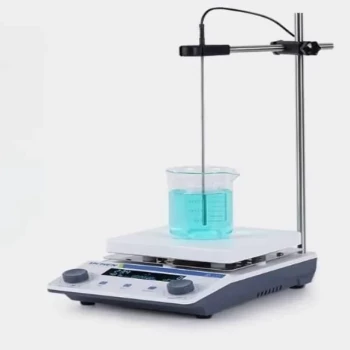
- Laboratory Small Constant Temperature Heated Magnetic Stirrer Heater and Stirrer
- Custom PTFE Teflon Parts Manufacturer for Magnetic Stirring Bar
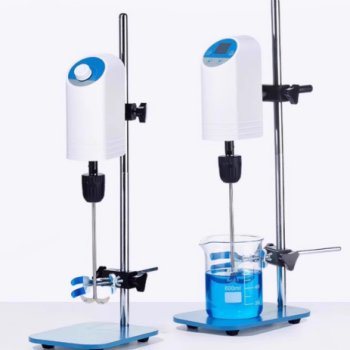
- High Performance Laboratory Stirrers for Diverse Applications
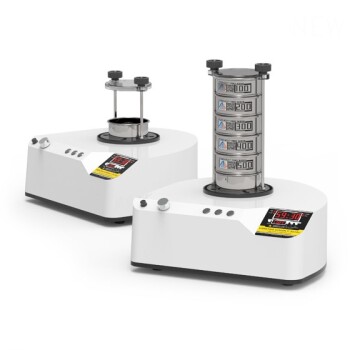
- Three-dimensional electromagnetic sieving instrument
- Custom PTFE Teflon Parts Manufacturer for PTFE Stirring Bar Recovery Rod
People Also Ask
- What role does a magnetic stirrer with heating play in ZnO nanoparticle synthesis? Precision Control for Quality Results
- What role does a constant temperature heating magnetic stirrer play in MFC-HAp synthesis? Achieve Material Homogeneity
- What is the function of a laboratory magnetic stirrer in Ni–Cr–P electrodeposition? Optimize Ion Transport & Coating
- Why is a laboratory magnetic stirrer required for benzoic acid esters? Boost Reaction Speed & Yield with High RPM
- What role does a laboratory magnetic stirrer play in TiO2 and TiO2-Ag sol preparation? Master Chemical Kinetics