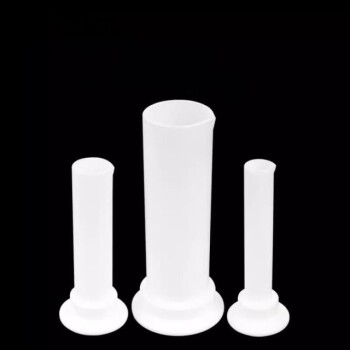
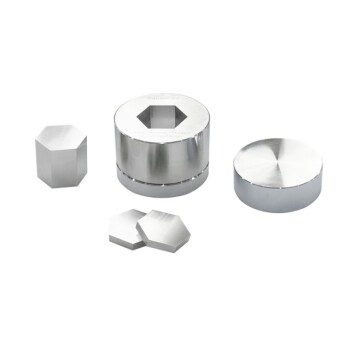
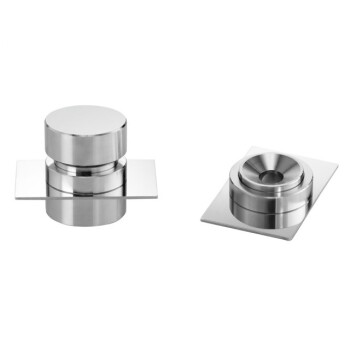
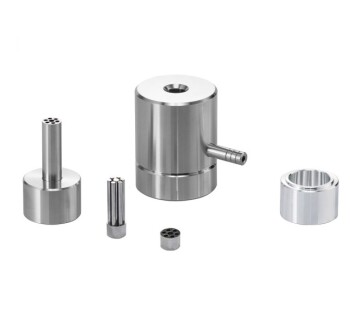
The primary role of a Polytetrafluoroethylene (PTFE) mold in this process is to act as a chemically inert, non-stick container featuring a pre-defined micro-pillar array. It constrains and guides the expansion of polymer melts during supercritical carbon dioxide (sc-CO2) foaming, forcing the material to fill specific gaps to create ordered structures.
The PTFE mold acts as the architectural blueprint for the foam, transforming a chaotic expansion process into a precision manufacturing method capable of producing regular micro-channel arrays for tissue engineering.
The Mechanism of Structure Formation
Controlling Polymer Expansion
In standard foaming, polymers expand randomly. The PTFE mold introduces a physical constraint to this process. As the polymer melt expands due to the supercritical CO2, it is forced to navigate the geometry of the mold.
Creating Ordered Micro-channels
The mold contains a specific array of micro-pillars. The expanding polymer fills the voids between these pillars. Once the process is complete and the mold is removed, the result is a foam scaffold with a regular, ordered system of micro-channels or microtubes.
Why PTFE is the Material of Choice
Essential Mold-Release Properties
The most critical attribute of PTFE in this application is its low surface energy (non-stick nature). When creating delicate micro-structures, the extraction process is high-risk; if the polymer sticks to the mold, the fine channels will tear. PTFE ensures the foam releases cleanly, preserving the morphology.
Chemical Stability
Supercritical CO2 acts as a solvent and plasticizer under high pressure. PTFE is chemically stable and does not react with the sc-CO2 or the polymer melt. This ensures that the purity of the biomedical scaffold is maintained and the mold itself does not degrade during the process.
Understanding the Trade-offs
Precision vs. Durability
While PTFE is excellent for release and stability, it is a softer material compared to metal molds. Care must be taken to ensure the micro-pillar arrays are not deformed under high cycling or extreme mechanical pressure, which would compromise the regularity of the foam.
Morphological Constraints
The process relies heavily on the ability of the polymer to flow into the gaps between pillars. If the gaps are too narrow or the viscosity of the melt is too high, the PTFE mold alone cannot guarantee perfect replication; the process parameters must be perfectly tuned to the mold's geometry.
Making the Right Choice for Your Goal
To maximize the effectiveness of PTFE molds in your foaming process, align your approach with your specific end-goals:
- If your primary focus is Tissue Regeneration: Prioritize the precision of the micro-pillar array in the mold design to ensure the resulting micro-channels mimic the biological environment needed for cell growth.
- If your primary focus is Manufacturing Efficiency: Leverage the mold-release properties of PTFE to reduce cycle times and minimize the rejection rate of damaged scaffolds.
The successful use of a PTFE mold turns a random chemical reaction into a precise engineering tool for advanced biomedical applications.
Summary Table:
| Feature | Role/Benefit of PTFE in sc-CO2 Foaming |
|---|---|
| Physical Role | Acts as a micro-pillar array template to guide polymer expansion. |
| Surface Energy | Low surface energy ensures clean mold release without tearing delicate structures. |
| Chemical Stability | Resistant to sc-CO2 solvent effects; maintains purity of biomedical scaffolds. |
| Constraint | Transforms random pore formation into ordered micro-channel arrays. |
| Application | Ideal for tissue engineering scaffolds requiring specific morphology. |
Elevate Your Material Research with KINTEK Precision Solutions
Achieving perfect morphology in supercritical CO2 foaming requires more than just high-quality polymers—it demands the right environment. At KINTEK, we specialize in the essential tools that drive innovation in laboratory and industrial research.
Our extensive portfolio includes high-performance PTFE products, ceramics, and crucibles designed for superior mold-release and chemical inertness. Pair these with our advanced high-temperature high-pressure reactors and autoclaves to master the sc-CO2 foaming process with unparalleled precision. Whether you are developing tissue engineering scaffolds or next-generation battery components, KINTEK provides the comprehensive range of laboratory equipment and consumables you need to succeed.
Ready to optimize your foaming process? Contact our technical experts today to discover how KINTEK’s specialized solutions can bring precision to your lab.
References
- Yujin Zhou, Mengdong Zhang. Technical development and application of supercritical CO2 foaming technology in PCL foam production. DOI: 10.1038/s41598-024-57545-6
This article is also based on technical information from Kintek Solution Knowledge Base .
Related Products
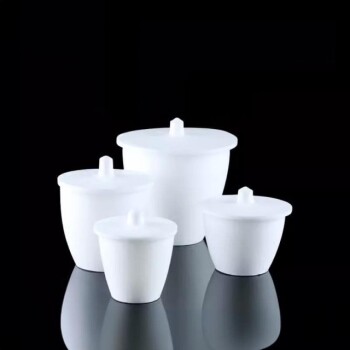
- Custom Machined and Molded PTFE Teflon Parts Manufacturer with PTFE Crucible and Lid
- Custom PTFE Teflon Parts Manufacturer for Hydrothermal Synthesis Reactor Polytetrafluoroethylene Carbon Paper and Carbon Cloth Nano-growth
- Custom PTFE Teflon Parts Manufacturer for Sampling Solution Sample and Dry Powder Spoons
- Custom PTFE Teflon Parts Manufacturer for Non-Standard Insulator Customization
- Custom PTFE Teflon Parts Manufacturer for PTFE Mesh F4 Sieve
People Also Ask
- Why is a PTFE crucible preferred for plasma etching? Ensure Chemical Integrity and Targeted Action
- What essential consumables are required for laboratory processes? Expert Guide to PTFE, Ceramics, and Crucibles
- Why are PTFE molds used for dental resin specimens? Ensure Pure Samples and Accurate Testing
- What are the advantages of using PTFE molds for preparing PUA hybrid films? Ensure High Purity and Easy Demolding
- What advantages do PTFE molds offer for composite polymer electrolyte casting? Ensure Defect-Free Membrane Fabrication