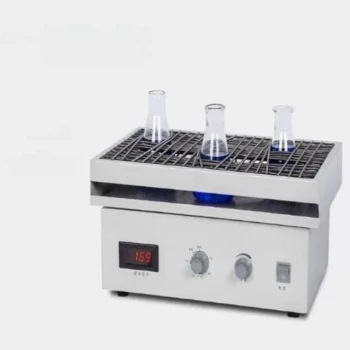
The primary role of a rotary shaker in bacterial attachment experiments is to create a controlled kinetic environment that actively prevents the natural sedimentation of cells. By maintaining a specific rotation speed, the device keeps bacterial cells uniformly suspended within the liquid, ensuring they do not settle onto test surfaces simply due to gravity.
The rotary shaker eliminates physical deposition as an experimental variable. This ensures that any bacterial attachment observed is the result of true biological adhesion and physicochemical interactions, rather than cells merely falling out of suspension.
The Mechanics of Experimental Validity
To accurately assess biofilm formation and biological fouling, you must isolate the specific mechanisms of attachment. A rotary shaker is the critical tool used to distinguish between active adhesion and passive settling.
Preventing Gravitational Bias
Under static conditions, gravity exerts a constant downward force on bacterial cells. Without intervention, these cells will naturally sink and accumulate on horizontal surfaces.
A rotary shaker counteracts this by introducing kinetic energy. This prevents the "false positive" of cells appearing to attach to a membrane when they are actually just resting on top of it due to their weight.
Ensuring Uniform Distribution
For an experiment to be reproducible, the bacterial suspension must be homogeneous.
The rotation ensures that cells are evenly distributed throughout the fluid volume. This guarantees that the membrane surface is exposed to a consistent concentration of bacteria, rather than a stratified gradient where cell density is higher at the bottom.
Isolating Adhesion Capabilities
The ultimate goal of these experiments is often to test the affinity between the bacteria and the membrane surface.
By removing gravity-driven deposition, the shaker forces the experiment to rely solely on physicochemical interactions. Consequently, any cells that remain on the surface have done so because of their specific adhesion capabilities, providing a true measure of biofouling potential.
Understanding the Experimental Trade-offs
While the rotary shaker is essential for isolating biological variables, it introduces specific dynamics that must be managed to maintain data integrity.
The Risk of Static Conditions
If a rotary shaker is omitted or fails, the experiment reverts to a static condition.
In this scenario, physical deposition dominates the results. This makes it impossible to accurately assess the biological fouling potential of the bacteria or the anti-fouling properties of a membrane, as the data will be skewed by gravity.
The Necessity of Controlled Kinetics
The reference emphasizes a "controlled kinetic environment."
If the rotation speed is inconsistent, the hydrodynamic forces acting on the cells will vary. Stability is required to ensure that the suspension remains uniform without introducing excessive shear forces that might artificially strip attached cells away.
Ensuring Accuracy in Biofouling Assessment
To ensure your data reflects true bacterial behavior rather than physical artifacts, apply the following principles:
- If your primary focus is measuring biological adhesion: Use a rotary shaker to maintain cell suspension and eliminate gravity-induced settling.
- If your primary focus is assessing physical deposition: A static environment is appropriate, but recognize that this does not measure biological affinity.
The rotary shaker is not merely a mixing device; it is a filter that removes gravity from your data, leaving only the biological interactions you intend to study.
Summary Table:
| Feature | Role in Experiment | Impact on Data Accuracy |
|---|---|---|
| Kinetic Motion | Prevents cell sedimentation | Eliminates false positives from gravity |
| Uniform Suspension | Maintains homogenous cell density | Ensures consistent exposure across surfaces |
| Controlled Speed | Balances suspension vs. shear | Protects integrity of biological interactions |
| Environment Type | Active vs. Static isolation | Distinguishes adhesion from physical deposition |
Elevate Your Biofilm Research with KINTEK Precision
Accuracy in bacterial attachment studies starts with the right equipment. KINTEK provides high-performance shakers, homogenizers, and cooling solutions designed to maintain the controlled kinetic environments essential for reproducible data. Whether you are conducting complex battery research, specialized crushing and milling, or precise biofilm assessments, our comprehensive range of laboratory equipment ensures your results are driven by science, not variables.
Ready to optimize your lab's performance? Contact KINTEK today to discover how our high-temperature furnaces, hydraulic presses, and specialized consumables can support your most critical experiments.
References
- Louise Vanysacker, Ivo F.J. Vankelecom. Microbial Adhesion and Biofilm Formation on Microfiltration Membranes: A Detailed Characterization Using Model Organisms with Increasing Complexity. DOI: 10.1155/2013/470867
This article is also based on technical information from Kintek Solution Knowledge Base .
Related Products
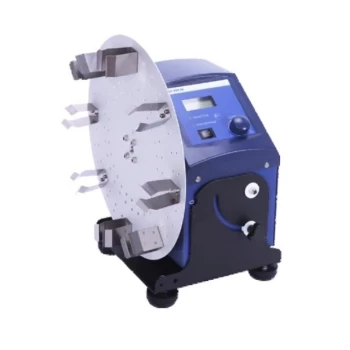
- Laboratory Disc Rotary Mixer for Efficient Sample Mixing and Homogenization
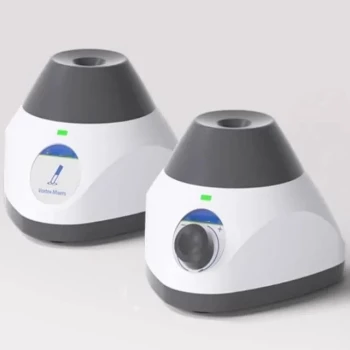
- Laboratory Vortex Mixer Orbital Shaker Multifunctional Rotation Oscillation Mixer
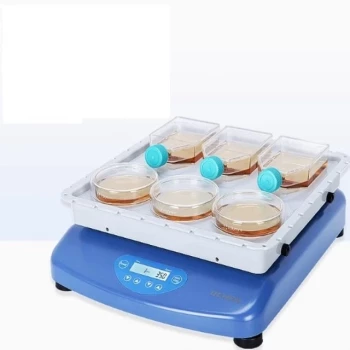
- Laboratory Oscillating Orbital Shaker
- Single Punch Tablet Press Machine and Mass Production Rotary Tablet Punching Machine for TDP
- Laboratory Multifunctional Small Speed-Adjustable Horizontal Mechanical Shaker for Lab
People Also Ask
- What is a laboratory mixer used for? Choose the Right Tool for Liquids or Solids
- What is a laboratory mixer? A Guide to Achieving Perfect Sample Homogeneity
- What are laboratory mixers used for? Achieve Perfect Sample Homogeneity and Reliable Results
- How does a high-efficiency homogenizing mixer contribute to the preparation of Tobermorite and Xonotlite precursors?
- Why is precision mixing required for concrete corrosion studies? Ensure Data Integrity through Homogenization