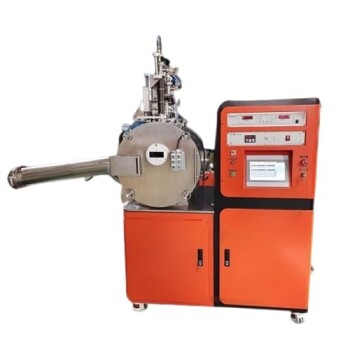
The primary role of a vacuum pumping system combining rotary and turbomolecular pumps in the PECVD of organosilicon films is to establish a high-purity, low-pressure environment critical for deposition. By evacuating the stainless steel reaction chamber to a base pressure typically below 1.9 Pa, this system removes ambient air and background impurities. This evacuation prepares the chamber for the introduction of precursor gases, specifically hexamethyldisiloxane (HMDSO) and argon, allowing them to react under strictly controlled conditions.
This dual-pump configuration is essential for creating a "clean slate" within the chamber, ensuring that the deposited films are free from contaminants introduced by ambient air.
Establishing the Reaction Environment
Reaching the Critical Base Pressure
The combined pumping system is engineered to drive the chamber pressure down to a specific target.
For organosilicon PECVD processes, the system must achieve a base pressure of less than 1.9 Pa. Reaching this threshold is the definitive sign that the chamber is ready for processing.
Eliminating Contaminants
The quality of an organosilicon film is heavily dependent on the purity of the reaction environment.
The pumping system actively removes ambient air and impurity gases from the stainless steel chamber. Without this removal, these impurities would incorporate into the film, degrading its electrical or mechanical properties.
Facilitating Precursor Interaction
Enabling Precise Gas Mixing
Once the impurities are evacuated, the system maintains the low-pressure environment required for the process gases.
This stable vacuum allows for the introduction of HMDSO (hexamethyldisiloxane) and argon without interference.
Controlling Reaction Dynamics
The physics of PECVD rely on specific pressure regimes to sustain plasma and uniform deposition.
The vacuum system ensures these precursors can react in a precise mixing ratio. This control is what ultimately dictates the uniformity and stoichiometry of the resulting organosilicon film.
Understanding the Critical Dependencies
Sensitivity to Base Pressure
The specific metric of 1.9 Pa is not arbitrary; it represents a threshold for purity.
If the system fails to reach this pressure, it indicates the presence of leaks or insufficient pumping speed. Operating above this pressure usually results in the inclusion of oxygen or nitrogen from the atmosphere into the film.
System Interdependence
The rotary and turbomolecular pumps function as an integrated unit to span the required pressure range.
While the text focuses on the result, it is important to note that the system's ability to handle the specific load of HMDSO—a complex organic molecule—relies on the continuous, efficient operation of this pumping combination.
Ensuring Process Integrity
To maximize the quality of organosilicon films, focus on the following operational metrics:
- If your primary focus is Film Purity: Verify that the pumping system consistently reaches a base pressure below 1.9 Pa before every run to guarantee the removal of ambient air.
- If your primary focus is Deposition Consistency: Ensure the vacuum level remains stable after precursor introduction to maintain the precise mixing ratio of HMDSO and argon.
A reliable, high-performance vacuum system is the invisible foundation upon which all successful PECVD chemistry is built.
Summary Table:
| Feature | Specification/Role |
|---|---|
| Core Pumps | Rotary and Turbomolecular Pump Combination |
| Target Base Pressure | < 1.9 Pa |
| Primary Precursors | Hexamethyldisiloxane (HMDSO) & Argon (Ar) |
| Chamber Material | Stainless Steel |
| Key Function | Elimination of ambient impurities for high-purity films |
| Process Benefit | Precise gas stoichiometry & uniform plasma deposition |
Elevate Your Thin Film Quality with KINTEK
Precise vacuum control is the foundation of high-performance PECVD. At KINTEK, we specialize in the advanced laboratory equipment necessary to master complex organosilicon deposition processes. Whether you are optimizing your CVD/PECVD systems, managing high-purity gas mixing, or requiring robust vacuum pumping solutions, our expertise ensures your research achieves unmatched purity and consistency.
Our laboratory portfolio includes:
- Advanced CVD & PECVD Systems for precise film growth.
- High-Temperature Furnaces (Muffle, Tube, Vacuum, and Atmosphere).
- High-Pressure Reactors & Autoclaves for demanding chemical synthesis.
- Specialized Consumables including ceramics, crucibles, and PTFE products.
Don't let ambient contaminants compromise your results. Partner with KINTEK for reliable, high-performance equipment tailored to your laboratory's needs.
Contact Our Technical Experts Today to Optimize Your PECVD Workflow
References
- Rita C. C. Rangel, Elidiane Cipriano Rangel. Role of the Plasma Activation Degree on Densification of Organosilicon Films. DOI: 10.3390/ma13010025
This article is also based on technical information from Kintek Solution Knowledge Base .
Related Products
- RF PECVD System Radio Frequency Plasma-Enhanced Chemical Vapor Deposition RF PECVD
- Chemical Vapor Deposition CVD Equipment System Chamber Slide PECVD Tube Furnace with Liquid Gasifier PECVD Machine
- Inclined Rotary Plasma Enhanced Chemical Vapor Deposition PECVD Equipment Tube Furnace Machine
- Inclined Rotary Plasma Enhanced Chemical Vapor Deposition PECVD Equipment Tube Furnace Machine
- 915MHz MPCVD Diamond Machine Microwave Plasma Chemical Vapor Deposition System Reactor
People Also Ask
- What is plasma enhanced chemical vapour deposition PECVD used for? Enable Low-Temp Thin Films for Electronics & Solar
- What is the role of RF-PECVD in VFG preparation? Mastering Vertical Growth and Surface Functionality
- What is an example of PECVD? RF-PECVD for High-Quality Thin Film Deposition
- What is plasma enhanced chemical Vapour deposition process used for fabrication of? A Guide to Low-Temperature Thin Films
- What is plasma CVD? Unlock Low-Temperature Thin Film Deposition for Sensitive Materials