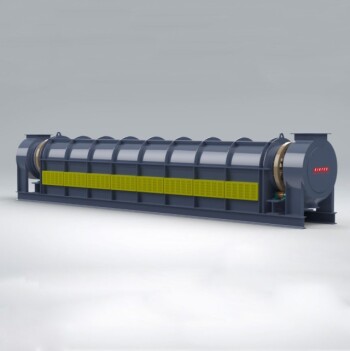
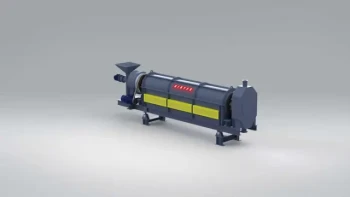
The primary role of an industrial electric furnace in this context is to provide a strictly controlled high-temperature environment, typically ranging between 800 and 900 °C, which is essential for the calcination of catalyst materials. This thermal treatment is the critical processing step that converts raw natural minerals into chemically active agents capable of breaking down complex biomass tar molecules.
By converting inert carbonates into active oxides and defining the material's physical architecture, the electric furnace acts as the defining instrument for catalyst activation. It determines not just if the catalyst works, but how efficiently and durably it performs under stress.
Transforming Raw Minerals into Active Catalysts
The Calcination Mechanism
The central function of the furnace is to facilitate calcination. Natural mineral precursors, such as dolomite and olivine, enter the furnace as carbonate minerals.
Activating Chemical Composition
Under the intense heat of 800 to 900 °C, these carbonates undergo a chemical decomposition. The furnace environment drives off carbon dioxide, converting the material into catalytically active oxides, specifically magnesium oxide (MgO) and calcium oxide (CaO).
Creating Active Sites
Without this thermal conversion, the raw minerals remain chemically inert regarding tar reforming. The furnace ensures that the maximum number of active sites are generated on the catalyst surface.
Engineering Physical Properties
Optimizing Pore Structure
Beyond chemical changes, the furnace plays a vital role in physical engineering. The thermal treatment adjusts the internal pore structure of the material.
Enhancing Surface Area
By removing volatile components and rearranging the crystal lattice, the furnace helps define the catalyst's specific surface area. A well-developed pore structure is crucial as it allows large tar molecules to access the active sites where reforming occurs.
Ensuring Mechanical Strength
The furnace treatment also solidifies the catalyst's physical integrity. It enhances mechanical strength, ensuring the material can withstand the physical abrasion and pressure within a biomass reactor without crumbling or degrading prematurely.
Advanced Environment Control
Managing Reaction Atmospheres
While the primary reference focuses on calcination, advanced furnace applications often require precise atmosphere control. For complex syntheses (such as molybdenum carbide catalysts), the furnace must maintain specific gas flows, such as nitrogen or methane-hydrogen mixtures.
Facilitating Reduction and Carbonization
In these scenarios, the furnace does more than heat; it acts as a chamber for reduction and carbonization reactions. It allows for the conversion of precursors into oxides and subsequent transformation into carbides, which requires an environment free of oxygen or rich in specific reactants.
Uniformity of Treatment
The electric furnace is designed to provide precise temperature distribution. This ensures that every granule of the catalyst batch undergoes the same crystalline transformation, preventing "hot spots" or uneven activation that could compromise reactor performance.
Understanding the Trade-offs
The Risk of Sintering
Precise temperature control is a double-edged sword. If the furnace temperature exceeds the optimal range (e.g., significantly above 900 °C for certain minerals), the catalyst pores may collapse. This process, known as sintering, drastically reduces surface area and catalytic activity.
Energy vs. Activation
Operating at these high temperatures requires significant energy input. The trade-off lies in balancing the energy cost of the furnace against the degree of activation achieved. Insufficient heating saves energy but results in incomplete conversion of carbonates to oxides, leading to poor performance.
Making the Right Choice for Your Goal
To select or operate the correct furnace for your catalyst preparation, consider your specific material requirements:
- If your primary focus is natural minerals (Dolomite/Olivine): Prioritize a furnace capable of maintaining a stable 800–900 °C range to ensure complete conversion of carbonates into active MgO and CaO oxides.
- If your primary focus is synthetic or complex catalysts: Prioritize a furnace with precise atmosphere control (gas flow regulators) and excellent temperature uniformity to manage reduction and carbonization steps.
- If your primary focus is mechanical durability: Ensure the furnace profile allows for a sufficient "soak time" at peak temperature to strengthen the material lattice without inducing sintering.
Ultimately, the industrial electric furnace is the foundational tool that dictates the efficiency, selectivity, and longevity of your biomass tar reforming catalysts.
Summary Table:
| Process Step | Temperature Range | Furnace Role/Function |
|---|---|---|
| Calcination | 800°C – 900°C | Converts carbonates (Dolomite/Olivine) into active CaO and MgO oxides. |
| Pore Engineering | Variable | Optimizes internal structure and surface area for tar molecule access. |
| Sintering Prevention | < 900°C (Optimized) | Maintains temperature uniformity to prevent pore collapse and activity loss. |
| Atmosphere Control | N₂ / CH₄-H₂ flows | Facilitates reduction and carbonization for complex synthetic catalysts. |
| Structural Solidification | Peak Soak Time | Enhances mechanical strength and durability for reactor environments. |
Precision Thermal Solutions for Catalyst Innovation
At KINTEK, we understand that the performance of your biomass tar reforming catalyst depends on the precision of its thermal activation. Our industrial electric furnaces—ranging from high-temperature muffle and tube furnaces to advanced CVD and atmosphere-controlled systems—are engineered to provide the exact temperature uniformity and atmosphere control required to maximize your material's surface area and mechanical strength.
Whether you are processing natural minerals like dolomite or developing complex synthetic carbides, KINTEK offers the comprehensive laboratory equipment and consumables (including PTFE, ceramics, and crucibles) to ensure your research scales into success.
Ready to optimize your catalyst preparation? Contact our experts today to find the perfect furnace for your laboratory or industrial application.
References
- A. Cavalli, P.V. Aravind. Catalytic reforming of acetic acid as main primary tar compound from biomass updraft gasifiers: screening of suitable catalysts and operating conditions. DOI: 10.1016/j.biombioe.2021.105982
This article is also based on technical information from Kintek Solution Knowledge Base .
Related Products
- Electric Rotary Kiln Pyrolysis Furnace Plant Machine Calciner Small Rotary Kiln Rotating Furnace
- Electric Rotary Kiln Small Rotary Furnace for Activated Carbon Regeneration
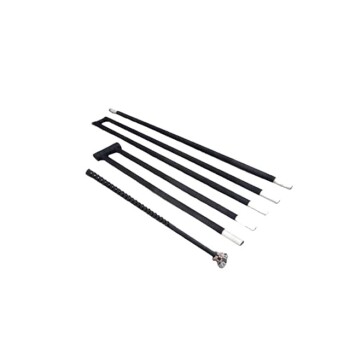
- Silicon Carbide SiC Thermal Heating Elements for Electric Furnace
- Electric Rotary Kiln Continuous Working Small Rotary Furnace Heating Pyrolysis Plant
- Graphite Vacuum Furnace High Thermal Conductivity Film Graphitization Furnace
People Also Ask
- What is a rotary kiln electric furnace? Achieve Superior Uniform Heating for Your Materials
- What are the characteristics of the slipping, slumping, and rolling modes of bed motion? Optimize Your Rotary Process
- What are the advantages of rotary kiln furnace? Achieve Superior Uniformity & Efficiency
- What is the temperature of a rotating kiln? It Depends on Your Material and Process Goal
- What are the principles of a rotary kiln? Master the Mechanics of High-Temperature Processing