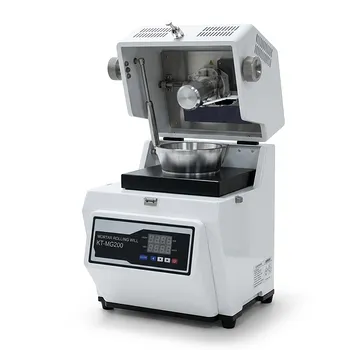
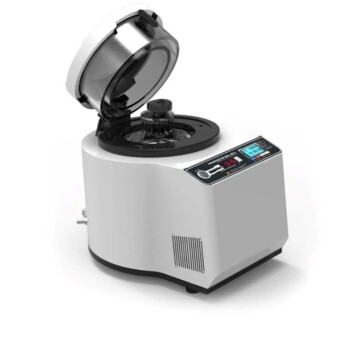
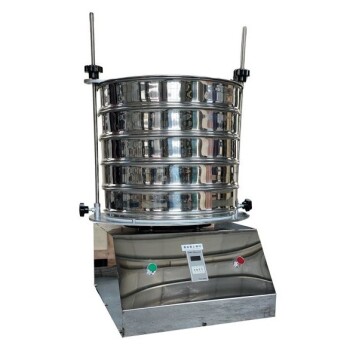
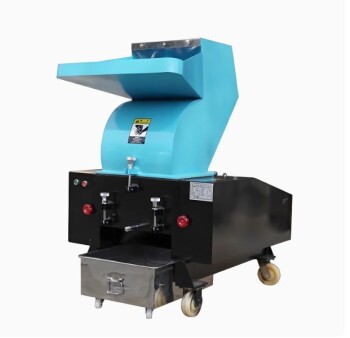
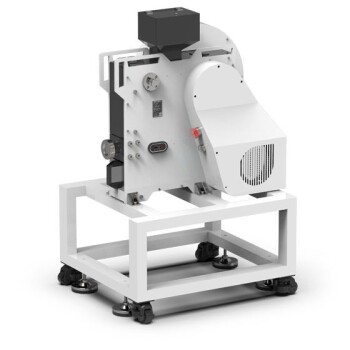
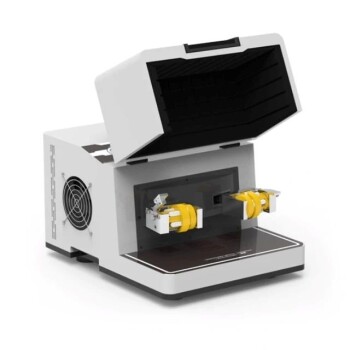
The mechanical pretreatment of rice straw through crushing, milling, and sieving is the foundational step for ensuring biochar quality. These processes transform raw, bulky biomass into a uniform powder—typically refined to a 0.25mm particle size using a 60-mesh sieve—to guarantee consistent heat and mass transfer during the subsequent pyrolysis process.
Pretreatment equipment standardizes particle size to maximize surface area and ensure uniform thermal decomposition. This uniformity is essential for achieving predictable physicochemical properties and enabling the consistent chemical impregnation required for high-performance functional biochars.
Achieving Physicochemical Uniformity
Optimizing Heat and Mass Transfer
The primary role of crushing and milling systems is to eliminate the natural structural variations in rice straw. By reducing the material to a fine, consistent powder, you ensure that thermal energy penetrates the particles evenly during pyrolysis.
Consistent heat transfer prevents the formation of "under-cooked" cores or over-processed surfaces. This uniformity is critical for maintaining the primary biochar’s physicochemical properties, ensuring that every batch meets specific technical standards.
Standardizing Particle Dimensions
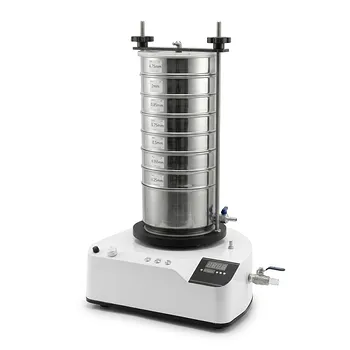
Sieving equipment acts as the quality control gatekeeper in the pretreatment phase. By using standard sieves (such as a 60-mesh or 0.25mm aperture), operators can classify pulverized materials into precise ranges.
Standardization ensures that the raw material behaves predictably during industrial processing. This precision is fundamental for the reproducibility of experimental data and the stability of the final product's adsorption capacity.
Enhancing Chemical Reactivity and Impregnation
Increasing Specific Surface Area
Mechanical refinement significantly increases the specific surface area of the rice straw. High-speed crushers use rotating blades to shear long fibers, exposing more of the internal cellular structure.
This increased surface area facilitates more thorough thermal decomposition. It allows volatile gases to escape efficiently and provides more active sites for the carbonization process to occur.
Facilitating Uniform Ion Loading
For specialized biochars, such as those loaded with magnesium, iron, or aluminum salts, milling is indispensable. A fine powder allows chemical solutions to uniformly impregnate the straw fiber structure.
When the particle size is tightly controlled (often between 400-800 μm for certain metal-loaded chars), the contact between the biomass and the mineral solution is optimized. This results in enhanced stability of the iron or metal loading, preventing leaching and improving performance.
Physical Stability and Mechanical Performance
Improving Pelletization and Density
Crushing and milling are essential if the biochar or raw straw is to be formed into pellets or blocks. Reducing the particle size ensures tighter bonding between particles during the pressing process.
Finer particles offer better conditioning and molding performance compared to coarse fibers. This leads to significantly higher density and mechanical strength in the resulting biomass pellets, making them easier to transport and use.
Understanding the Trade-offs
Energy Consumption vs. Surface Area
While finer particles generally improve reactivity and uniformity, the energy required for milling increases exponentially as particle size targets decrease. There is a point of diminishing returns where the cost of further grinding outweighs the marginal gains in biochar quality.
Dust Management and Material Loss
Extremely fine milling creates significant amounts of dust, which poses respiratory and explosion risks in a laboratory or industrial setting. Additionally, excessive milling can lead to material loss during the sieving process if the equipment is not properly sealed.
How to Apply This to Your Project
Making the Right Choice for Your Goal
To select the appropriate equipment and settings, you must align your pretreatment strategy with your final biochar application.
- If your primary focus is consistent adsorption performance: Use a 60-mesh sieve to ensure a uniform 0.25mm particle size for optimized heat and mass transfer.
- If your primary focus is nutrient or metal loading: Prioritize high-speed milling to maximize the specific surface area for uniform chemical impregnation.
- If your primary focus is logistics and storage: Focus on fine-grinding to improve the bonding strength and density of pelletized products.
- If your primary focus is research reproducibility: Utilize precision laboratory grading equipment to strictly control the particle size distribution across all test batches.
By mastering the mechanical refinement of rice straw, you transform a variable agricultural byproduct into a high-precision technical feedstock.
Summary Table:
| Pretreatment Step | Key Function | Impact on Biochar Quality |
|---|---|---|
| Crushing & Milling | Fiber shearing & size reduction | Increases surface area for uniform heat transfer and chemical reactivity. |
| Sieving | Particle size classification | Ensures reproducibility and standardizes ion loading for functional biochars. |
| Pelletizing | High-pressure compaction | Improves mechanical strength and density for easier logistics and storage. |
| Optimization | Energy vs. surface area balance | Maximizes material efficiency while minimizing dust and energy waste. |
Elevate Your Biochar Research with KINTEK Precision
Achieving high-performance biochar starts with impeccable pretreatment. KINTEK specializes in providing the laboratory equipment you need to transform raw biomass into high-precision feedstocks.
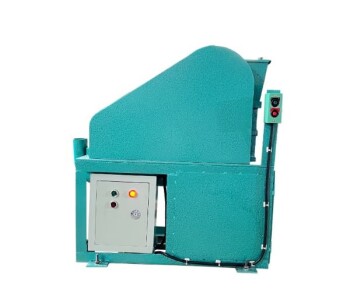
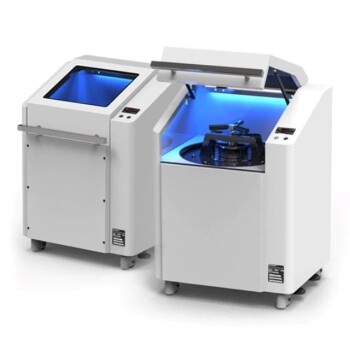
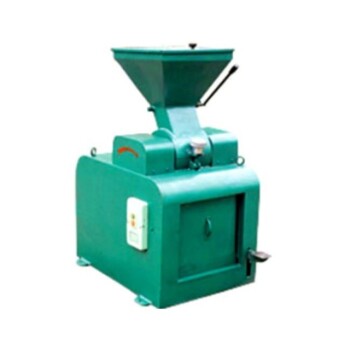
From advanced crushing and milling systems and sieving equipment for perfect particle distribution to hydraulic pellet presses for density optimization, we offer the full spectrum of tools required for material refinement. Our portfolio also features high-temperature reactors and autoclaves designed for consistent carbonization and chemical impregnation.
Why choose KINTEK?
- Consistency: Ensure every batch meets your exact technical standards.
- Versatility: Solutions for everything from basic research to industrial-scale optimization.
- Expert Support: We help you balance energy consumption with surface area gains to maximize your ROI.
Ready to optimize your biochar production? Contact our technical team today to find the ideal equipment for your laboratory!
References
- Xian Zhang, Stijn Van Hulle. Synthesis, characterization, and comparison of N-modified biochar with different nitrogen sources for bisphenol A adsorption. DOI: 10.1007/s13399-023-05224-3
This article is also based on technical information from Kintek Solution Knowledge Base .
Related Products
- Three-dimensional electromagnetic sieving instrument
- Mini Planetary Ball Mill Machine for Laboratory Milling
- Sealed Jaw Crusher High Efficiency Environmental Protection Safe and Reliable
- Laboratory Disc Cup Vibratory Mill for Sample Grinding
- Laboratory Sealed Hammer Crusher for Efficient Sample Preparation
People Also Ask
- Why is sieving equipment essential for the classification of processed bio-activated carbon? Optimize Performance
- What are the limitations of sieving? Understanding the Constraints of Particle Size Analysis
- What are advantages and disadvantages of sieving method? A Guide to Reliable & Cost-Effective Particle Sizing
- How is sieving important? The Critical Role of Particle Size Analysis in Quality Control
- What is sieving and how does it work? A Guide to Accurate Particle Size Analysis