Polycrystalline alumina ($Al_2O_3$) substrates serve as the foundational support system for Yttria-Stabilized Zirconia (YSZ) thin films created through wet chemical methods. They function primarily as a chemically inert and electrically insulating platform, providing the necessary physical flatness for spin coating and the thermal durability required for high-temperature sintering.
Core Insight: The selection of polycrystalline alumina is not merely about structural support; it is critical for data integrity. Its high thermal resistance and chemical stability ensure that the substrate does not react with the film during intense heating, guaranteeing that subsequent electrical measurements reflect only the properties of the YSZ film itself.
The Physical and Chemical Interface
Enabling Uniform Deposition
Wet chemical preparation, specifically the sol-gel method, relies heavily on the quality of the initial liquid application. Polycrystalline alumina substrates provide the flat surface essential for this process.
This flatness allows the precursor solution to spread evenly during spin coating. A consistent surface ensures the resulting film has a uniform thickness, which is vital for consistent performance.
Ensuring Electrical Isolation
Alumina is chosen specifically for its properties as an electrical insulator.
When characterizing the electrical properties of the YSZ film, the substrate must not conduct current. This insulation prevents electrical leakage through the support, isolating the measurement to the thin film alone.
Thermal Resilience and Stability
Withstanding High-Temperature Processing
Converting a wet precursor into a solid ceramic film requires significant heat, often involving annealing or flash sintering.
Alumina substrates possess high thermal resistance, allowing them to endure these harsh thermal cycles. They maintain their structural integrity and do not deform, even under the stress of rapid heating.
Preventing Chemical Contamination
At elevated temperatures, materials in contact often react or diffuse into one another, which degrades the film quality.
Alumina remains chemically stable during these processes. It does not react with the YSZ thin film, preventing the formation of secondary phases at the interface that could alter the film's composition.
Critical Considerations for Measurement
Guaranteeing Accurate Conductivity Data
The ultimate goal of many YSZ thin film studies is to measure ionic conductivity.
Because the alumina substrate is both insulating and non-reactive, it permits the accurate measurement of in-plane ionic conductivity. Researchers can be confident that the data collected represents the intrinsic behavior of the YSZ film, undistorted by substrate interference or chemical byproducts.
Making the Right Choice for Your Goal
When designing your thin film experiments, consider how the substrate influences both fabrication and characterization:
- If your primary focus is processing integrity: Rely on alumina to withstand the mechanical forces of spin coating and the thermal shock of flash sintering without warping.
- If your primary focus is electrical accuracy: Utilize alumina’s insulating properties to eliminate substrate cross-talk during in-plane conductivity measurements.
By acting as a stable, non-interfering foundation, polycrystalline alumina allows you to isolate and verify the true performance of your YSZ thin films.
Summary Table:
| Feature | Role of Alumina Substrate in YSZ Preparation |
|---|---|
| Surface Geometry | Provides flatness for uniform spin coating deposition |
| Electrical Property | High insulation prevents leakage for accurate conductivity data |
| Thermal Resistance | Withstands high-temperature annealing and flash sintering |
| Chemical Stability | Inert nature prevents contamination or secondary phase formation |
Elevate Your Thin Film Research with KINTEK
Precise material synthesis requires a foundation you can trust. KINTEK specializes in high-performance laboratory equipment and consumables, providing the essential tools for advanced material science. Whether you are performing wet chemical preparation using our shakers and homogenizers, or conducting high-temperature processing in our muffle and vacuum furnaces, we ensure your research environment is optimized for accuracy.
From alumina and ceramic crucibles to high-pressure reactors and thin-film research tools, KINTEK delivers the durability and precision needed to isolate the true performance of your materials.
Ready to optimize your lab's performance? Contact our experts today to find the perfect solutions for your YSZ and thin-film research projects!
Related Products
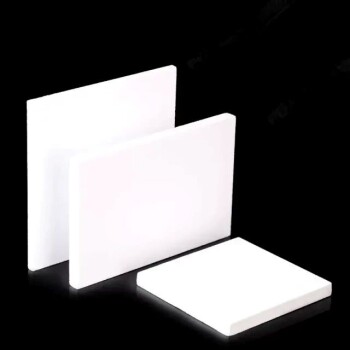
- High Temperature Wear-Resistant Alumina Al2O3 Plate for Engineering Advanced Fine Ceramics
- Optical Window Glass Substrate Wafer Single Double Sided Coated K9 Quartz Sheet
- Advanced Engineering Fine Ceramics Low Temperature Alumina Granulation Powder
- MgF2 Magnesium Fluoride Crystal Substrate Window for Optical Applications
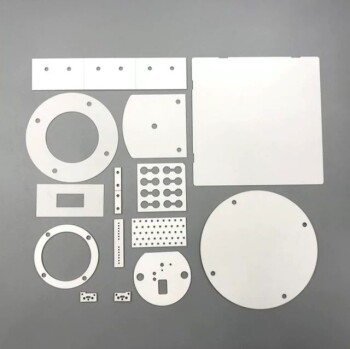
- Custom-Made Alumina Zirconia Special-Shaped Ceramic Plates for Engineering Advanced Fine Ceramics Processing
People Also Ask
- What are the process advantages of selecting an alumina plate for CuO nanofilm synthesis? Achieve Superior Purity
- What function do alumina ceramic plates serve as supports in the preparation of molecular sieve membranes?
- How is alumina ceramic made? A Guide to Manufacturing Methods and Material Properties
- Why use high-purity alumina plates for sintering porous stainless steel? Ensure Purity & Precision
- What is the function of alumina setter plates for LATP? Protect Material Purity & Prevent Adhesion