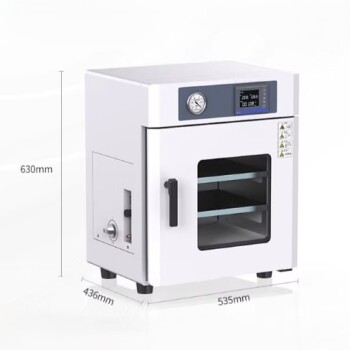
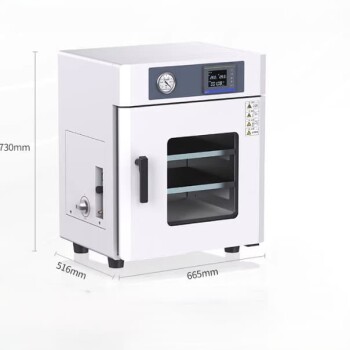
In the processing of Silicon Carbide (SiC) and Zirconia Toughened Alumina (ZTA), the specific function of a blast drying oven is to facilitate the complete evaporation of liquid solvents from the ball-milled slurry. By maintaining a controlled temperature, typically around 100°C, the oven drives off volatile media—such as alcohol—to transform the wet mixture into a dry, solid precursor powder.
Core Takeaway: The blast drying oven is the gatekeeper of structural integrity in ceramic processing. Its primary role is to ensure zero residual solvent remains in the powder, as trapped moisture or alcohol will expand during sintering, causing catastrophic defects like porosity and cracking.
The Mechanics of Solvent Removal
Converting Slurry to Precursor
The initial stages of SiC/ZTA processing involve mixing powders with liquid media to create a slurry. The blast drying oven is responsible for the phase transition of this material.
It removes the liquid vehicle (alcohol) used during ball milling, leaving behind a dry mixed powder. This dried "precursor" is the raw material required for the subsequent steps of sieving and hot-press sintering.
Controlled Thermal Application
Unlike passive drying, a blast drying oven utilizes forced air convection combined with precise thermal control.
For SiC/ZTA slurries, the oven is typically set to 100°C. This temperature is sufficient to volatilize the alcohol solvents rapidly without subjecting the ceramic particles to excessive thermal shock or premature reaction.
Ensuring Material Integrity
Prevention of Sintering Defects
The most critical "why" behind using this oven is defect mitigation. If the slurry is not dried completely, residual solvents remain trapped within the powder structure.
During the high-temperature sintering phase, these residuals would boil and expand violently. This creates pores, voids, and cracks in the final ceramic body, compromising the mechanical strength of the ZTA composite.
Preparation for Hot-Pressing
Hot-press sintering requires a powder with specific flow and density characteristics.
The blast drying process ensures the powder is free of moisture that could interfere with the densification process. It delivers a material that is ready to be sieved into uniform granule sizes, ensuring even packing during the pressing stage.
Understanding the Trade-offs
Blast Drying vs. Vacuum Drying
It is important to distinguish the blast drying oven from a vacuum drying oven.
- Blast Drying: Relies on higher temperatures (e.g., 100°C) and air circulation. It is effective for robust materials like SiC/ZTA where rapid solvent removal is the priority.
- Vacuum Drying: Relies on low pressure to drop the solvent boiling point (e.g., drying at 60°C). This is typically used for materials highly sensitive to oxidation or agglomeration, such as Aluminum or certain electrolytes.
Note: Because a blast oven operates at atmospheric pressure and higher temperatures, it does not offer the same level of oxidation protection as a vacuum oven. However, for the specific SiC/ZTA application described, the blast oven is the standard tool for efficient solvent removal.
Making the Right Choice for Your Goal
When integrating a blast drying oven into your ceramic processing line, consider the following:
- If your primary focus is Defect Elimination: Ensure the drying cycle is long enough to achieve complete solvent evaporation; even trace moisture can ruin the sintering stage.
- If your primary focus is Process Efficiency: Optimize the airflow and temperature (around 100°C) to maximize evaporation rates without overheating the powder.
Consistently maintaining the drying parameters is the single most effective way to ensure high-density, crack-free SiC/ZTA ceramics.
Summary Table:
| Stage | Function of Blast Drying Oven | Impact on Final Ceramic |
|---|---|---|
| Phase Transition | Evaporates liquid solvents (e.g., alcohol) | Converts wet slurry into dry precursor powder |
| Thermal Control | Forced air convection at ~100°C | Ensures rapid evaporation without thermal shock |
| Quality Assurance | Removes all residual moisture/volatiles | Prevents voids, pores, and cracks during sintering |
| Preparation | Uniform drying of ball-milled mixtures | Enables efficient sieving and hot-press densification |
Optimize Your Ceramic Processing with KINTEK Precision
Achieving high-density, crack-free SiC/ZTA ceramics begins with perfect powder preparation. KINTEK specializes in high-performance laboratory equipment designed for rigorous material science applications. From our advanced blast drying and vacuum ovens to our comprehensive range of high-temperature furnaces (muffle, tube, vacuum, and hot-press), we provide the tools you need for precise thermal processing.
Our portfolio also includes:
- Crushing and milling systems for superior slurry preparation.
- Hydraulic presses (pellet, hot, isostatic) for dense material compaction.
- High-temperature high-pressure reactors and autoclaves.
- Essential consumables like high-purity ceramics, crucibles, and PTFE products.
Don't let residual solvents compromise your structural integrity. Contact KINTEK today to discover how our equipment can enhance your laboratory's efficiency and material performance!
Related Products
- Laboratory Scientific Electric Heating Blast Drying Oven
- 23L Laboratory Vacuum Drying Oven
- 56L Vertical Laboratory Vacuum Drying Oven
- High Temperature Muffle Oven Furnace for Laboratory Debinding and Pre Sintering
People Also Ask
- How does a laboratory electric drying oven contribute to the formation of the initial coating? Expert Insights
- What role does a precision laboratory drying oven play in the synthesis of GO-PANI nanocomposites? Protect Material Integrity
- What role does a laboratory drying oven play in the preparation of zinc oxide nanoparticle precursors?
- What is the necessity of using a laboratory drying oven when processing MoO3/GO composite nanopowders? Find out here.
- What is the role of a laboratory drying oven in cellulose citrate production? Ensure Material Stability & Purity