Knowledge test sieve What is the use of sieving in laboratory? Ensure Material Quality & Accurate Particle Analysis
Author avatar

Tech Team · Kintek Solution

Updated 2 months ago

What is the use of sieving in laboratory? Ensure Material Quality & Accurate Particle Analysis


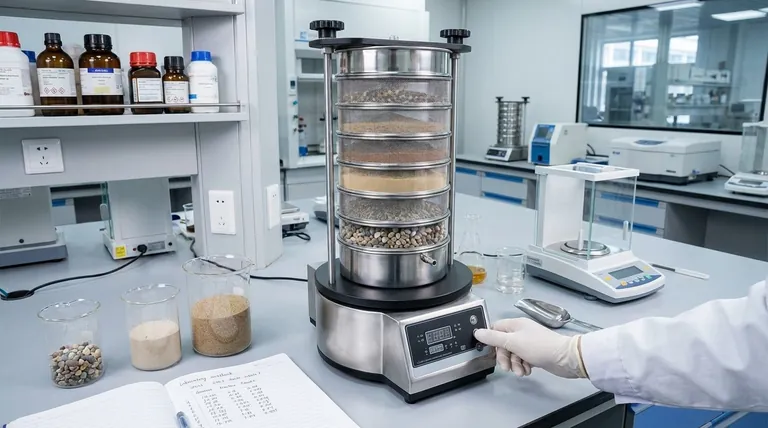
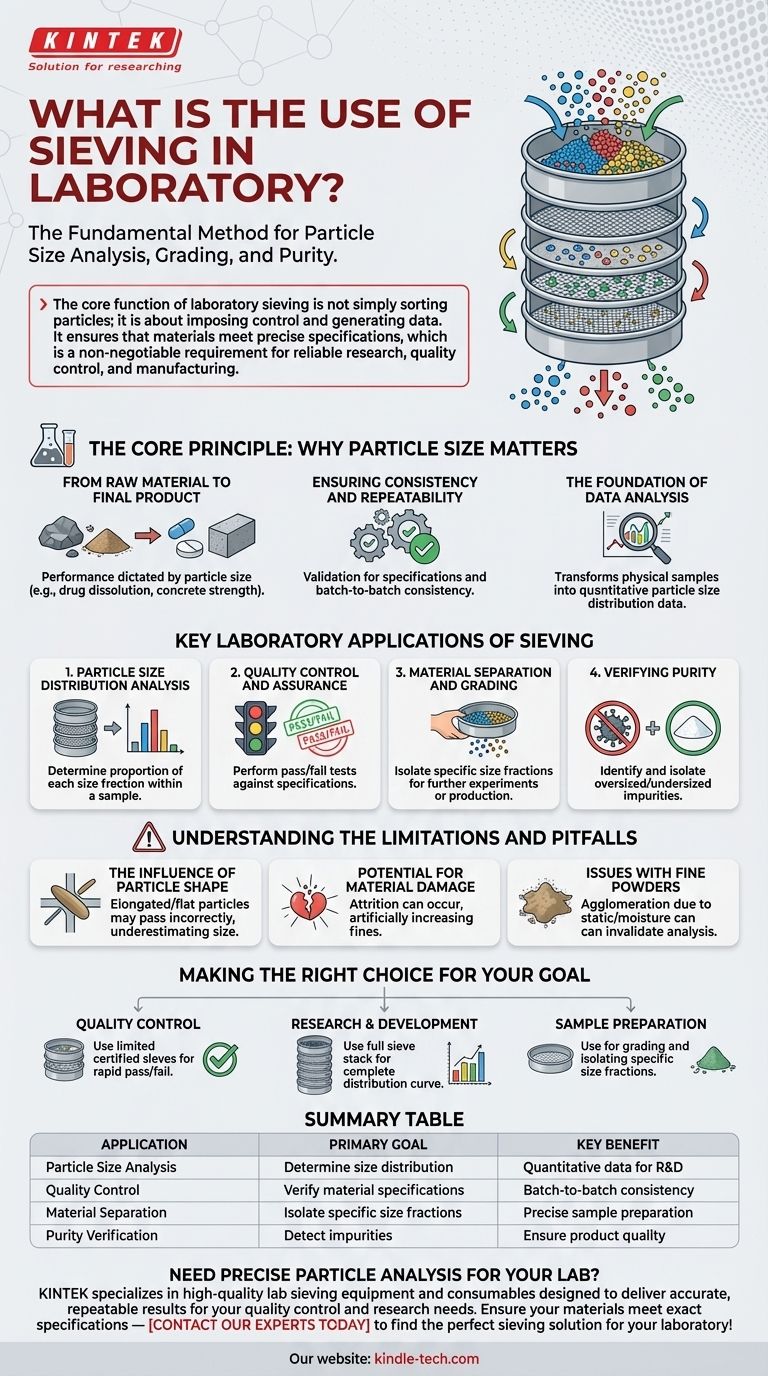
In the laboratory, sieving is the fundamental method used to separate granular materials based on particle size. Its primary purpose is to determine the particle size distribution of a sample, grade materials to specific size fractions, and measure impurity levels.

The core function of laboratory sieving is not simply sorting particles; it is about imposing control and generating data. It ensures that materials meet precise specifications, which is a non-negotiable requirement for reliable research, quality control, and manufacturing.
What is the use of sieving in laboratory? Ensure Material Quality & Accurate Particle Analysis

The Core Principle: Why Particle Size Matters

Understanding the size of particles within a material is critical because size directly influences a substance's physical and chemical properties. Sieving provides the essential data and control needed to manage these properties.

From Raw Material to Final Product

A material's performance is often dictated by the size of its constituent particles. For example, the dissolution rate of a pharmaceutical drug or the strength of concrete depends on the precise size distribution of its powders and aggregates.

Ensuring Consistency and Repeatability

Sieving is a cornerstone of quality control. It validates that both incoming raw materials and outgoing finished products adhere to required specifications, ensuring batch-to-batch consistency.

The Foundation of Data Analysis

Sieving transforms a physical sample into a quantitative data set. This particle size distribution analysis is a foundational technique used in research and development to characterize new materials and optimize processes.

Key Laboratory Applications of Sieving

While the principle is simple, its application is varied and critical across many scientific and industrial fields.

Particle Size Distribution Analysis

This is the most common application. A stack of sieves with progressively smaller mesh openings is used to sort a sample into different size fractions, allowing analysts to determine the proportion of each size within the material.

Quality Control and Assurance

Labs use sieving to perform pass/fail tests. A material might be tested to ensure that no more than a certain percentage of its particles are larger or smaller than a specified size.

Material Separation and Grading

Sieving is also used for preparation. Researchers may need to isolate particles of a specific size range from a mixed sample for use in further experiments or production processes.

Verifying Purity

The technique can effectively identify contamination. By sieving a sample, oversized or undersized impurities can be quickly isolated and measured, confirming the purity of the material.

Understanding the Limitations and Pitfalls

While powerful, sieving is a mechanical process with inherent trade-offs that an expert must consider to ensure accurate results.

The Influence of Particle Shape

Sieving analysis assumes particles are perfect spheres. Elongated or flat particles can pass through mesh openings end-on or diagonally, leading to an underestimation of their true size.

Potential for Material Damage

The agitation required for sieving can cause fragile particles to break apart (attrition). This can skew results by artificially creating more fine particles than were present in the original sample.

Issues with Fine Powders

Very fine powders are susceptible to agglomeration, where particles clump together due to static electricity or moisture. These clumps behave like larger particles, preventing them from passing through the correct sieve and invalidating the analysis.

Making the Right Choice for Your Goal

The specific sieving method and interpretation of results depend entirely on your objective.

  • If your primary focus is quality control: Use a limited set of certified sieves that correspond directly to your product's specifications to get a rapid pass/fail result.
  • If your primary focus is research and development: Use a full stack of sieves with a wide range of mesh sizes to generate a complete particle size distribution curve for detailed material characterization.
  • If your primary focus is sample preparation: Use sieving simply to grade a material, isolating the desired size fraction for a subsequent experiment or process.

Ultimately, mastering sieving is about understanding and controlling the physical properties of your materials to guarantee a predictable and reliable outcome.

Summary Table:

Application Primary Goal Key Benefit
Particle Size Analysis Determine size distribution Quantitative data for R&D
Quality Control Verify material specifications Batch-to-batch consistency
Material Separation Isolate specific size fractions Precise sample preparation
Purity Verification Detect impurities Ensure product quality

Need precise particle analysis for your lab? KINTEK specializes in high-quality lab sieving equipment and consumables designed to deliver accurate, repeatable results for your quality control and research needs. Ensure your materials meet exact specifications — contact our experts today to find the perfect sieving solution for your laboratory!

Visual Guide
What is the use of sieving in laboratory? Ensure Material Quality & Accurate Particle Analysis Visual Guide

Related Products

People Also Ask

Related Products

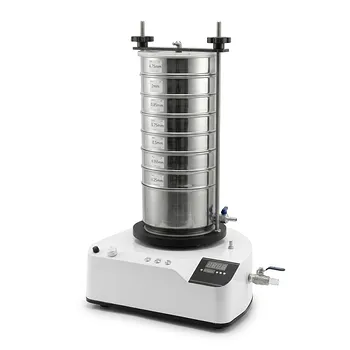
Laboratory Vibratory Sieve Shaker Machine for Dry and Wet Three-Dimensional Sieving

Laboratory Vibratory Sieve Shaker Machine for Dry and Wet Three-Dimensional Sieving

KT-VD200 can be used for sieving tasks of dry and wet samples in the laboratory. The screening quality is 20g-3kg. The product is designed with a unique mechanical structure and an electromagnetic vibrating body with a vibration frequency of 3000 times per minute.

Laboratory Test Sieves and Sieving Machines

Laboratory Test Sieves and Sieving Machines

Precision lab test sieves & sieving machines for accurate particle analysis. Stainless steel, ISO-compliant, 20μm-125mm range. Request specs now!

Laboratory Vibratory Sieve Shaker Machine Slap Vibrating Sieve

Laboratory Vibratory Sieve Shaker Machine Slap Vibrating Sieve

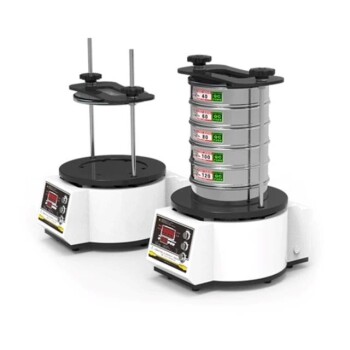
KT-T200TAP is a slapping and oscillating sieving instrument for laboratory desktop use, with 300 rpm horizontal circular motion and 300 vertical slapping motions to simulate manual sieving to help sample particles pass through better.

Laboratory Test Sieves and Vibratory Sieve Shaker Machine

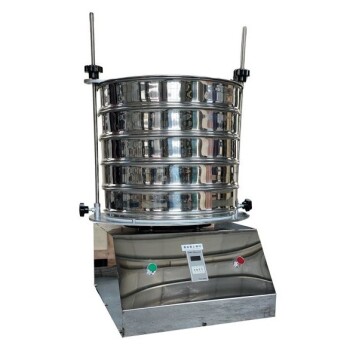
Laboratory Test Sieves and Vibratory Sieve Shaker Machine

Efficiently process powders, granules, and small blocks with a high-frequency vibration sieve. Control vibration frequency, screen continuously or intermittently, and achieve accurate particle size determination, separation, and classification.

Laboratory Wet Three-Dimensional Vibratory Sieve Shaker Machine

Laboratory Wet Three-Dimensional Vibratory Sieve Shaker Machine

The wet three-dimensional vibrating sieving instrument focuses on solving the sieving tasks of dry and wet samples in the laboratory. It is suitable for sieving 20g - 3kg dry, wet or liquid samples.

Vibratory Sieve Shaker Machine Dry Three-Dimensional Vibrating Sieve

Vibratory Sieve Shaker Machine Dry Three-Dimensional Vibrating Sieve

The KT-V200 product focuses on solving common sieving tasks in the laboratory. It is suitable for sieving 20g-3kg dry samples.

Three-dimensional electromagnetic sieving instrument

Three-dimensional electromagnetic sieving instrument

KT-VT150 is a desktop sample processing instrument for both sieving and grinding. Grinding and sieving can be used both dry and wet. The vibration amplitude is 5mm and the vibration frequency is 3000-3600 times/min.

Mini Planetary Ball Mill Machine for Laboratory Milling

Mini Planetary Ball Mill Machine for Laboratory Milling

Discover the KT-P400 desktop planetary ball mill, ideal for grinding and mixing small samples in the lab. Enjoy stable performance, long service life, and practicality. Functions include timing and overload protection.

Laboratory manual slicer

Laboratory manual slicer

Manual microtome is a high-precision cutting device designed for laboratories, industry and medical fields. It is suitable for the preparation of thin slices of various materials such as paraffin samples, biological tissues, battery materials, food, etc.

Laboratory Jaw Crusher

Laboratory Jaw Crusher

Discover the small jaw crusher for efficient, flexible, and affordable crushing in labs and small mines. Ideal for coal, ores, and rocks. Learn more now!

Vibrating Disc Mill Small Laboratory Grinding Machine

Vibrating Disc Mill Small Laboratory Grinding Machine

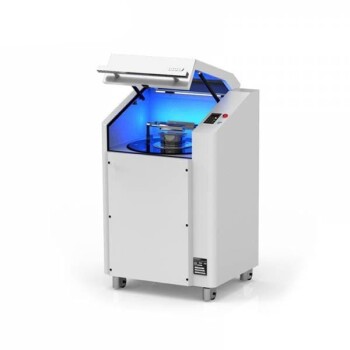
Discover the versatile Vibrating Disc Mill for efficient laboratory grinding. Ideal for geology, metallurgy, biology, and more. Explore now!

High Energy Planetary Ball Mill Milling Machine for Laboratory

High Energy Planetary Ball Mill Milling Machine for Laboratory

Experience fast and effective sample processing with the F-P2000 high-energy planetary ball mill. This versatile equipment offers precise control and excellent grinding capabilities. Perfect for laboratories, it features multiple grinding bowls for simultaneous testing and high output. Achieve optimal results with its ergonomic design, compact structure, and advanced features. Ideal for a wide range of materials, it ensures consistent particle size reduction and low maintenance.

Laboratory Ball Mill Jar Mill with Metal Alloy Grinding Jar and Balls

Laboratory Ball Mill Jar Mill with Metal Alloy Grinding Jar and Balls

Grind and mill with ease using metal alloy grinding jars with balls. Choose from 304/316L stainless steel or tungsten carbide and optional liner materials. Compatible with various mills and features optional functions.

Laboratory Jar Mill with Agate Grinding Jar and Balls

Laboratory Jar Mill with Agate Grinding Jar and Balls

Grind your materials with ease using Agate Grinding Jars with Balls. Sizes from 50ml to 3000ml, perfect for planetary and vibration mills.

Small Cryogenic Grinder Cryomill Cryogrinder with Liquid Nitrogen for Laboratory Use

Small Cryogenic Grinder Cryomill Cryogrinder with Liquid Nitrogen for Laboratory Use

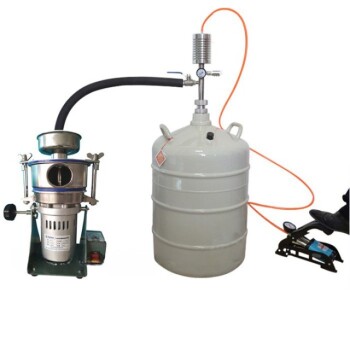
Our KINTEK Cryomilling is perfect for small runs and R&D trials. With a versatile cryogenic system, it can handle a variety of materials, including plastics, rubber, pharmaceuticals, and food grades. Plus, our specialized hydraulic laboratory crushers ensure accurate results through multiple passes, making it suitable for XRF analysis. Get finely-powdered samples with ease!

Lab Vibration Mill

Lab Vibration Mill

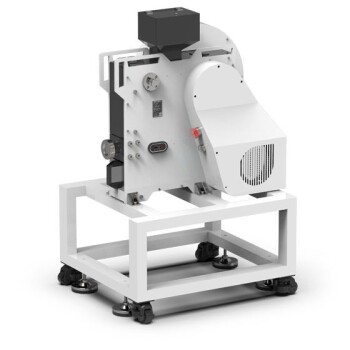
Vibration Mill for Efficient Sample Preparation, Suitable for Crushing and Grinding a Variety of Materials with Analytical Precision. Supports Dry / Wet / Cryogenic Grinding and Vacuum/Inert Gas Protection.

Laboratory Grinding Mill Mortar Grinder for Sample Preparation

Laboratory Grinding Mill Mortar Grinder for Sample Preparation

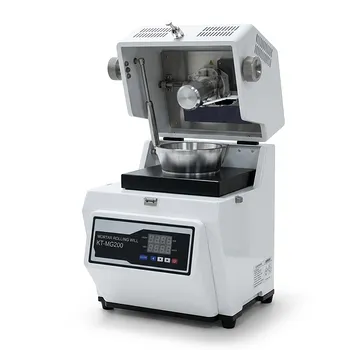
KT-MG200 mortar grinder can be used for mixing and homogenizing powder, suspension, paste and even viscous samples. It can help users realize the ideal operation of sample preparation with more regularization and higher repeatability.

Laboratory Micro Horizontal Jar Mill for Precision Sample Preparation in Research and Analysis

Laboratory Micro Horizontal Jar Mill for Precision Sample Preparation in Research and Analysis

Discover the Micro Horizontal Jar Mill for precise sample preparation in research and analysis. Ideal for XRD, geology, chemistry, and more.

Lab Internal Rubber Mixer Rubber Kneader Machine for Mixing and Kneading

Lab Internal Rubber Mixer Rubber Kneader Machine for Mixing and Kneading

Lab internal rubber mixer is suitable for mixing, kneading and dispersing various chemical raw materials such as plastics, rubber, synthetic rubber, hot melt adhesive and various low-viscosity materials.

Laboratory Oscillating Orbital Shaker

Laboratory Oscillating Orbital Shaker

Mixer-OT orbital shaker uses brushless motor, which can run for a long time. It is suitable for vibration tasks of culture dishes, flasks and beakers.


Leave Your Message