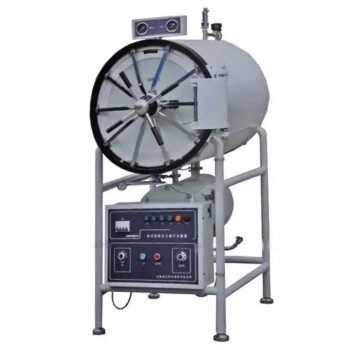
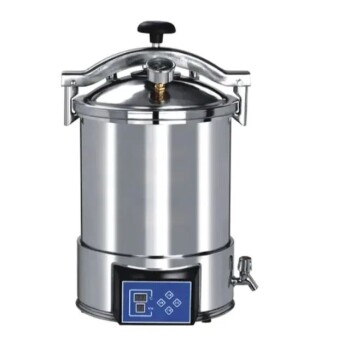
A high-pressure autoclave functions as a critical intensification device that creates the specific thermochemical environment required to break down Pennisetum alopecuroides. By maintaining a temperature of 120°C under pressure, the reactor forces the pretreatment solution (whether acid, alkali, or ferric chloride) to penetrate the dense lignocellulosic structure, significantly accelerating the dissolution of hemicellulose and lignin.
The core value of the autoclave is its ability to overcome the structural recalcitrance of biomass. It utilizes "thermochemical coupling"—the synergy of heat, pressure, and chemical agents—to dismantle physical barriers and expose the cellulose framework for future processing.
The Mechanism of Thermochemical Coupling
Enabling High-Temperature Reactions
The primary role of the autoclave is to achieve and sustain a temperature of 120°C. Under normal atmospheric conditions, aqueous solutions would boil off before effectively altering the biomass structure.
Deep Structural Penetration
The high pressure within the reactor acts as a driving force. It pushes the chemical agents (dilute acid, alkali, or ferric chloride) past the surface and into the deep structures of the plant material.
Accelerating Chemical Breakdown
Inside this pressurized environment, the reaction kinetics change. The heat accelerates the chemical attack on the biomass, ensuring that the rigid structure is softened more rapidly than it would be at ambient temperatures.
Removing Structural Barriers
Dissolution of Hemicellulose and Lignin
Pennisetum alopecuroides is naturally resistant to degradation due to lignin and hemicellulose, which act as binders. The autoclave environment facilitates the rapid dissolution and removal of these components.
Reducing Recalcitrance
"Recalcitrance" refers to the plant's natural resistance to being broken down. By stripping away the outer protective layers (lignin), the reactor significantly lowers this resistance.
Creating an Open Framework
The ultimate output of this step is an "open cellulose framework." By removing the binders, the cellulose fibers are exposed, making them accessible for the subsequent enzymatic hydrolysis process.
The Importance of Pre-Processing Context
Increasing Specific Surface Area
Before the biomass enters the autoclave, it is typically ground and passed through a 20-mesh sieve. This mechanical step destroys the macroscopic structure of the plant fibers.
Enhancing Contact Frequency
This physical preparation is vital for the autoclave's success. A larger specific surface area ensures that when the high-pressure reaction begins, there is maximum contact between the chemical solution and the substrate.
Understanding the Trade-offs
Operational Complexity
Operating high-pressure reactors introduces safety and maintenance complexities. The equipment must be rated to handle pressures that can range significantly depending on the specific reactor design (often capable of 50 to 350 bars, though specific protocols vary).
Energy Consumption
Reaching and maintaining 120°C involves a significant energy input. The process efficiency relies on balancing the energy cost of the autoclave against the yield gained in subsequent enzymatic hydrolysis.
Making the Right Choice for Your Goal
To maximize the efficiency of your pretreatment protocol, consider the following strategic focus areas:
- If your primary focus is Reaction Speed: Ensure your biomass is ground to at least a 20-mesh standard to maximize the surface area available for the pressurized chemicals to attack.
- If your primary focus is Cellulose Accessibility: Strictly monitor the autoclave temperature at 120°C to ensure adequate thermochemical coupling occurs to strip away the lignin barrier.
Effective pretreatment is not just about the chemical agent; it is about using pressure and heat to force that agent exactly where it needs to go.
Summary Table:
| Feature | Role in Pretreatment | Impact on Biomass |
|---|---|---|
| Thermochemical Coupling | Combines 120°C heat with chemical agents | Overcomes structural recalcitrance |
| High Pressure | Drives solution into deep plant structures | Accelerates hemicellulose and lignin dissolution |
| Structural Modification | Strips away protective binders | Creates an open cellulose framework |
| Physical Synergy | Works with 20-mesh ground substrate | Increases surface area for chemical attack |
Maximize Your Biomass Research Potential with KINTEK
Precise control over temperature and pressure is the cornerstone of effective lignocellulosic pretreatment. KINTEK specializes in advanced laboratory equipment designed to meet the rigorous demands of your research. From high-temperature high-pressure reactors and autoclaves to crushing and milling systems for precise sample preparation, we provide the tools necessary to dismantle the toughest biological barriers.
Whether you are focusing on enzymatic hydrolysis yields or reaction kinetics, our portfolio includes everything from muffle furnaces and vacuum systems to PTFE consumables and cooling solutions. Let KINTEK help you achieve superior thermochemical coupling and repeatable results.
Ready to upgrade your laboratory capabilities? Contact us today to find the perfect solution for your research goals!
References
- Shangyuan Tang, Xiyu Cheng. Enhanced Enzymatic Hydrolysis of Pennisetum alopecuroides by Dilute Acid, Alkaline and Ferric Chloride Pretreatments. DOI: 10.3390/molecules24091715
This article is also based on technical information from Kintek Solution Knowledge Base .
Related Products
- Stainless High Pressure Autoclave Reactor Laboratory Pressure Reactor
- Visual High-Pressure Reactor for In-Situ Observation
- Customizable Laboratory High Temperature High Pressure Reactors for Diverse Scientific Applications
- Customizable High Pressure Reactors for Advanced Scientific and Industrial Applications
- High Pressure Laboratory Autoclave Reactor for Hydrothermal Synthesis
People Also Ask
- Why is a laboratory high-pressure reactor used in the hydrothermal synthesis of hydroxyapatite catalysts?
- What role does a laboratory high-pressure reactor play in the leaching process of spent cathode materials? Optimize Recovery
- Why is a laboratory high-pressure reactor necessary for synthesizing fly ash-based zeolite? Achieve Pure Crystallization
- What conditions do laboratory high-pressure reactors provide for HTC? Optimize Your Biochar Production Processes
- What is the function of a high-pressure reactor autoclave? Enhancing Cu/N Co-Doped Carbon Catalyst Synthesis