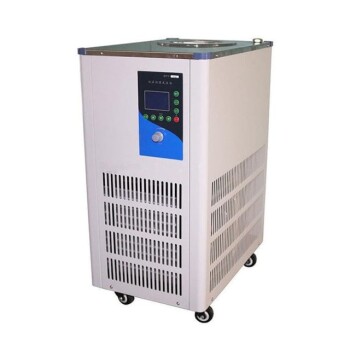
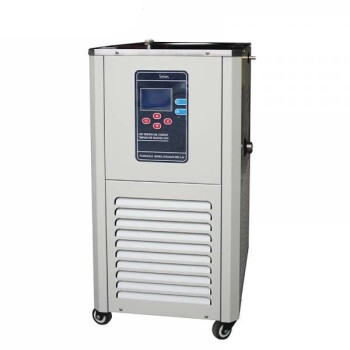
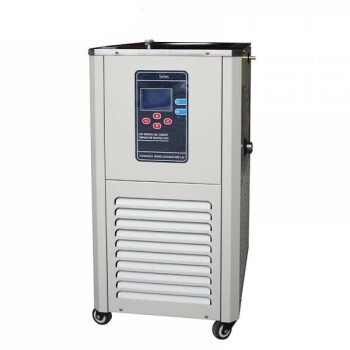
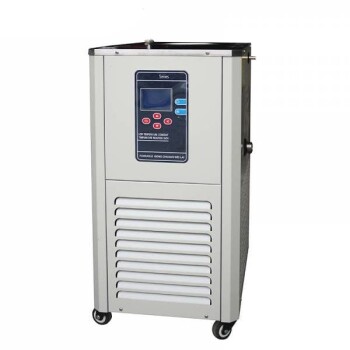
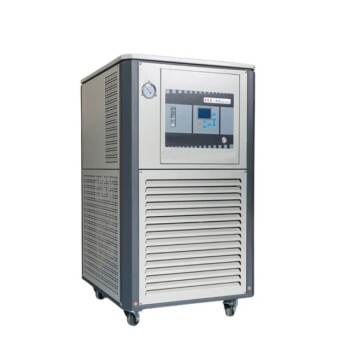
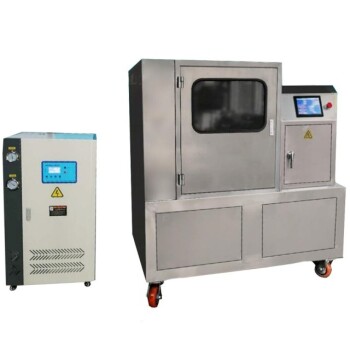
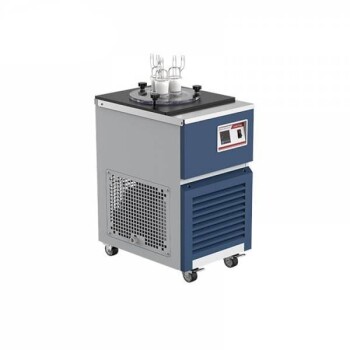
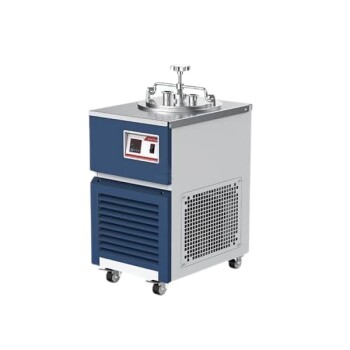
Jacketed coil condensers and cooling water chillers function as the critical thermal termination system in Supercritical Water Oxidation (SCWO). Together, they rapidly reduce the temperature of the high-energy products exiting the reactor, bringing them down to room temperature to effectively "freeze" the chemical state of the fluid and enable safe handling.
Core Takeaway: The cooling subsystem in SCWO does more than simply lower temperature; it is a stabilization mechanism that preserves the chemical integrity of the sample for analysis while physically protecting delicate downstream instrumentation from the destructive heat of the reactor.
The Critical Role of Rapid Cooling
The transition from the reactor to the collection system is a vulnerable point in the SCWO process. The condenser and chiller address three fundamental challenges.
1. Termination of Chemical Reactions
The primary goal inside the reactor is to oxidize organic pollutants at high temperatures (often exceeding 374.15 °C). However, once the fluid leaves the reactor, these reactions must stop immediately.
Jacketed coil condensers provide rapid heat transfer to quench the fluid. By instantly dropping the temperature, the system terminates the high-temperature degradation reaction.
This ensures that the chemical composition analyzed at the end of the line exactly matches the conditions at the reactor outlet, rather than being the result of continued "slow" reactions in the tubing.
2. Protection of Precision Instrumentation
High-pressure components are robust, but they are rarely designed to withstand the combination of high pressure and extreme temperature simultaneously.
Downstream components, specifically pressure control valves (such as back-pressure regulators) and flow measurement devices, contain sensitive seals and diaphragms.
If the effluent were not cooled to room temperature, the thermal load would destroy these precision components, leading to process failure or safety leaks.
3. Phase Stabilization for Separation
Supercritical water exists as a single, homogeneous fluid phase. However, to analyze the results of the oxidation, you must separate the clean water from the gaseous byproducts (like CO2).
The cooling system stabilizes the physical properties of the stream. It forces the fluid to drop below the critical point, clearly separating it into liquid and gas phases.
This separation must occur before the stream enters the phase separator to ensure that collected samples are truly representative of the process outcomes.
Understanding the Trade-offs
While rapid cooling is essential, the application of extreme temperature differentials introduces specific engineering challenges that must be managed.
Thermal Stress and Shock
The supplementary data highlights a critical risk: severe thermal stress.
If the cooling process is too aggressive or poorly controlled, the rapid contraction of materials can cause physical damage.
For example, oxide films on sample surfaces may peel off due to thermal shock. This compromises morphological analysis, making it difficult to determine how materials degraded or corroded during the experiment.
Energy Management
The chiller must be sized correctly to handle the heat load.
If the chiller is undersized, the cooling water circulating through the jacketed coil will heat up, reducing the temperature gradient.
This leads to "temperature creep" downstream, potentially damaging the back-pressure regulator despite the presence of a condenser.
Making the Right Choice for Your Goal
The configuration of your cooling system depends on whether you are prioritizing equipment longevity or data granularity.
- If your primary focus is Equipment Protection: Prioritize a high-capacity chiller that can maintain room temperature regardless of reactor fluctuations to guarantee the safety of your back-pressure regulator.
- If your primary focus is Data Accuracy: Ensure your condenser design allows for immediate, rapid quenching to stop reactions instantly, preventing "false positives" caused by post-reactor oxidation.
- If your primary focus is Material Analysis: Implement a controlled cooling ramp rather than an instant quench to prevent oxide film delamination and preserve surface morphology.
Ultimately, the condenser and chiller effectively bridge the gap between the extreme environment of the reactor and the standard conditions required for safe analysis.
Summary Table:
| Feature | Function in SCWO Process | Key Benefit |
|---|---|---|
| Jacketed Coil Condenser | Quenches high-energy reactor effluent | Terminates reactions instantly for accurate sampling |
| Cooling Water Chiller | Maintains consistent cooling water temperature | Prevents thermal damage to back-pressure regulators |
| Phase Stabilization | Drops fluid below critical point | Enables clear separation of liquid and gaseous products |
| Thermal Management | Regulates temperature differentials | Protects material surface integrity and prevents thermal shock |
Maximize Your Research Precision with KINTEK
Don't let thermal stress compromise your data or destroy your precision instrumentation. KINTEK specializes in high-performance laboratory solutions, providing the robust cooling systems, high-pressure reactors, and high-temperature furnaces essential for successful Supercritical Water Oxidation (SCWO) research.
From high-capacity chillers to specialized pressure control components, we offer the technical expertise to ensure your lab operates safely and efficiently. Our comprehensive portfolio includes:
- Reaction Systems: Muffle, tube, and vacuum furnaces; high-pressure reactors and autoclaves.
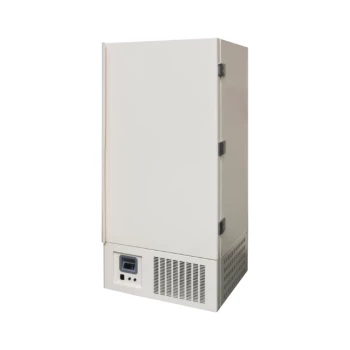
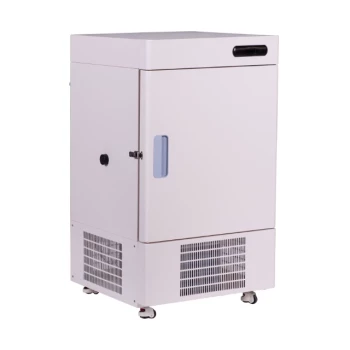
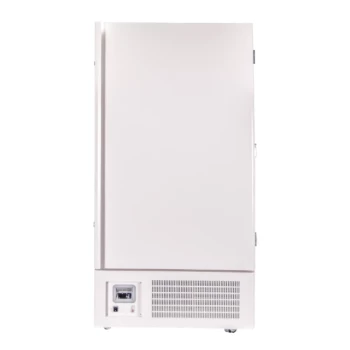
- Thermal Control: Advanced cooling solutions, ULT freezers, and cold traps.
- Precision Tools: Hydraulic pellet presses, crushing systems, and essential ceramics.
Ready to optimize your thermal termination system? Contact our experts today to find the perfect fit for your application.
References
- Isabela M. Dias, Reginaldo Guirardello. Treatment of Antihypertensive and Cardiovascular Drugs in Supercritical Water: An Experimental and Modeled Approach. DOI: 10.3390/w16010125
This article is also based on technical information from Kintek Solution Knowledge Base .
Related Products
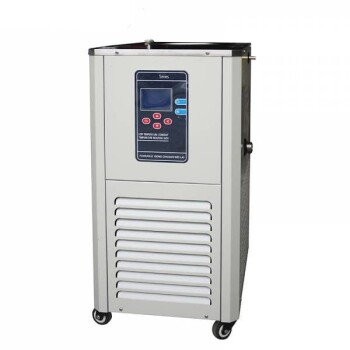
- 100L Chilling Circulator Cooling Water Circulator for Low Temperature Constant Temperature Reaction Bath Water Bath Cooling
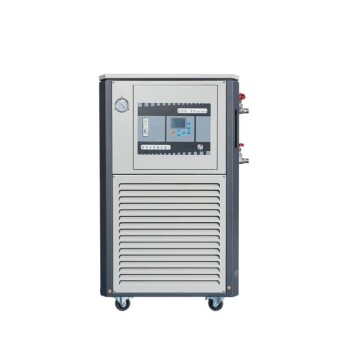
- 20L Chiller Water Bath Cooling Circulator Low Temperature Constant Temperature Reaction Bath
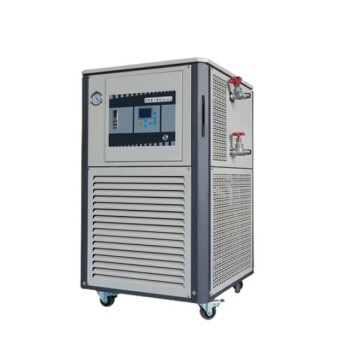
- 50L Chiller Water Bath Cooling Circulator Low Temperature Constant Temperature Reaction Bath
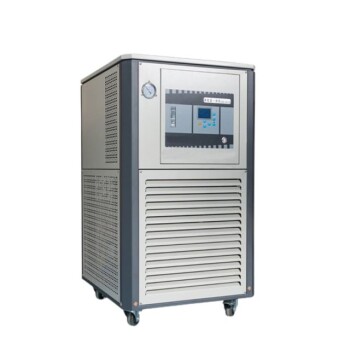
- 10L Chilling Circulator Cooling Water Bath Low Temperature Constant Temperature Reaction Bath
- 80L Chilling Circulator Cooling Water Circulator for Water Bath Cooling and Low Temperature Constant Temperature Reaction Bath
People Also Ask
- What function does a circulating cooling chiller perform during the gas adsorption isotherm testing of nanoporous carbon?
- Why is a circulating water chiller required for Prussian Blue nanoparticles? Ensure Stability & Batch Reproducibility
- What is the purpose of a cooling circulation water bath system in electrochemical experiments? Enhance Lab Precision
- How does a constant temperature circulator support the leaching reaction of gold scrap? Optimize Gold Recovery Results
- How do constant temperature circulators impact weight-loss immersion tests? Ensure Precision in Corrosion Analysis