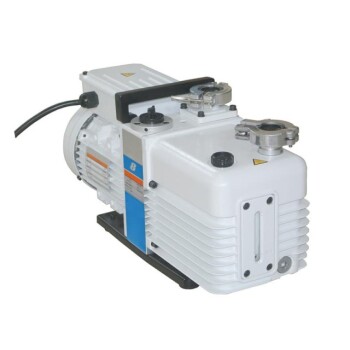
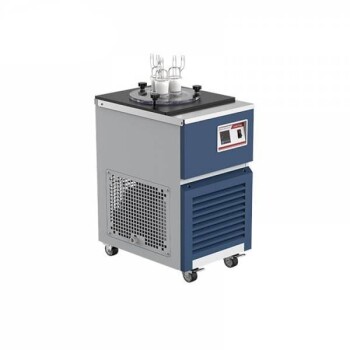
A high-precision vacuum pump system acts as the fundamental process controller for initiated Chemical Vapor Deposition (iCVD). It serves two critical functions: first, it evacuates the chamber to remove impurity gases prior to deposition, ensuring the chemical integrity of the film. Second, and perhaps more importantly, it maintains a dynamic vacuum balance during the process to precisely regulate how monomer vapors behave and interact with the substrate.
Core Takeaway While removing contaminants is the baseline requirement, the true necessity of a high-precision system lies in its ability to manipulate the "mean free path" of molecules. By strictly controlling pressure, the vacuum system dictates the film's growth rate, its uniformity, and its ability to coat the inside of complex nanoporous structures.
The Two Pillars of Vacuum Functionality
Establishing Chemical Purity
Before any deposition begins, the chamber must be cleared of atmospheric gases and contaminants.
A high-precision pump removes these impurity gases effectively. This step is non-negotiable for ensuring that the resulting film maintains the desired chemical composition and purity without interference from background elements.
Maintaining Dynamic Balance
iCVD is not a static process; it involves the continuous flow of chemical vapors.
The vacuum system must maintain a dynamic vacuum balance amidst this flow. It does not just evacuate the chamber; it actively balances the inflow of monomers with the outflow to hold a specific, steady-state operating pressure.
How Pressure Defines Material Properties
The precision of the vacuum system directly impacts the physical properties of the deposited film through three key mechanisms.
Regulating the Mean Free Path
The vacuum level determines the mean free path—the average distance a molecule travels before colliding with another.
By controlling the operating pressure, the system regulates this distance. A precise mean free path is essential for ensuring that monomers reach the substrate surface intact and react where intended, rather than colliding prematurely in the gas phase.
Controlling Residence Time
Pressure control dictates the residence time of monomer vapors within the chamber.
This defines how long the chemicals remain in the reaction zone. If the residence time is not strictly controlled, the reaction efficiency drops, leading to unpredictable results.
Ensuring Uniformity and Penetration
The ultimate output of the iCVD process—the film itself—relies on the previous two factors.
By stabilizing the mean free path and residence time, the vacuum system ensures film uniformity. Furthermore, this control allows the vapors to penetrate deep into nanopores, enabling the coating of complex, high-aspect-ratio structures that less precise systems would fail to cover.
Understanding the Trade-offs
The Sensitivity of Process Parameters
The relationship between pressure and film quality is non-linear and highly sensitive.
If the vacuum system fluctuates even slightly, it alters the mean free path. This can immediately disrupt the film growth rate, causing variations in thickness across the substrate.
Complexity of Nanopore Penetration
Achieving deep penetration into nanopores requires a delicate balance that only high-precision equipment can provide.
If the pressure is too high, the mean free path shortens, and the monomers may not penetrate deep enough before reacting. If the pressure is too low, the residence time may decrease to the point where film growth becomes inefficient.
Making the Right Choice for Your Goal
To optimize your iCVD process, consider how vacuum precision aligns with your specific application targets:
- If your primary focus is Complex Geometries: You must prioritize pressure stability to maximize the mean free path, ensuring the vapor penetrates deep into nanopores.
- If your primary focus is Film Consistency: You need a system that offers tight control over residence time to guarantee a uniform growth rate across the entire surface.
- If your primary focus is Material Purity: You require a pump with high evacuation efficiency to eliminate all background impurities before the process initiates.
Precision in your vacuum system is not a luxury; it is the dial that controls the structural architecture of your material.
Summary Table:
| Feature | Function in iCVD | Impact on Material Quality |
|---|---|---|
| Evacuation Efficiency | Removes atmospheric impurities | Ensures high chemical purity and film integrity |
| Dynamic Pressure Control | Regulates Mean Free Path | Dictates film growth rate and surface uniformity |
| Residence Time Management | Controls vapor duration in chamber | Optimizes reaction efficiency and thickness consistency |
| Nanopore Penetration | Stabilizes molecular flow | Enables deep coating of high-aspect-ratio structures |
Elevate Your Thin-Film Research with KINTEK Precision
Precision is the heartbeat of successful iCVD. At KINTEK, we understand that even minor pressure fluctuations can compromise your material's architecture. As specialists in laboratory equipment, we provide the high-performance vacuum systems, high-temperature reactors, and CVD/PECVD solutions required to achieve flawless film growth and penetration.
Why partner with KINTEK?
- Comprehensive Portfolio: From advanced vacuum pump systems and high-pressure reactors to essential ceramics and crucibles.
- Expert Engineering: Equipment designed for the rigorous demands of battery research, material science, and nanopore coating.
- Reliability & Consistency: Ensure repeatable results with our industry-leading crushing, milling, and thermal processing tools.
Don't let subpar vacuum control limit your innovation. Contact KINTEK today to discover how our specialized laboratory equipment can optimize your deposition processes and enhance your research outcomes.
References
- Younghak Cho, Sung Gap Im. A Versatile Surface Modification Method via Vapor-phase Deposited Functional Polymer Films for Biomedical Device Applications. DOI: 10.1007/s12257-020-0269-1
This article is also based on technical information from Kintek Solution Knowledge Base .
Related Products
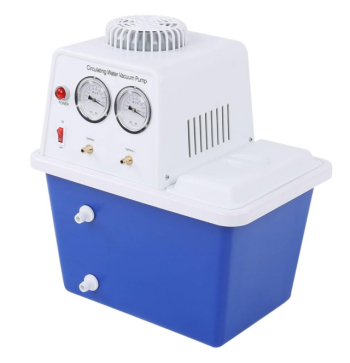
- Circulating Water Vacuum Pump for Laboratory and Industrial Use
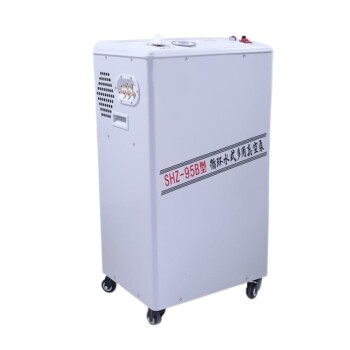
- Laboratory Vertical Water Circulating Vacuum Pump for Lab Use
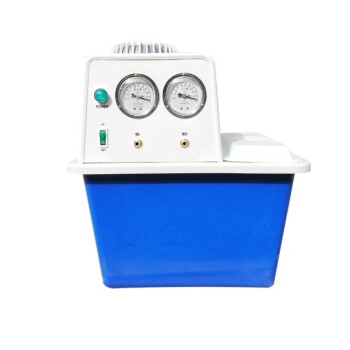
- Laboratory Benchtop Water Circulating Vacuum Pump for Lab Use
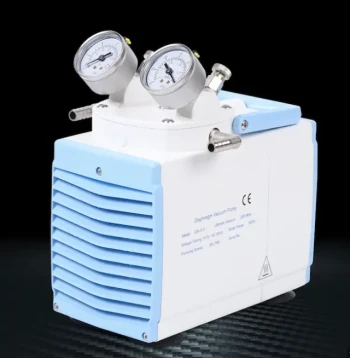
- Oil Free Diaphragm Vacuum Pump for Laboratory and Industrial Use
- Laboratory Rotary Vane Vacuum Pump for Lab Use
People Also Ask
- How is a circulating water vacuum pump utilized for hydrogen production residues? Optimize Your Solid-Liquid Separation
- How does the impeller rotation affect the gas flow in a water circulating vacuum pump? A Guide to the Liquid Ring Principle
- What determines the vacuum degree achievable by a water circulating vacuum pump? Unlock the Physics of Its Limits
- What are the advantages of a water circulating vacuum pump? Superior Durability for Demanding Lab Environments
- How does a water circulating vacuum pump operate? Discover the Efficient Liquid Piston Principle