Knowledge What role do laboratory stirred reactors and acid baths play in lignin-based vitrimers recycling? Achieve 100% Recovery
Author avatar

Tech Team · Kintek Solution

Updated 1 day ago

What role do laboratory stirred reactors and acid baths play in lignin-based vitrimers recycling? Achieve 100% Recovery


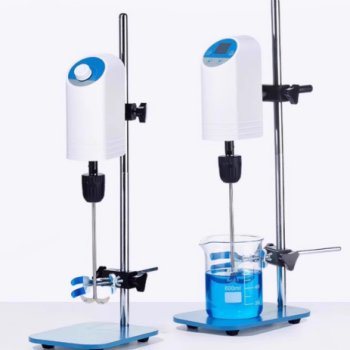
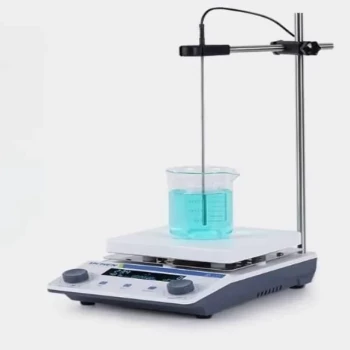
Laboratory stirred reactors and acid baths function as the catalytic heart of the recycling process for lignin-based vitrimers. They work in tandem to create a controlled, agitated acidic environment that chemically dismantles the polymer network. This combination enables the separation of the resin matrix from reinforcement materials under mild conditions, specifically between 50 and 60°C.

By maintaining a controlled acidic environment with constant agitation, this setup triggers the cleavage of dynamic covalent bonds. This mechanism allows for the recovery of high-value carbon fibers without damage and facilitates a closed-loop recycling system for the polymer matrix.

The Mechanism of Chemical Recycling

Creating the Reactive Environment

The acid bath is the primary chemical driver of the recycling process. Typically composed of a mild solution, such as 0.1 M HCl, it provides the necessary protons to interact with the polymer chain.

Triggering Bond Cleavage

Lignin-based vitrimers often contain Schiff bases or other dynamic covalent bonds. When exposed to the acidic solution, these specific bonds undergo cleavage.

This chemical reaction effectively "unlocks" the cross-linked network of the epoxy resin, transforming it from a solid composite matrix into a soluble state.

The Role of Agitation and Control

Ensuring Uniform Reaction

The laboratory stirred reactor provides mechanical agitation throughout the process.

Without this agitation, the acid might only react with the surface of the waste material. Stirring ensures the solution penetrates the composite structure, reaching dynamic bonds deep within the matrix.

Maintaining Mild Thermal Conditions

The reactor system allows for precise temperature regulation, keeping the process between 50 and 60°C.

This temperature range is critical. It is high enough to accelerate the bond cleavage but low enough to prevent thermal degradation of the recovered materials.

The Outcome: High-Value Recovery

Non-Destructive Fiber Reclamation

The primary advantage of this method is the protection of reinforcement materials.

Because the process relies on chemical bond cleavage rather than high heat or mechanical shredding, carbon fibers can be recovered from the waste composites without structural damage.

Closed-Loop Matrix Recycling

Once the dynamic bonds are cleaved, the matrix material is not destroyed.

Instead, the depolymerized lignin-based resin can be recovered. This enables a closed-loop system where the matrix material can potentially be reprocessed and reused, significantly reducing waste.

Understanding the Operational Constraints

Chemical Specificity

This recycling method is not universal for all epoxies.

It relies entirely on the presence of dynamic covalent bonds (like Schiff bases) within the polymer network. Standard thermoset epoxies lacking these specific dynamic chemistries will not dissolve under these mild acidic conditions.

Process Scalability

While effective in a laboratory stirred reactor, scaling this process requires careful engineering.

Moving from a batch reactor to an industrial scale involves managing larger volumes of acid solution and ensuring uniform heat and agitation distribution across larger masses of waste composite.

Optimizing Your Recycling Strategy

The use of stirred reactors and acid baths offers a precise, low-energy path to material recovery. To apply this effectively, consider your primary end-goal:

  • If your primary focus is Fiber Recovery: Prioritize the control of agitation speed to ensure the acid penetrates the composite fully without mechanically stressing the delicate carbon fibers.
  • If your primary focus is Resin Reuse: strictly monitor the temperature range (50–60°C) to ensure the chemical cleavage is efficient but does not thermally degrade the lignin-based components.

This approach transforms waste management from a destructive end-of-life process into a sustainable cycle of material regeneration.

Summary Table:

Feature Role in Recycling Process Key Parameters
Acid Bath Acts as a chemical driver to trigger dynamic bond cleavage. 0.1 M HCl Solution
Stirred Reactor Provides uniform agitation and ensures acid penetration. Mechanical Stirring
Temperature Control Accelerates bond cleavage without degrading materials. 50°C - 60°C
Dynamic Bonds Target for chemical unlocking (e.g., Schiff bases). Covalent Bond Cleavage
Recovery Outcome Damage-free reclamation of high-value fibers and resin. Closed-loop System

Revolutionize Your Material Recovery with KINTEK

Unlock the full potential of circular chemistry with KINTEK’s advanced laboratory solutions. Whether you are focusing on non-destructive carbon fiber reclamation or establishing a closed-loop resin recycling system, our high-precision laboratory stirred reactors, high-temperature high-pressure reactors, and acid-resistant baths provide the exact thermal and mechanical control required for delicate bond cleavage.

From crushing and milling systems for feedstock preparation to specialized high-temperature furnaces and PTFE consumables for chemical processing, KINTEK equips your facility with the tools needed to transform polymer waste into high-value assets.

Ready to optimize your recycling strategy? Contact KINTEK today for a custom equipment consultation!

References

  1. Weijun Yang, P. J. Lemstra. Bio‐renewable polymers based on lignin‐derived phenol monomers: Synthesis, applications, and perspectives. DOI: 10.1002/sus2.87

This article is also based on technical information from Kintek Solution Knowledge Base .

Related Products

People Also Ask

Related Products

Customizable Laboratory High Temperature High Pressure Reactors for Diverse Scientific Applications

Customizable Laboratory High Temperature High Pressure Reactors for Diverse Scientific Applications

High-pressure lab reactor for precise hydrothermal synthesis. Durable SU304L/316L, PTFE liner, PID control. Customizable volume & materials. Contact us!

High Pressure Laboratory Autoclave Reactor for Hydrothermal Synthesis

High Pressure Laboratory Autoclave Reactor for Hydrothermal Synthesis

Discover the applications of Hydrothermal Synthesis Reactor - a small, corrosion-resistant reactor for chemical labs. Achieve rapid digestion of insoluble substances in a safe and reliable way. Learn more now.

Stainless High Pressure Autoclave Reactor Laboratory Pressure Reactor

Stainless High Pressure Autoclave Reactor Laboratory Pressure Reactor

Discover the versatility of Stainless High Pressure Reactor - a safe and reliable solution for direct and indirect heating. Built with stainless steel, it can withstand high temperatures and pressures. Learn more now.

Laboratory High Pressure Horizontal Autoclave Steam Sterilizer for Lab Use

Laboratory High Pressure Horizontal Autoclave Steam Sterilizer for Lab Use

The horizontal autoclave steam sterilizer adopts the gravity displacement method to remove the cold air in the inner chamber, so that the inner steam and cold air content is less, and the sterilization is more reliable.

Desktop Fast High Pressure Laboratory Autoclave Sterilizer 16L 24L for Lab Use

Desktop Fast High Pressure Laboratory Autoclave Sterilizer 16L 24L for Lab Use

The desktop fast steam sterilizer is a compact and reliable device used for rapid sterilization of medical, pharmaceutical, and research items.

Desktop Fast Laboratory Autoclave Sterilizer 35L 50L 90L for Lab Use

Desktop Fast Laboratory Autoclave Sterilizer 35L 50L 90L for Lab Use

The desktop fast steam sterilizer is a compact and reliable device used for rapid sterilization of medical, pharmaceutical, and research items. It efficiently sterilizes surgical instruments, glassware, medicines, and resistant materials, making it suitable for various applications.

Portable High Pressure Laboratory Autoclave Steam Sterilizer for Lab Use

Portable High Pressure Laboratory Autoclave Steam Sterilizer for Lab Use

Portable autoclave sterilization pressure is a device that uses pressure saturated steam to quickly and effectively sterilize items.

Laboratory Sterilizer Lab Autoclave Pulsating Vacuum Desktop Steam Sterilizer

Laboratory Sterilizer Lab Autoclave Pulsating Vacuum Desktop Steam Sterilizer

The pulsating vacuum desktop steam sterilizer is a compact and reliable device used for rapid sterilization of medical, pharmaceutical, and research items.

Laboratory High Pressure Steam Sterilizer Vertical Autoclave for Lab Department

Laboratory High Pressure Steam Sterilizer Vertical Autoclave for Lab Department

Vertical pressure steam sterilizer is a kind of sterilization equipment with automatic control, which is composed of heating system, microcomputer control system and overheating and overpressure protection system.

Visual High-Pressure Reactor for In-Situ Observation

Visual High-Pressure Reactor for In-Situ Observation

The visual high-pressure reactor uses transparent sapphire or quartz glass, maintaining high strength and optical clarity under extreme conditions for real-time reaction observation.

Mini SS High Pressure Autoclave Reactor for Laboratory Use

Mini SS High Pressure Autoclave Reactor for Laboratory Use

Mini SS High Pressure Reactor - Ideal for medicine, chemical, and scientific research industries. Programmed heating temp and stirring speed, up to 22Mpa pressure.

Square Bidirectional Pressure Mold for Lab Use

Square Bidirectional Pressure Mold for Lab Use

Discover precision in molding with our Square Bidirectional Pressure Mold. Ideal for creating diverse shapes and sizes, from squares to hexagons, under high pressure and uniform heating. Perfect for advanced material processing.

Round Bidirectional Press Mold for Lab

Round Bidirectional Press Mold for Lab

The round bidirectional press mold is a specialized tool used in high-pressure molding processes, particularly for creating intricate shapes from metal powders.

Small Vacuum Heat Treat and Tungsten Wire Sintering Furnace

Small Vacuum Heat Treat and Tungsten Wire Sintering Furnace

The small vacuum tungsten wire sintering furnace is a compact experimental vacuum furnace specially designed for universities and scientific research institutes. The furnace features a CNC welded shell and vacuum piping to ensure leak-free operation. Quick-connect electrical connections facilitate relocation and debugging, and the standard electrical control cabinet is safe and convenient to operate.

Custom PTFE Teflon Parts Manufacturer for Magnetic Stirring Bar

Custom PTFE Teflon Parts Manufacturer for Magnetic Stirring Bar

The PTFE magnetic stirring bar, made from high-quality PTFE, offers exceptional resistance to acids, alkalis, and organic solvents, coupled with high-temperature stability and low friction. Ideal for laboratory use, these stirring bars are compatible with standard flask ports, ensuring stability and safety during operations.

Microwave Plasma Chemical Vapor Deposition MPCVD Machine System Reactor for Lab and Diamond Growth

Microwave Plasma Chemical Vapor Deposition MPCVD Machine System Reactor for Lab and Diamond Growth

Get high-quality diamond films with our Bell-jar Resonator MPCVD machine designed for lab and diamond growth. Discover how Microwave Plasma Chemical Vapor Deposition works for growing diamonds using carbon gas and plasma.

Split Chamber CVD Tube Furnace with Vacuum Station Chemical Vapor Deposition System Equipment Machine

Split Chamber CVD Tube Furnace with Vacuum Station Chemical Vapor Deposition System Equipment Machine

Efficient split chamber CVD furnace with vacuum station for intuitive sample checking and quick cooling. Up to 1200℃ max temperature with accurate MFC mass flowmeter control.

Square Lab Press Mold for Laboratory Applications

Square Lab Press Mold for Laboratory Applications

Create uniform samples easily with Square Lab Press Mold - available in various sizes. Ideal for battery, cement, ceramics, and more. Custom sizes available.

915MHz MPCVD Diamond Machine Microwave Plasma Chemical Vapor Deposition System Reactor

915MHz MPCVD Diamond Machine Microwave Plasma Chemical Vapor Deposition System Reactor

915MHz MPCVD Diamond Machine and its multi-crystal effective growth, the maximum area can reach 8 inches, the maximum effective growth area of single crystal can reach 5 inches. This equipment is mainly used for the production of large-size polycrystalline diamond films, the growth of long single crystal diamonds, the low-temperature growth of high-quality graphene, and other materials that require energy provided by microwave plasma for growth.

Laboratory Jaw Crusher

Laboratory Jaw Crusher

Discover the small jaw crusher for efficient, flexible, and affordable crushing in labs and small mines. Ideal for coal, ores, and rocks. Learn more now!


Leave Your Message