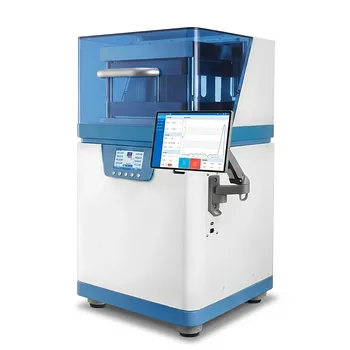
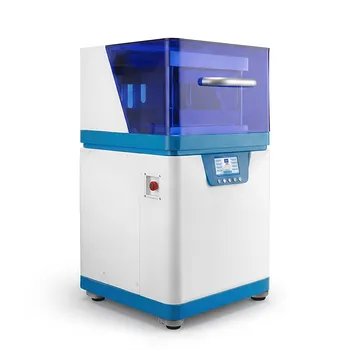
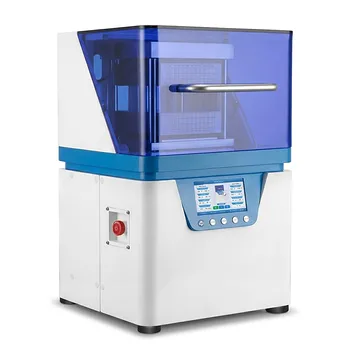
The high-pressure hydrothermal reactor is the critical vessel that provides a sealed, superheated environment necessary for the chemical transformation of nickel and molybdenum sources. By maintaining specific conditions—typically 150°C for approximately 6 hours—the reactor creates a high-pressure state that facilitates the thorough dissolution and recrystallization of reactants into a defined rod-like morphology.
The hydrothermal reactor acts as a controlled thermodynamic chamber, allowing chemical reactions to occur above the solvent's boiling point to drive the oriented growth of NiMoO4 crystals. This environment is essential for creating the structural foundation required for subsequent processes like sulfidation or electrocatalysis.
The Fundamental Role of the Reaction Environment
Overcoming Boiling Point Limitations
The primary function of the reactor is to provide a sealed environment where the internal pressure rises autogenously as the temperature increases. This allows the solvent to remain in a liquid state at temperatures far exceeding its normal boiling point.
Facilitating Dissolution and Recrystallization
The high-temperature, high-pressure (HTHP) conditions promote the full dissolution of nickel and molybdenum precursors. This "superheated" state ensures that the metal ions are effectively distributed, allowing for a more uniform recrystallization process than would be possible under ambient pressure.
Driving Structural Morphology and Self-Assembly
Oriented Growth Along Crystal Planes
The reactor provides the specific kinetic conditions required for active components to grow along preferred crystal planes. This results in the formation of organized structures, such as vertical nanosheet arrays or single-crystal nanowires, depending on the specific precursors used.
In-Situ Construction on Substrates
High-pressure reactors enable the in-situ growth of NiMoO4 directly onto conductive substrates like nickel foam (NF) or carbon cloth. This creates a free-standing nanorod array that is structurally stable and eliminates the need for external binders that might impede conductivity.
Maximizing Surface Area
By facilitating the self-assembly of 3D nanopillar or nanosheet structures, the reactor ensures the precursor has a high specific surface area. This physical architecture is vital for maximizing the exposure of active sites, which is a key requirement for high-performance electrocatalysis.
Understanding the Trade-offs and Pitfalls
Sensitivity to Time and Temperature
The synthesis is highly sensitive to the isothermal duration and precise temperature settings. Deviating from the optimal 150°C or 6-hour window can lead to incomplete crystallization or the collapse of the desired rod-like morphology.
Structural Foundation Risks
If the hydrothermal process is not perfectly controlled, the resulting precursor may lack the structural integrity needed for downstream processing. A weak foundation at this stage often leads to the degradation of the material during subsequent sulfidation or calcination steps.
Applying These Insights to Your Synthesis
Making the Right Choice for Your Goal
To achieve the best results with a high-pressure hydrothermal reactor, consider your primary objective for the NiMoO4 precursor:
- If your primary focus is maximized catalytic activity: Ensure the reactor parameters are tuned to favor vertical nanosheet arrays, which provide the highest exposure of active sites.
- If your primary focus is mechanical durability: Prioritize in-situ growth on nickel foam substrates to create a binder-free, structurally stable foundation.
- If your primary focus is phase purity: Maintain a strictly constant temperature (e.g., 150°C) to ensure uniform nucleation and prevent the formation of secondary crystalline phases.
Mastering the hydrothermal environment is the definitive step in ensuring your NiMoO4 precursors possess the structural foundation necessary for advanced material applications.
Summary Table:
| Feature/Process | Role in NiMoO4 Synthesis | Key Benefit for Materials |
|---|---|---|
| Sealed Environment | Enables solvent heating above normal boiling point | Facilitates full dissolution of metal ions |
| Autogenous Pressure | Drives kinetics of recrystallization | Ensures uniform nucleation and phase purity |
| Oriented Growth | Directs crystallization along specific planes | Forms high-surface-area nanosheets/nanorods |
| In-Situ Synthesis | Allows direct growth on nickel foam or carbon cloth | Creates binder-free, stable, and conductive structures |
| Isothermal Control | Maintains constant 150°C for 6 hours | Prevents morphology collapse and ensures structural integrity |
Elevate Your Material Synthesis with KINTEK’s Precision Reactors
Achieving the perfect rod-like morphology and phase purity for NiMoO4 requires absolute control over pressure and temperature. KINTEK specializes in providing top-tier high-temperature high-pressure reactors and autoclaves designed to withstand the rigorous demands of hydrothermal synthesis and electrocatalysis research.
Our comprehensive laboratory portfolio supports your entire workflow—from nickel foam substrates and PTFE-lined reactors for in-situ growth to high-temperature furnaces for subsequent calcination and hydraulic presses for sample preparation. We empower researchers and manufacturers with the reliability needed to ensure structural integrity and maximize catalytic activity.
Ready to optimize your hydrothermal processes? Contact our experts today to find the perfect equipment for your lab!
References
- Zhaorui Zhou, Yao Liu. Optimizing E<sub>g</sub> Orbital Occupancy of Transition Metal Sulfides by Building Internal Electric Fields to Adjust the Adsorption of Oxygenated Intermediates for Li‐O<sub>2</sub> Batteries. DOI: 10.1002/smll.202302598
This article is also based on technical information from Kintek Solution Knowledge Base .
Related Products
- Customizable Laboratory High Temperature High Pressure Reactors for Diverse Scientific Applications
- High Pressure Laboratory Autoclave Reactor for Hydrothermal Synthesis
- Customizable High Pressure Reactors for Advanced Scientific and Industrial Applications
- Stainless High Pressure Autoclave Reactor Laboratory Pressure Reactor
- Mini SS High Pressure Autoclave Reactor for Laboratory Use
People Also Ask
- How do high-pressure and high-temperature reactors ensure the effective treatment of lignocellulosic wastewater in WAO?
- What equipment is required for high-pressure high-temperature reactions? Master Extreme Chemistry Safely
- How do you control high pressure in a reactor? A Guide to Safe & Stable Operation
- Why is argon better than nitrogen for inert atmosphere? Ensure Absolute Reactivity & Stability
- How does initial oxygen pressure affect the wet oxidation of pharmaceutical sludge? Master Your Oxidation Depth