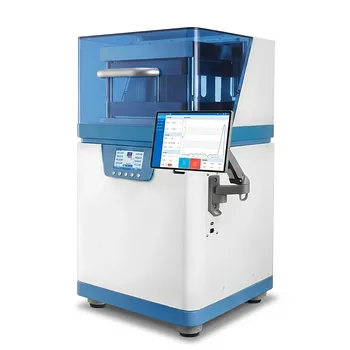
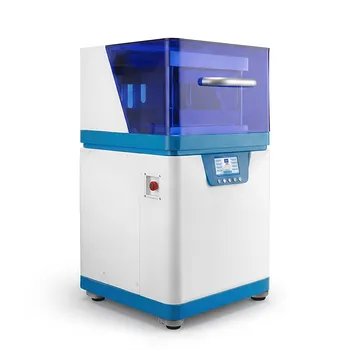
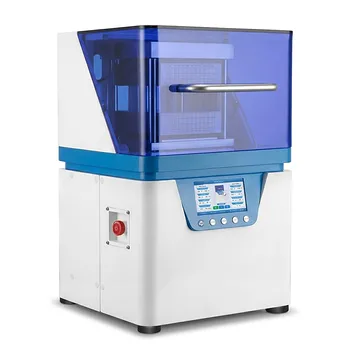
A high-pressure hydrothermal reactor serves as the critical catalyst for precision material synthesis. It creates a sealed environment that enables the in-situ reaction of yttrium, cerium, and zirconium salts directly onto the surface of carrier materials, such as molasses fibers. This specific high-pressure setting facilitates the formation of stabilized zirconia nanoparticles with controlled porous structures and highly uniform distribution.
The core function of the hydrothermal reactor is to leverage high-pressure, subcritical conditions to drive the complete dissolution and uniform anchoring of active components. This process produces nano-sized, highly reactive powders with precise stoichiometry that are unattainable through traditional open-air methods.
Mechanisms of Hydrothermal Synthesis
Enhanced Solubility and Reactivity
The reactor increases the solubility of metal salts beyond their normal atmospheric limits. This allows for the complete dissolution of precursors, which is essential for obtaining a homogeneous mixture.
Higher solubility ensures that when precipitation occurs, it does so with precise stoichiometry. This leads to a more consistent stabilized zirconia phase throughout the composite material.
Facilitating In-Situ Reactions
The "one-pot" technology allowed by these reactors facilitates reactions directly on the surface of substrates. By reacting the salts in-situ, the reactor promotes the uniform anchoring of active components onto fibers or nanotubes.
This creates a tight physical and chemical bond between the zirconia and the support structure. Such bonding is critical to prevent the shedding of active species during subsequent processing or use.
Structural and Morphological Control
Formation of Nanoscale Particles
Hydrothermal reactors operate at significantly lower temperatures (often between 120°C and 250°C) than traditional solid-state methods. These lower temperatures prevent excessive grain growth and agglomeration.
The result is the production of ultra-fine powders with particle sizes frequently reaching approximately 0.1 μm. These nano-sized particles provide the high reactivity needed for efficient sintering and densification.
Development of Porous Architectures
The specific physicochemical conditions within the pressurized vessel are required to form porous structures. High pressure influences how the stabilized zirconia nanoparticles nucleate and grow.
This control over morphology is vital for applications requiring high surface area. The reactor effectively "tunes" the porosity to meet the specific requirements of the zirconia composite.
Kinetic and Thermodynamic Advantages
Accelerated Reaction Kinetics
Maintaining a constant high pressure at a stable temperature significantly accelerates chemical transformations. Reactions that might take days at atmospheric pressure can be completed in a matter of hours.
This efficiency does not come at the cost of quality. The controlled environment actually produces nanocomposites with higher crystallinity and more uniform interlaminar channels.
Subcritical Environment Benefits
The sealed reactor generates internal pressures that facilitate subcritical reactions between precursors. These conditions are the core requirement for producing single-phase powders like sodium zirconium phosphate.
By working within this closed system, engineers can achieve one-step chemical reactions. This bypasses the need for multiple intermediate heating and grinding stages found in conventional manufacturing.
Understanding the Trade-offs
Equipment Limitations and Safety
Operating a high-pressure hydrothermal reactor requires specialized, robust construction, typically using high-grade stainless steel. The internal stresses generated require strict adherence to safety protocols to mitigate the risk of mechanical failure.
Scalability and Batch Processing
While the hydrothermal method produces superior material quality, it is primarily a batch process. This can limit throughput compared to continuous industrial methods, as the system requires time for heating, pressurized reaction, and controlled cooling.
Applying This to Your Project
When integrating a high-pressure hydrothermal reactor into your synthesis workflow, your parameters should align with your material goals:
- If your primary focus is high reactivity and small particle size: Utilize a reactor capable of maintaining temperatures near 250°C to ensure fine nucleation and minimal grain growth.
- If your primary focus is uniform distribution on a carrier: Prioritize the "one-pot" in-situ approach to maximize the bonding strength between the zirconia and your substrate.
- If your primary focus is structural porosity: Carefully calibrate the pressure-to-temperature ratio to influence the nanoparticle self-assembly during the growth phase.
The high-pressure hydrothermal reactor remains the definitive tool for engineers who require absolute control over the nanostructure and phase purity of stabilized zirconia composites.
Summary Table:
| Feature | Mechanism | Synthesis Benefit |
|---|---|---|
| Subcritical Pressure | Enhances salt solubility | Precise stoichiometry and high phase purity |
| In-situ Reaction | One-pot anchoring | Uniform distribution and strong chemical bonding |
| Low-Temp Growth | 120°C - 250°C control | Ultra-fine particles (~0.1 μm) without agglomeration |
| Sealed Environment | Accelerated kinetics | Higher crystallinity and formed porous architectures |
Elevate Your Material Synthesis with KINTEK Precision
Achieving the perfect nanostructure for stabilized zirconia requires equipment that can withstand rigorous subcritical conditions. KINTEK specializes in high-performance laboratory solutions, offering a robust range of high-temperature high-pressure reactors and autoclaves designed for superior chemical transformations.
Whether you are focusing on in-situ anchoring or developing porous architectures, our portfolio supports your entire workflow—from crushing and milling systems to high-temperature furnaces and hydraulic presses. Partner with KINTEK to benefit from equipment that ensures repeatability, safety, and the high reactivity your research demands.
Ready to optimize your synthesis process? Contact our technical experts today to find the ideal solution for your laboratory!
References
- Menna M. Abo-Zeid, Mohamed S. El‐Deab. Metal oxide stabilized zirconia modified bio-derived carbon nanosheets as efficient electrocatalysts for oxygen evolution reaction. DOI: 10.1007/s10800-023-01980-2
This article is also based on technical information from Kintek Solution Knowledge Base .
Related Products
- Customizable Laboratory High Temperature High Pressure Reactors for Diverse Scientific Applications
- High Pressure Laboratory Autoclave Reactor for Hydrothermal Synthesis
- Customizable High Pressure Reactors for Advanced Scientific and Industrial Applications
- Stainless High Pressure Autoclave Reactor Laboratory Pressure Reactor
- Mini SS High Pressure Autoclave Reactor for Laboratory Use
People Also Ask
- How do high-pressure and high-temperature reactors ensure the effective treatment of lignocellulosic wastewater in WAO?
- What equipment is required for high-pressure high-temperature reactions? Master Extreme Chemistry Safely
- How do you control high pressure in a reactor? A Guide to Safe & Stable Operation
- How does initial oxygen pressure affect the wet oxidation of pharmaceutical sludge? Master Your Oxidation Depth
- Why is argon better than nitrogen for inert atmosphere? Ensure Absolute Reactivity & Stability