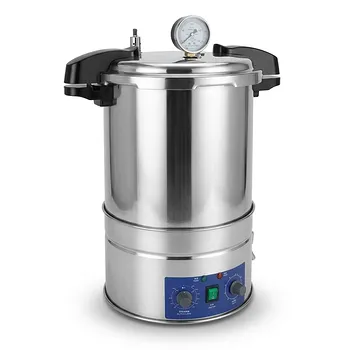
The high-pressure reactor serves as the critical reaction vessel that provides the sealed, high-temperature, and high-pressure environment necessary to drive the chemical transformation of MAB phases into MBenes. By creating these extreme conditions, the reactor enhances the chemical activity and permeability of alkaline solutions, allowing them to selectively break M-Al bonds and remove aluminum layers without the need for hazardous fluorinated reagents.
Core Takeaway: The high-pressure reactor is the foundational infrastructure for "green" MBenes synthesis, enabling an environmentally friendly alkali-assisted etching process that replaces toxic hydrofluoric acid with high-energy hydrothermal kinetics.
The Mechanics of Alkali-Assisted Etching
Breaking M-Al Metallic Bonds
The primary role of the reactor is to provide the energy required to fracture the strong M-Al bonds within MAB phases. Under standard conditions, these bonds are highly stable; however, the high-temperature hydrothermal environment provides the activation energy necessary for the alkaline solution to chemically attack and dissolve the aluminum layers.
Enhanced Permeability of Alkaline Solutions
High pressure significantly increases the permeability and solvation capacity of etching agents like sodium hydroxide (NaOH). This allows the alkaline ions to penetrate deep into the layered structure of the precursor material, ensuring that the aluminum removal is uniform and complete throughout the sample.
Acceleration of Reaction Kinetics
The reactor maintains a constant-temperature environment that drastically accelerates reaction kinetics. By operating under saturated vapor pressure, the system ensures that the raw materials react and precipitate efficiently, which is vital for achieving the desired MBene nanosheet morphology.
The Shift to Sustainable "Green" Synthesis
Elimination of Fluorinated Reagents
Traditional etching methods for 2D materials often rely on hydrofluoric acid (HF), which is exceptionally toxic and environmentally damaging. The high-pressure reactor enables an alternative alkali-assisted route, achieving successful exfoliation using safer, "green" reagents that are easier to handle and neutralize.
Control Over Surface Chemistry
Similar to the synthesis of MXenes, the hydrothermal environment allows for the precise tuning of surface functional groups. The high-pressure conditions encourage the formation of specific oxygen-containing groups on the MBenes, which can be critical for their performance in energy storage or catalytic applications.
In-Situ Material Transformation
The sealed environment prevents the loss of volatile components and maintains a controlled thermochemical state. This ensures that the transition from a 3D MAB phase to a 2D MBene nanosheet occurs in-situ, preserving the structural integrity of the transition metal layers while the A-layers are removed.
Understanding the Trade-offs and Pitfalls
Risk of Over-Etching
While high temperatures and pressures are necessary, excessive conditions can lead to over-etching or the degradation of the MBenes. If the reactor parameters are not precisely controlled, the transition metal layers themselves may begin to dissolve, leading to reduced yields and poor crystallinity.
Material Corrosion and Safety
The combination of high-concentration alkaline solutions and high temperatures is extremely corrosive to standard laboratory equipment. High-pressure reactors used for this process must be lined with specialized materials, such as PTFE or PPL, to prevent the reactor walls from contaminating the product or failing under stress.
Scalability Constraints
Hydrothermal etching is primarily a batch process, which can limit high-volume production. Maintaining uniform temperature and pressure gradients becomes increasingly difficult as the reactor size increases, potentially leading to inconsistent quality between different production runs.
How to Apply This to Your Synthesis Goals
Making the Right Choice for Your Goal
- If your primary focus is Environmental Sustainability: Use the high-pressure reactor to replace HF-based methods with the alkali-assisted hydrothermal route, effectively eliminating fluorine waste from your workflow.
- If your primary focus is High Nanosheet Purity: Ensure the reactor is set to a precise, constant-temperature (typically 270°C for similar phases) to drive the complete removal of aluminum without forming secondary impurities.
- If your primary focus is Surface Functionalization: Adjust the concentration of the NaOH solution and the reaction time within the reactor to tailor the oxygen-containing groups for specific electrochemical needs.
The high-pressure reactor is the indispensable engine that makes the sustainable, fluorine-free production of high-performance MBenes a technical reality.
Summary Table:
| Feature | Role in MBene Synthesis | Impact on Process |
|---|---|---|
| Energy Delivery | Provides hydrothermal activation energy | Cleaves stable M-Al bonds without toxic HF |
| Pressure Control | Increases alkaline solution permeability | Ensures uniform and complete aluminum removal |
| Kinetics | Accelerates reaction rates via vapor pressure | Optimized batch efficiency and nanosheet purity |
| Sustainability | Enables alkali-assisted chemistry | Fluorine-free, eco-friendly "green" production |
| Safety Lining | Utilizes PTFE/PPL-lined vessels | Prevents corrosion from high-concentration NaOH |
Revolutionize Your Material Synthesis with KINTEK
Are you looking to transition to sustainable, fluorine-free MBene production? At KINTEK, we specialize in the high-performance laboratory equipment essential for advanced material science. Our high-temperature high-pressure reactors and autoclaves are specifically designed to withstand the harsh alkaline environments required for green etching, featuring specialized PTFE and PPL linings to ensure product purity and equipment longevity.
Beyond reactors, KINTEK offers a complete ecosystem for your research, including:
- High-Temperature Furnaces: Muffle, tube, and vacuum systems for precise thermal processing.
- Material Preparation: Crushing, milling, and hydraulic presses for precursor MAB phase processing.
- Chemical Handling: Corrosion-resistant ceramics, crucibles, and electrolytic cells.
Empower your lab with the tools for next-generation energy storage and catalysis.
References
- Zhuobin Guo, Zhong‐Shuai Wu. Recent advances and key challenges of the emerging MBenes from synthesis to applications. DOI: 10.1002/metm.12
This article is also based on technical information from Kintek Solution Knowledge Base .
Related Products
- Customizable Laboratory High Temperature High Pressure Reactors for Diverse Scientific Applications
- Customizable High Pressure Reactors for Advanced Scientific and Industrial Applications
- Stainless High Pressure Autoclave Reactor Laboratory Pressure Reactor
- Visual High-Pressure Reactor for In-Situ Observation
- Mini SS High Pressure Autoclave Reactor for Laboratory Use
People Also Ask
- How do high-pressure and high-temperature reactors ensure the effective treatment of lignocellulosic wastewater in WAO?
- What equipment is required for high-pressure high-temperature reactions? Master Extreme Chemistry Safely
- How do you control high pressure in a reactor? A Guide to Safe & Stable Operation
- Why is argon better than nitrogen for inert atmosphere? Ensure Absolute Reactivity & Stability
- How does initial oxygen pressure affect the wet oxidation of pharmaceutical sludge? Master Your Oxidation Depth