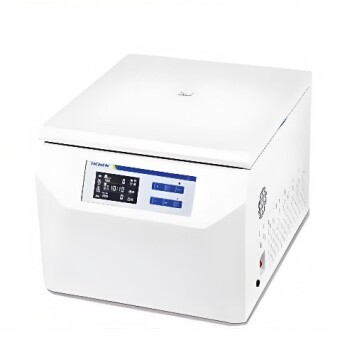
A high-pressure reactor functions as the thermodynamic engine necessary to transform raw chemical precursors into the complex crystal structure of HZSM-5 zeolite. By creating a sealed environment, it allows the synthesis mixture to reach elevated temperatures and pressures while maintaining a liquid state, forcing the dissolution and structural rearrangement of silicon and aluminum sources.
Core Takeaway The high-pressure reactor does not merely hold the ingredients; it generates a specific hydrothermal environment—characterized by autogenous pressure and uniform heat—that makes the crystallization of the HZSM-5 framework energetically favorable. This sealed system drives the critical transition from an amorphous precursor gel to a highly ordered, porous crystalline solid.
Mechanisms of Hydrothermal Synthesis
Establishing Autogenous Pressure
The fundamental role of the reactor is to create a "closed system." When the synthesis mixture is heated inside this sealed vessel, the pressure naturally rises (autogenous pressure).
This pressure allows the solvent (typically water within an alkaline medium) to remain in a liquid state at temperatures significantly above its normal boiling point. This state is essential for the chemical reactions required to form HZSM-5.
Promoting Gel Dissolution and Aging
Inside the reactor, the high temperature and pressure accelerate the interaction between the silicon and aluminum sources.
This environment facilitates the "aging" process, where solid precursors dissolve into the alkaline solution. This dissolution is the first necessary step before any crystalline structure can form.
Driving Precipitation and Crystallization
Once the precursors are dissolved, the reactor’s stable thermal environment drives the reaction toward precipitation.
The dissolved silicate and aluminate species begin to re-assemble. Guided by the thermodynamic conditions within the reactor, these species organize into the specific, regular pore structure characteristic of the HZSM-5 zeolite framework.
Critical Process Variables
Uniform Thermal Fields
For high-quality HZSM-5, the temperature distribution within the reactor must be consistent.
A high-pressure reactor ensures a uniform thermal field, eliminating cold spots that could lead to impurities or incomplete crystallization. This uniformity is vital for ensuring the pore regularity and purity of the final zeolite product.
Chemical Resistance and Containment
The synthesis of HZSM-5 occurs in an alkaline medium, which can be highly corrosive to standard metals.
High-pressure reactors used for this purpose typically utilize chemically inert liners, such as Teflon (PTFE). This protects the steel reactor vessel from corrosion and prevents metallic impurities from leaching into the zeolite crystals during the long crystallization period (often 24 to 96 hours).
Understanding the Trade-offs
Process Duration vs. Crystal Quality
While higher temperatures within the reactor can speed up crystallization, they may also alter the crystal size or morphology.
You must balance the reaction time against the temperature settings. Accelerating the process too aggressively in the reactor can lead to the formation of undesired phases or irregular crystal structures rather than the targeted HZSM-5 framework.
Safety and Equipment Limits
Operating a closed vessel at high temperatures generates significant internal pressure.
Users must ensure the reactor is rated for the specific pressure generated by the solvent at the target synthesis temperature (often between 90°C and 150°C). Overfilling the reactor can leave insufficient headspace for expansion, creating a safety hazard and potentially damaging the equipment.
Making the Right Choice for Your Goal
When selecting or operating a high-pressure reactor for HZSM-5 synthesis, align your approach with your specific objectives:
- If your primary focus is Crystal Purity: Prioritize a reactor with a high-quality Teflon liner and precise temperature control to prevent contamination and ensure a uniform thermal field.
- If your primary focus is Morphology Control: Focus on the reactor's ability to maintain stable pressure over long durations (24-96 hours) to allow for slow, regulated crystal growth.
Ultimately, the high-pressure reactor serves as the essential control volume that forces thermodynamic equilibrium, turning a chaotic mixture of silica and alumina into an orderly, functional zeolite catalyst.
Summary Table:
| Feature | Role in HZSM-5 Synthesis | Impact on Final Product |
|---|---|---|
| Autogenous Pressure | Keeps solvent liquid above boiling point | Enables dissolution of silicon/aluminum precursors |
| Thermal Uniformity | Maintains consistent internal temperature | Ensures pore regularity and prevents impurities |
| PTFE/Teflon Lining | Provides chemical resistance to alkaline media | Prevents metallic contamination and reactor corrosion |
| Sealed Environment | Forces thermodynamic equilibrium | Drives transition from amorphous gel to crystalline solid |
Elevate Your Material Synthesis with KINTEK
Precision is the key to perfect zeolite crystallization. KINTEK specializes in advanced laboratory equipment designed for the most demanding hydrothermal applications. Whether you are synthesizing HZSM-5 or developing next-generation catalysts, our high-performance solutions ensure safety, purity, and repeatable results.
Our specialized portfolio includes:
- High-Temperature & High-Pressure Reactors and Autoclaves with premium PTFE liners.
- Crushing, Milling, and Sieving Systems for post-synthesis material processing.
- Muffle and Tube Furnaces for precise zeolite calcination.
- Hydraulic Presses for pelletizing your finished catalysts.
Don't let equipment limitations compromise your research. Contact KINTEK today to discuss your specific HZSM-5 synthesis needs and discover how our high-pressure reactors can enhance your laboratory's efficiency and output.
References
- Kyong‐Hwan Chung, Sang‐Chul Jung. Highly Selective Catalytic Properties of HZSM-5 Zeolite in the Synthesis of Acetyl Triethyl Citrate by the Acetylation of Triethyl Citrate with Acetic Anhydride. DOI: 10.3390/catal7110321
This article is also based on technical information from Kintek Solution Knowledge Base .
Related Products
- Customizable Laboratory High Temperature High Pressure Reactors for Diverse Scientific Applications
- Customizable High Pressure Reactors for Advanced Scientific and Industrial Applications
- Stainless High Pressure Autoclave Reactor Laboratory Pressure Reactor
- Mini SS High Pressure Autoclave Reactor for Laboratory Use
- High Pressure Laboratory Autoclave Reactor for Hydrothermal Synthesis
People Also Ask
- How do high-pressure and high-temperature reactors ensure the effective treatment of lignocellulosic wastewater in WAO?
- What equipment is required for high-pressure high-temperature reactions? Master Extreme Chemistry Safely
- How do you control high pressure in a reactor? A Guide to Safe & Stable Operation
- Why is argon better than nitrogen for inert atmosphere? Ensure Absolute Reactivity & Stability
- How does initial oxygen pressure affect the wet oxidation of pharmaceutical sludge? Master Your Oxidation Depth