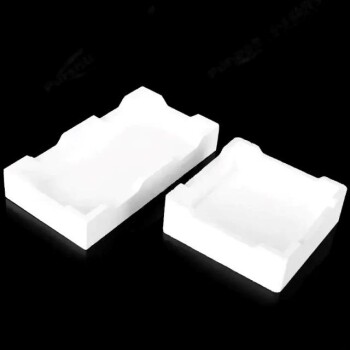
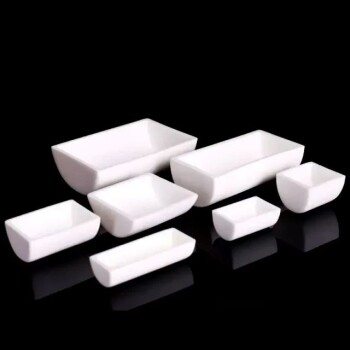
The high-purity corundum boat acts as the primary containment vessel for the intense chemical reactions required to reduce metal oxides with magnesium. It serves as a thermally stable, chemically inert stage that prevents contamination and withstands the high exothermic heat generated during the reduction of materials like silica aerogel into mesoporous silicon.
The core role of a corundum boat is to provide a neutral environment that survives extreme temperature spikes without reacting with the reagents. By maintaining its structural and chemical integrity, it ensures the purity and precision of the final synthesized materials.
Exceptional Thermal Resilience
Withstanding Exothermic Reaction Heat
Magnesiothermic reduction is a highly exothermic process, meaning it releases significant amounts of heat rapidly once the reaction begins. High-purity corundum (alumina) possesses a melting point exceeding 2000°C, allowing it to remain solid even when the local reaction temperature spikes far above the furnace set point.
Maintaining Stability at High Operating Temperatures
In standard laboratory environments, these processes typically occur between 1273 K and 1723 K. At these levels, the boat must not soften or deform under the weight of the reactants. Corundum’s mechanical strength ensures that the structural integrity of the sample is preserved throughout the heating and cooling cycles.
Chemical Inertness and Material Purity
Prevention of Side Reactions
The primary advantage of using high-purity corundum is its lack of reactivity with magnesium powder, sodium chloride, or the resulting silicon. If the container were to react with the magnesium, it would consume the reductant and introduce impurities into the final product.
Ensuring Data Accuracy and Sample Recovery
Because corundum does not bond with the reaction products, the resulting samples can be easily removed after the process is complete. This is critical for post-synthesis characterization, such as XRD or Raman spectroscopy, where even trace contamination from the container could lead to inaccurate experimental data.
Understanding the Trade-offs
Thermal Shock Sensitivity
While corundum is highly resistant to heat, it is relatively sensitive to thermal shock compared to materials like quartz. If the temperature is raised or lowered too rapidly, the boat can crack due to internal stresses.
High Purity Requirements
The term "high-purity" is critical; standard grade alumina may contain trace oxides like silica or iron. At high temperatures, these impurities can migrate into the sample or lower the chemical resistance of the boat itself, compromising the experimental outcome.
How to Apply This to Your Project
Optimizing Container Selection
Selecting the right grade and shape of corundum boat depends on the specific scale and temperature of your reduction process. Ensure your furnace ramp rates are compatible with alumina’s thermal expansion properties to prevent boat failure.
- If your primary focus is material purity: Always specify 99% or higher alumina content to prevent trace metal contamination during long reduction cycles.
- If your primary focus is high-throughput testing: Implement controlled cooling rates to extend the lifespan of the boats and prevent cracking from thermal shock.
- If your primary focus is cost-efficiency: Reserve corundum for high-temperature magnesiothermic processes and consider quartz only for lower-temperature applications where magnesium vapor pressure is minimal.
By providing a stable and inert environment, high-purity corundum boats enable the precise synthesis of advanced materials in high-temperature chemical environments.
Summary Table:
| Feature | Role in Magnesiothermic Reduction | Key Benefit |
|---|---|---|
| High Melting Point | Withstands exothermic heat spikes ($>2000$°C) | Prevents vessel deformation or melting |
| Chemical Inertness | Remains neutral to magnesium and silicon | Eliminates side reactions and impurities |
| 99%+ Alumina Purity | Prevents migration of trace oxides | Ensures high-precision experimental data |
| Mechanical Strength | Resists softening at high operating temperatures | Maintains sample structural integrity |
Elevate Your Synthesis Precision with KINTEK
Ensure the integrity of your high-temperature experiments with KINTEK’s high-purity corundum boats and advanced ceramic consumables. Specifically designed for demanding processes like magnesiothermic reduction, our 99%+ alumina products prevent contamination and withstand extreme exothermic heat spikes.
Beyond high-quality ceramics and crucibles, KINTEK offers a comprehensive range of high-temperature furnaces (muffle, tube, vacuum) and specialized laboratory equipment tailored to your research needs. Partner with us for reliable supply, exceptional material quality, and technical expertise to drive your innovations forward.
Contact KINTEK today to optimize your lab's performance!
References
- Yunpeng Shan, Xingzhong Guo. Bi-Continuous Si/C Anode Materials Derived from Silica Aerogels for Lithium-Ion Batteries. DOI: 10.3390/batteries9110551
This article is also based on technical information from Kintek Solution Knowledge Base .
Related Products
- High Purity Pure Graphite Crucible for Evaporation
- Carbon Graphite Boat -Laboratory Tube Furnace with Cover
- Advanced Engineering Fine Ceramics Alumina Ceramic Saggar for Fine Corundum
- Molybdenum Tungsten Tantalum Evaporation Boat for High Temperature Applications
- Hemispherical Bottom Tungsten Molybdenum Evaporation Boat
People Also Ask
- Why are high-purity graphite crucibles preferred for sulfide solid electrolytes? Achieve Superior Material Purity
- Why is a high-purity graphite crucible required for Chromel-TaC composites? Ensure Peak Purity at 1400°C
- What role do high-purity graphite crucibles play in molten salt corrosion research? Ensure Reactor-Grade Precision
- Why are high-purity graphite crucibles used for magnesium distillation? Ensure 3N8 Purity & Thermal Stability
- Why is a high-purity graphite crucible ideal for nitrogen-doped graphene at 1500 °C? Maximize Purity and Stability