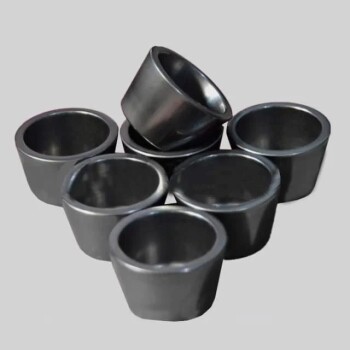
High-purity graphite is selected primarily for its exceptional chemical inertness at elevated temperatures. In the vacuum distillation purification of magnesium, the goal is to achieve extreme purity levels. Graphite remains stable within the distillation temperature range of 873K to 1023K, meaning it does not react with or erode into the molten magnesium. This prevents the introduction of carbon or metallic impurities, which is the critical factor in producing high-purity magnesium at the 3N8 level.
By eliminating chemical interactions between the container and the melt, high-purity graphite ensures the final product's integrity while offering the structural resilience needed to withstand thermal cycling and static pressure.
Ensuring Chemical Purity
The fundamental requirement of vacuum distillation is preventing the container from contaminating the raw material.
Absolute Chemical Inertness
The primary driver for using high-purity graphite is that it does not react with molten magnesium within the processing window of 873K to 1023K.
Eliminating Contaminants
Unlike standard clay or certain ceramic vessels, high-purity graphite prevents the leaching of metallic impurities into the melt.
Achieving Target Grades
This stability is essential for reaching specific purity targets, such as the 3N8 level (99.98% purity).
Mechanical and Thermal Performance
Beyond chemical stability, the physical properties of graphite make it uniquely suited for the rigors of the distillation environment.
Superior Thermal Shock Resistance
Graphite has a low coefficient of thermal expansion and excellent strain resistance.
This allows the crucible to withstand sudden heating and quenching cycles without cracking, unlike more brittle ceramic alternatives.
Efficient Heat Transfer
Graphite possesses high thermal conductivity, which allows for rapid heat transfer to the raw materials.
This efficiency shortens melting times and significantly reduces the overall energy consumption of the purification process.
Structural Integrity Under Load
Even at high temperatures, high-purity graphite maintains significant mechanical strength (compression resistance greater than 70 Mpa).
This ensures the crucible can withstand the static pressure of the molten liquid without deforming or failing during the process.
Understanding the Trade-offs
While high-purity graphite is the standard, it requires specific conditions and material grades to function correctly.
Oxidation Risks
Graphite is susceptible to oxidation at high temperatures if exposed to air.
Therefore, it is most effective in vacuum environments or inert atmospheres, which aligns perfectly with the vacuum distillation process.
Density and Porosity
Not all graphite is equal; low-density graphite can suffer from erosion or metal penetration.
High-performance crucibles must use graphite with a bulk density of 1.78 g/cm³ or greater and low porosity to resist erosion by the molten magnesium and its vapors.
The Need for Low Ash Content
The graphite material must be "low-ash" to prevent volatile substances from creating defects.
Impurities in the graphite itself can lead to spots, holes, or coating failures, compromising the crucible's longevity.
Making the Right Choice for Your Goal
When selecting crucibles for magnesium purification, prioritize the specific physical parameters of the graphite.
- If your primary focus is Maximum Purity: Ensure the graphite is certified as high-purity (99.9%) to guarantee it will not react chemically with the magnesium melt at 1023K.
- If your primary focus is Equipment Longevity: Look for graphite with high bulk density (>1.78 g/cm³) and anti-oxidation treatments to resist erosion and extend service life.
High-purity graphite acts as a chemically neutral, thermally efficient barrier that allows you to isolate magnesium without compromising its quality.
Summary Table:
| Key Feature | Requirement/Value | Benefit to Process |
|---|---|---|
| Operating Temp | 873K - 1023K | Prevents reaction with molten magnesium |
| Target Purity | 3N8 Level (99.98%) | Eliminates metallic & carbon contamination |
| Bulk Density | ≥ 1.78 g/cm³ | Resists erosion and metal penetration |
| Compressive Strength | > 70 MPa | Maintains structural integrity under static load |
| Thermal Conductivity | High | Rapid heat transfer and reduced energy use |
Optimize Your Purification Process with KINTEK
Achieving 3N8 level purity requires more than just high temperatures—it demands the right materials. KINTEK specializes in high-performance laboratory equipment and consumables, including high-purity graphite crucibles, high-temperature furnaces, and vacuum distillation tools tailored for advanced metallurgy.
Whether you are refining magnesium or conducting specialized battery research, our team provides the technical expertise and high-quality ceramic, PTFE, and graphite solutions you need to eliminate contamination and ensure process stability.
Ready to elevate your lab's output? Contact our experts today to find the perfect crucible and furnace configuration for your application.
Related Products
- High Purity Pure Graphite Crucible for Evaporation
- High Purity Pure Graphite Crucible for Electron Beam Evaporation
- Carbon Graphite Boat -Laboratory Tube Furnace with Cover
- Arc-Shaped Alumina Ceramic Crucible High Temperature Resistant for Engineering Advanced Fine Ceramics
- Ultra-High Temperature Graphite Vacuum Graphitization Furnace
People Also Ask
- Why are high-purity graphite crucibles preferred for sulfide solid electrolytes? Achieve Superior Material Purity
- Why is a high-purity graphite crucible required for Chromel-TaC composites? Ensure Peak Purity at 1400°C
- What role do high-purity graphite crucibles play in molten salt corrosion research? Ensure Reactor-Grade Precision
- Why is a high-purity graphite crucible ideal for nitrogen-doped graphene at 1500 °C? Maximize Purity and Stability
- What role does a high-purity graphite crucible play in CaO-MgO-Al2O3-SiO2 system equilibrium experiments? Maximize Accuracy